



Best mini split setting for a New York winter

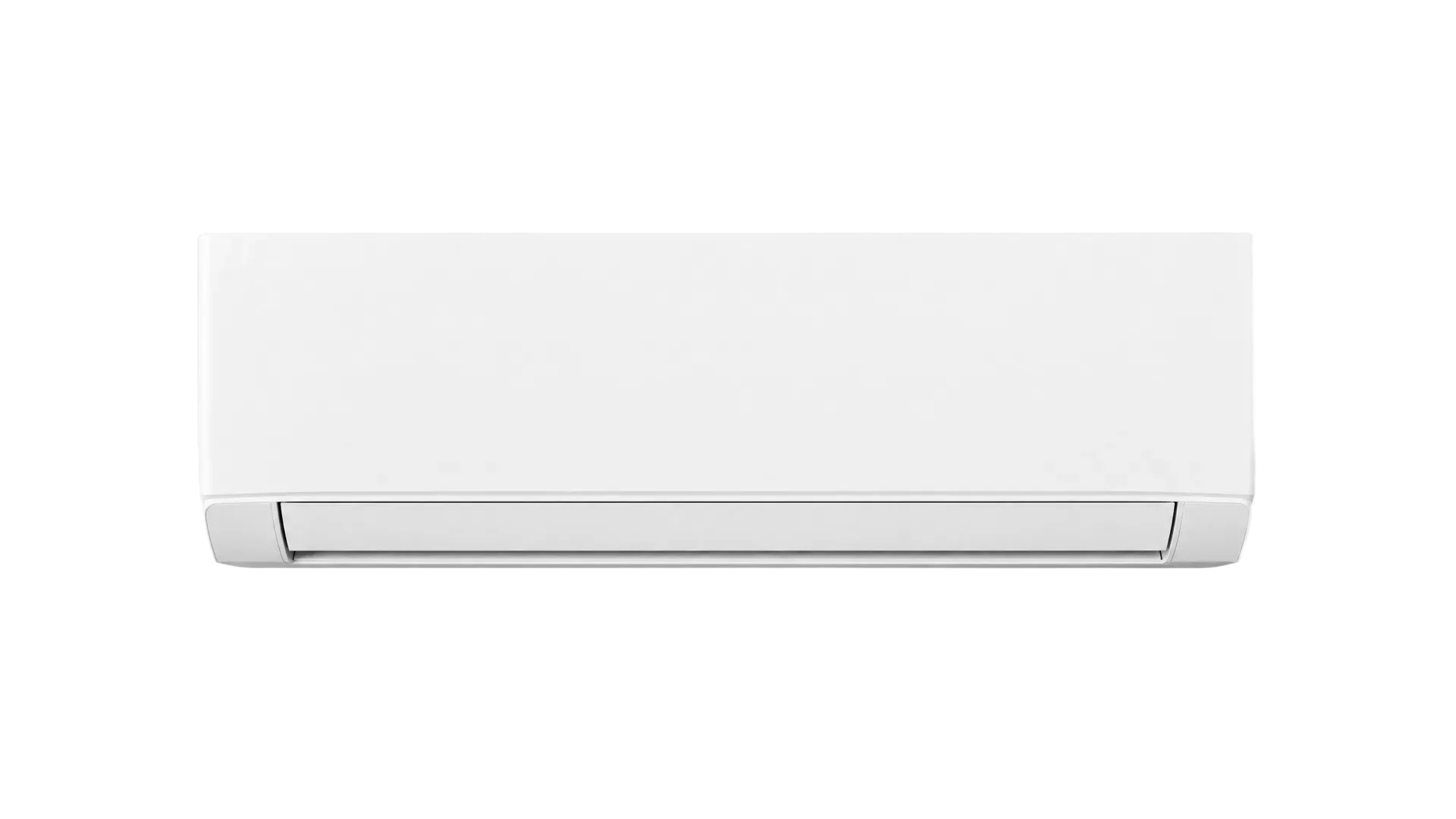
A white wall-mounted mini-split air conditioner indoor unit shown straight-on against a plain light gray background.
Skip the calls

Set it to heat mode and pick a steady temperature, usually 68 to 70, and leave it there instead of turning it up and down through the day. A mini split works more efficiently holding one temperature than recovering from swings, and in New York winters it has real cold to fight, often well below freezing. At those temperatures the outdoor unit can ice over, and it will run a defrost cycle on its own to clear that, so don't be alarmed if it pauses heating for a few minutes and you hear the fan change or feel cooler air for a moment. Keep the outdoor unit clear of snow and ice buildup around the sides and base so air can still move through it. If your home heats mainly with gas and the mini split covers one room or zone, a steady mid-60s to low-70s setting keeps that space comfortable without making the unit work harder than it needs to in deep cold.

A smiling woman with dark shoulder-length hair in a cream V-neck sweater sits at a marble counter with a glass of red wine, with a kitchen and softly lit living room behind her.
A woman in a dark green sweater laughs while seated at a marble kitchen island with a glass of red wine, with open shelving, cabinets and a living room visible behind her.
A woman with long dark hair in a cream knit sweater laughs while looking off to the side, seated at a counter with a glass of red wine, in a dimly lit living room with a sofa, lamp, framed pictures and houseplant behind her.
A smiling woman with long dark hair in a beige sweater sits at a marble kitchen counter with a glass of red wine, with a dimly lit living room behind her.

The outdoor unit is doing real work even on a cold New York day. It pulls heat out of the outside air and runs it through a compressor that raises it to a temperature useful inside your house. When frost builds up on that outdoor coil, the system runs a defrost cycle on its own, reversing briefly and slowing or stopping the fan to melt it off. You might notice steam rising off the unit outside or a few minutes of cooler air inside. That's the defrost cycle doing its job, not a malfunction. Indoors, the blower pushes air across a coil to heat your rooms, and a filter clogged with dust makes it work harder for the same result. If your system has backup heat strips, they only kick in when it's cold enough outside that the compressor can't keep up on its own. One thing you can control: keep snow and ice cleared from around the base of the outdoor unit so the fan can draw air and the defrost drain isn't blocked.

How your mini split makes heat

  • The outdoor unit pulls heat from outside air even in freezing temperatures, compressing a refrigerant gas to raise it to a usable level.
  • A defrost cycle kicks in automatically when frost builds on the outdoor coil, briefly reversing the system and running the fan slower or stopping it.
  • During defrost you may see steam coming off the outdoor unit and feel cooler air inside for a few minutes, which is normal.
  • The indoor unit's blower moves air across an indoor coil, and a dirty filter forces it to work harder to push out the same heat.
  • Auxiliary or backup heat strips, if the system has them, only engage when the outdoor temperature drops low enough that the compressor alone can't keep up.
  • Keeping the outdoor unit clear of snow and ice around its base lets the fan draw air properly and the defrost drain run off without refreezing.
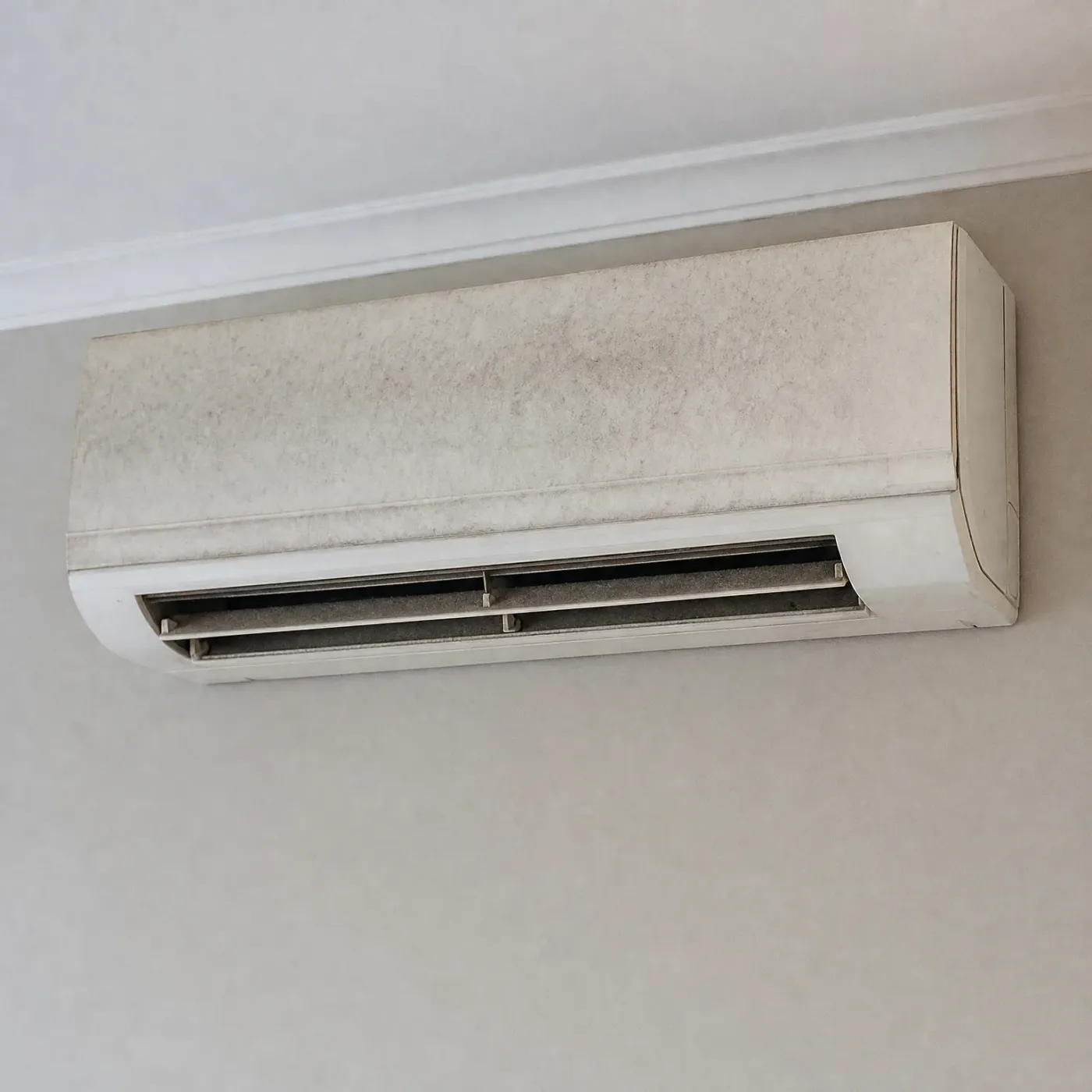
A dusty, discolored white wall-mounted mini-split air conditioner unit installed high on a plain interior wall below a white ceiling molding.
Before you get your mini split maintenance
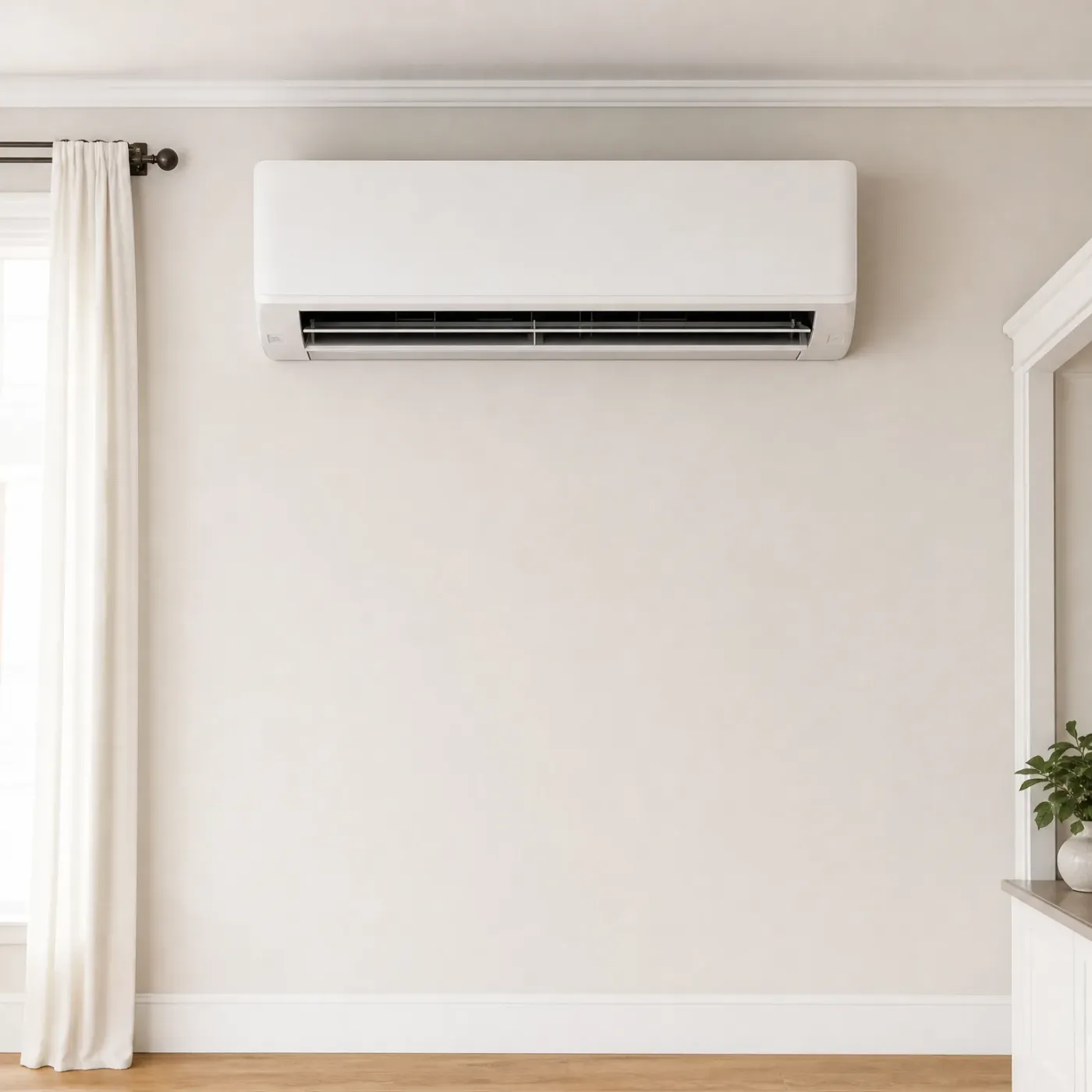
A white wall-mounted mini-split air conditioner on a beige interior wall, with a cream curtain and window at left, a potted plant on a ledge at right, and a wood floor below.
After you get your mini split maintenance

Why steady beats cranking it up

A mini split sized for your home can lose ground below a certain outdoor temperature and lean on backup heat strips to keep up, which cost more to run than the compressor. Turning the thermostat up several degrees when a room feels cold asks the unit to catch up fast, and that's when those strips kick in. Holding one setting means the compressor does the work at its normal rate instead of the backup heat covering the gap. On a cold January night in New York, that difference shows up on the bill.
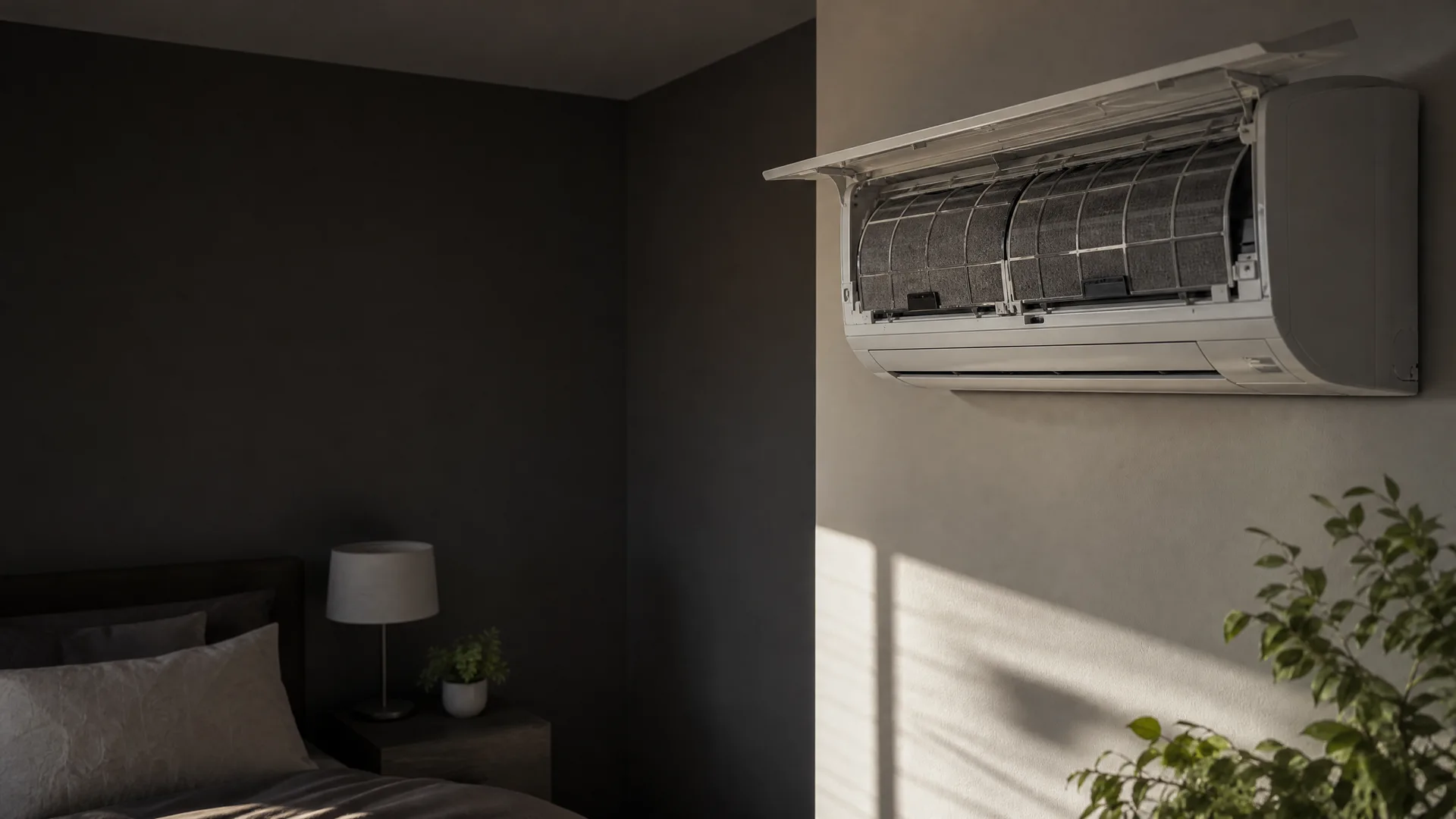

What a dirty filter does to this

A clogged filter restricts the air moving across the indoor coil, so the unit has to run longer to move the same amount of heat into the room. That longer runtime is what pushes the backup strips on more often, even at a steady setting. A filter checked and cleaned on a regular schedule keeps airflow where it should be, so the compressor can hold 68 to 70 on its own through most of the winter without help from strip heat.

Power costs 26.39 cents per kilowatt-hour statewide

At 26.39 cents per kilowatt-hour, every degree you crank your mini split up shows up fast on the bill. Holding a steady 68 to 70 instead of pushing it higher when a room feels cold keeps the compressor doing the work instead of the backup heat strips, which is where the real cost is.

EIA-861 2025 statewide residential average

A wall-mounted mini-split air conditioner with its front cover open exposing the filters, in a dim bedroom with a bed, nightstand lamp and a potted plant.

You open the bedroom window a crack because the morning is the first warm one since March, and the mini split clicks off on its own for the first time in months. You pop the front cover up out of habit, something you've been meaning to check since January, and the filter screen behind it is grey with dust, matted enough that you can't see through it. You run a finger across it and it leaves a clean line. No wonder the room never felt quite right on the coldest nights. You think about how many evenings you sat near it with a blanket instead of calling someone, and how little you want to spend another week this fall finding a contractor, getting someone on the phone, explaining the same thing twice before anyone even looks at it.

Skip calling around

Your request goes to one pro, not a list of companies.

There's no charge for the request.

Running it hard without a check

A mini split that holds 68 to 70 all winter is cycling through defrost over and over on nights when it's near or below freezing outside. The outdoor coil carries ice and clears it, the indoor filter catches whatever's in the air, and nothing stops to confirm either one is still doing its job well. Keep going this way and you might not notice a half-frozen coil or a filter clogged with dust until the backup strips kick in more than they should and the bill reflects it. A system running clean looks identical from the thermostat to one that's quietly losing ground. The only way to tell them apart is to look.

Having someone look before it slips

A contractor who services mini splits in New York every winter knows what tends to go first once the cold settles in: a coil that isn't clearing frost the way it should, a filter that's been skipped too many times, a refrigerant charge that's drifted low enough to lean on the strips. Instead of hunting down a few companies and running through the same explanation with each one, you get matched with one local contractor who already knows this equipment in this climate. They check the parts that strain hardest in freezing weather and tell you plainly what they found, so the steady setting you picked is actually being backed up by a system that can hold it.

A smiling bearded man in a navy sweater sits at a candlelit dinner table with a glass of red wine, a bowl of salad, and plates of food in the foreground.
A woman with dark hair in a bun reclines on a sofa with her eyes closed, wrapped in a cream fleece blanket, a closed blue hardcover book resting in front of her, with a lit lamp and a vase of dried flowers in the background.

Before maintenance

You're tracking down a contractor who knows mini splits, calling around for someone who can actually look at the outdoor coil before the next cold snap hits.

Describe it once

After maintenance

A local contractor who services mini splits all winter checks the coil, the filter and the refrigerant charge, so the system isn't quietly leaning on backup heat strips.

Describe it once

Skip maintenance or get it serviced

Skip it

  • The outdoor coil keeps icing over on cold nights and the defrost cycle runs longer each time to clear it.
  • A dirty indoor filter cuts airflow across the coil, so the unit works harder to push out the same heat.
  • A system low on refrigerant leans on backup heat strips sooner, and those cost more to run than the compressor.
  • Dust packed into the blower wheel shows up as a system that runs constantly but never quite catches up to 68.
  • A contractor finds a failing part in January instead of a homeowner finding no heat during a cold snap.

Get it serviced

  • A clean outdoor coil pulls heat from the air the way it's supposed to, so defrost cycles stay short and infrequent.
  • A clear filter and clean blower wheel mean the system reaches 68 to 70 without running longer than it needs to.
  • Refrigerant checked and topped off keeps the compressor doing the work instead of the backup strips kicking in early.
  • A local contractor who services mini splits all winter knows which part on your model tends to fail first.
  • One contractor handles the visit instead of a string of calls to different companies comparing quotes.
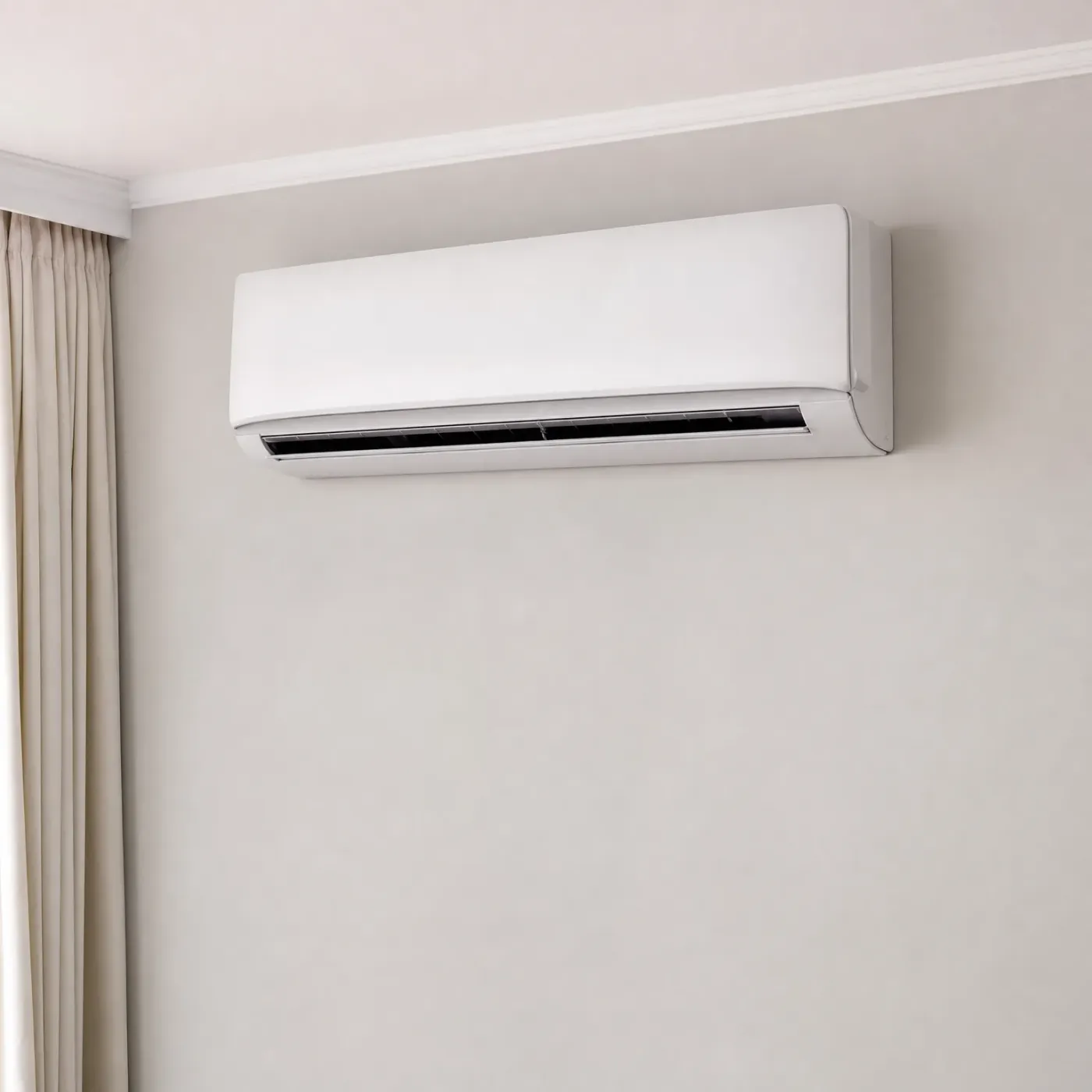
A white wall-mounted mini-split air conditioner near the ceiling of a room with light gray walls, white crown molding, and a beige curtain at the left edge.
A clean mini split like this one holds its heat setting all winter without the coil or filter working against it.
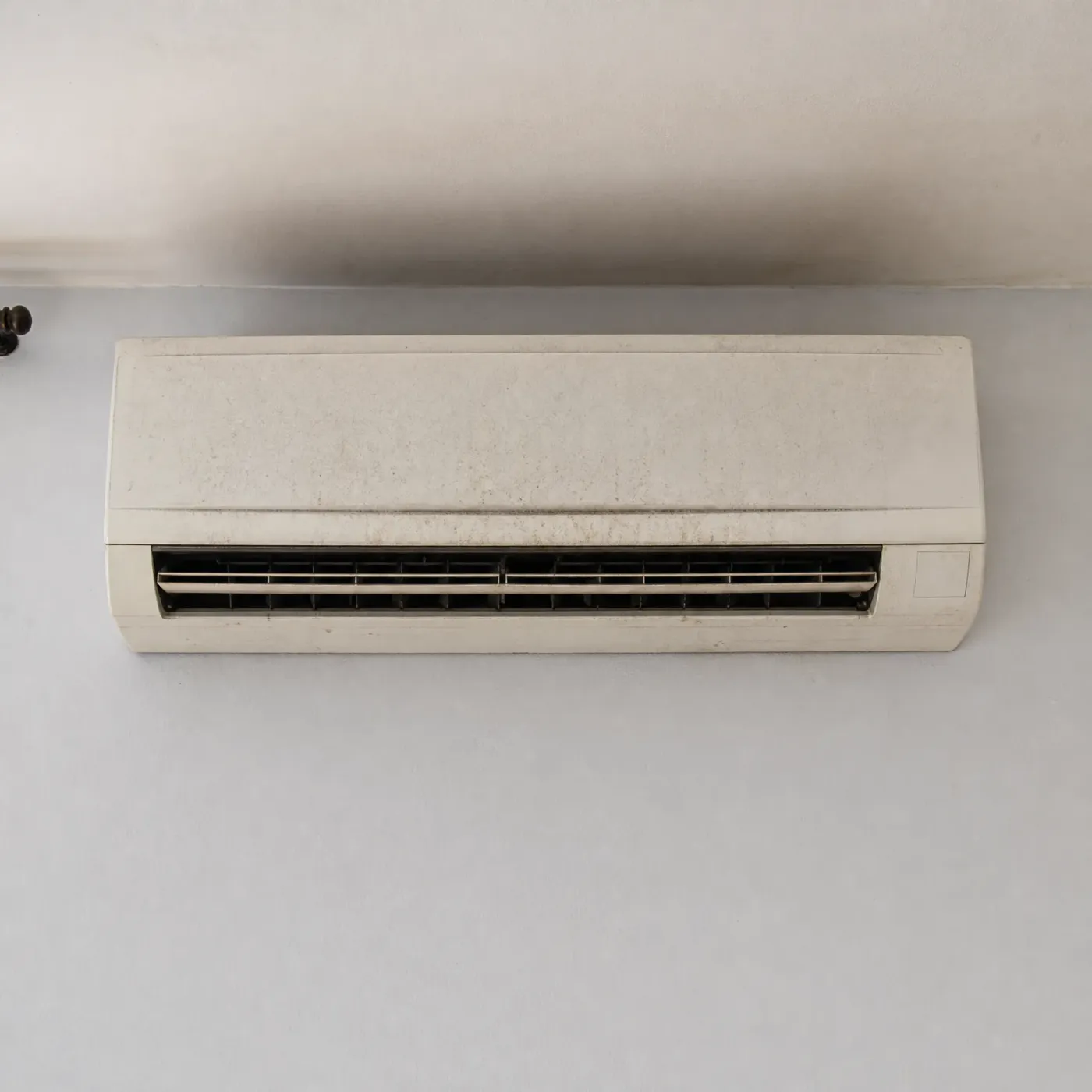
A dusty beige wall-mounted mini-split air conditioner indoor unit installed high on a plain light-colored wall below the ceiling.
Dust caked on the coil and staining spreading above it mean the unit is straining to push out heat it can't fully deliver.
A two-story gray horizontal-siding house with multiple gables, a covered front porch with white columns and railing, and a dark front door, fronted by a patchy green and brown lawn under a clear blue sky.

That same unit works through summer too, and New York air carries a dew point averaging 62°F across June, July and August, NOAA climate data shows. That's heavy, sticky air for the mini split to wring moisture out of on top of cooling the room. The indoor coil has to pull more water out of the air at that dew point, and a coil already coated with dust or a filter already clogged can't shed that load as well. You'll notice it as a room that feels cool but still damp, or a system that runs longer to get there.

NASA POWER T2MDEW county cells weighted by homes

Why does the bedroom never quite get warm?

You notice the air coming out feels cooler than it used to, or the unit runs longer to hit the same 68 to 70 you always set. Maybe there's a thin stripe of dust above the indoor vent, or frost that lingers on the outdoor unit longer than it should before defrost clears it. Some nights the compressor seems to labor, clicking on and off more than it used to. Left alone through a full winter, a coil working this way pushes the system toward backup heat strips more often, and with power priced the way it is here, that difference lands on the bill before it shows up as a comfort problem.

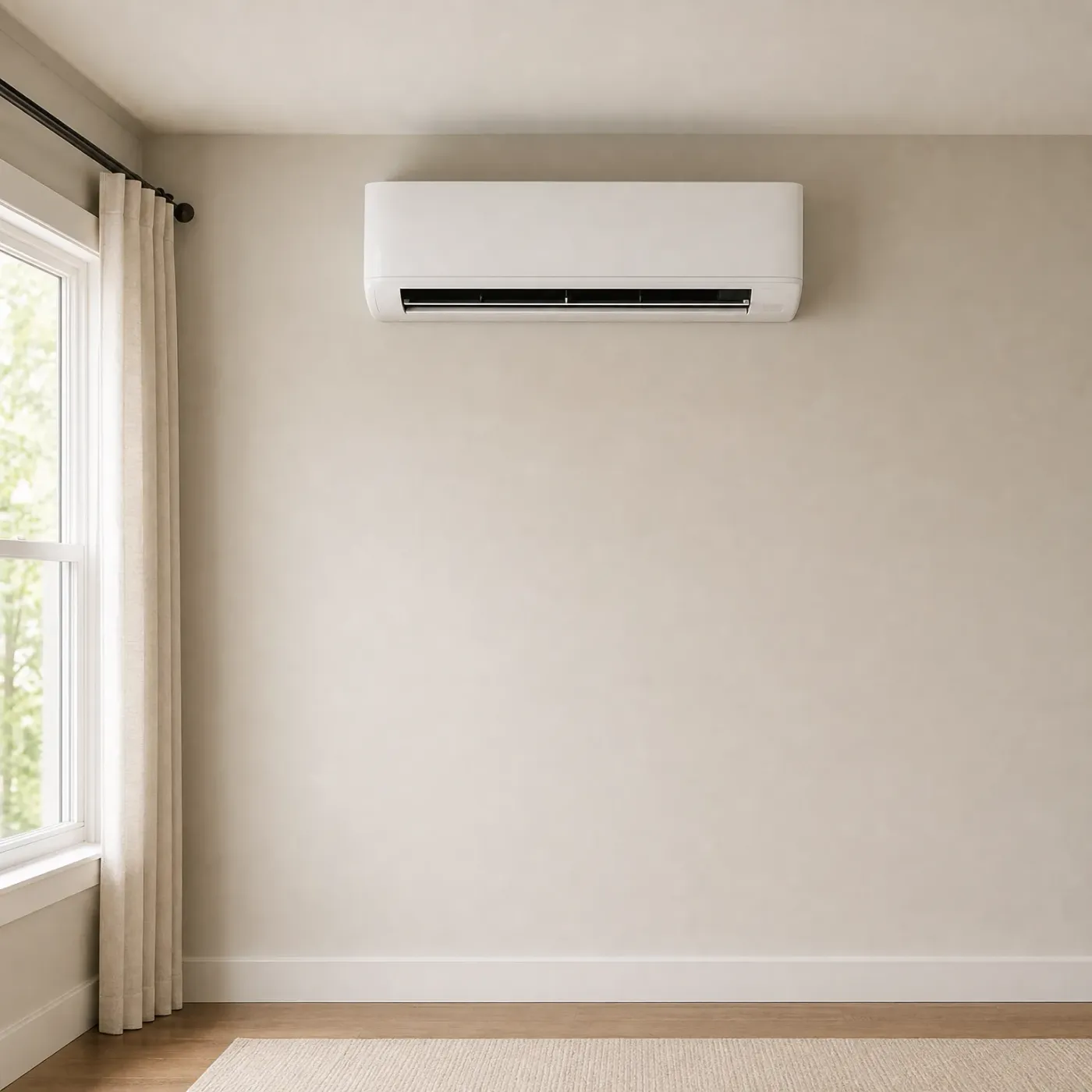
A white wall-mounted mini-split air conditioner on a beige interior wall, with a curtained window on the left and wood flooring with a light rug below.

Clean and holding its temperature

This is a mini split that isn't working against itself. The coil is clear, the filter is clean, and air moves through it the way it was designed to. It holds 68 to 70 through a cold night without leaning on backup heat strips.

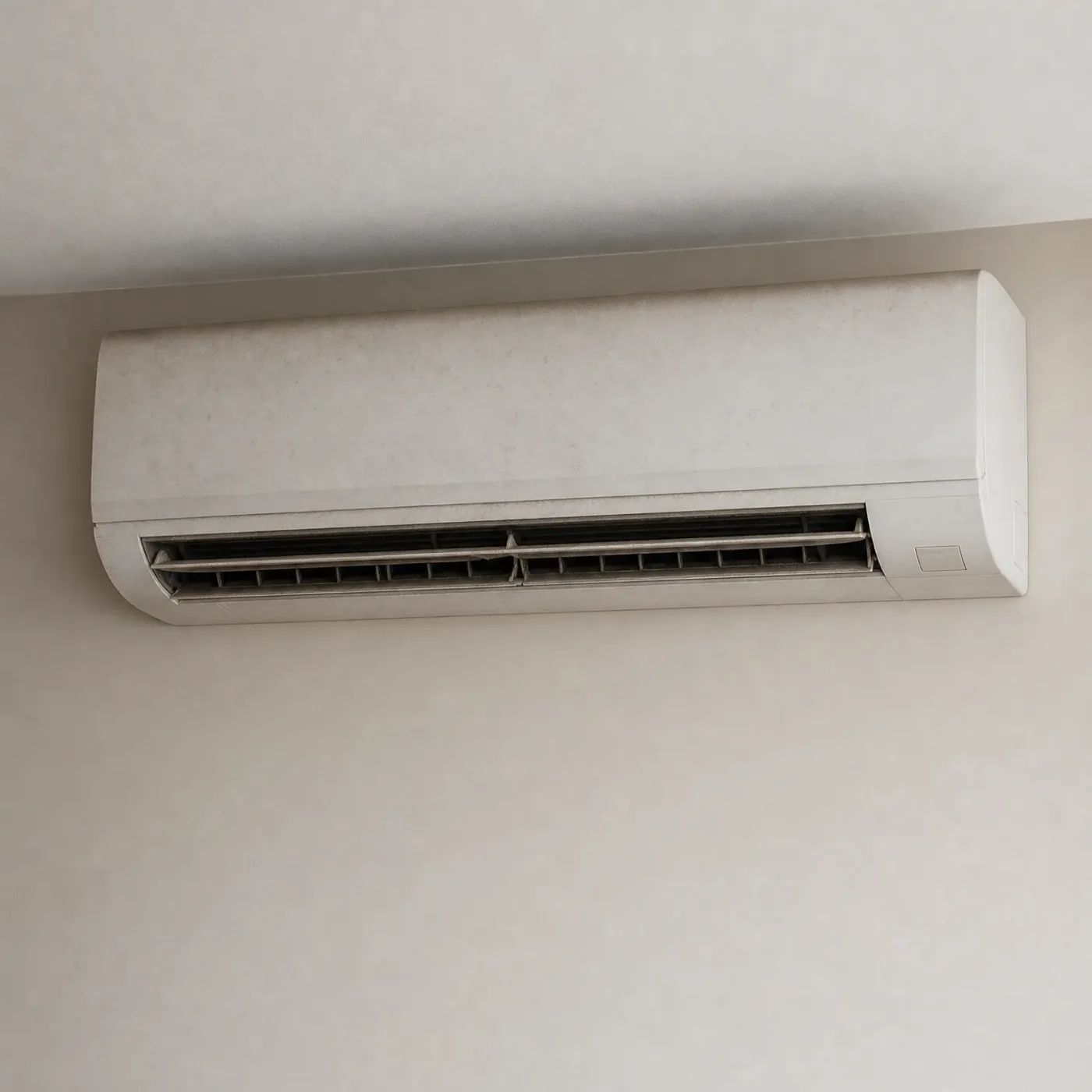
A white wall-mounted mini-split air conditioner indoor unit installed near the ceiling on a plain light-colored wall, with its horizontal outlet vent and louvers visible.

Dust, discoloration, and a unit that's falling behind

The casing and vents on this one show it. Dust cuts airflow before you ever feel it in the room, and a unit that's been running dirty all winter is already costing more to hold the same setting you picked in October.

A closed silver laptop and a ceramic mug of dark coffee sit on a wooden table in front of two chair backs, with a kitchen counter, tiled backsplash, wooden cutting boards, a vase of greenery and a potted plant by a window behind.

68 to 70, held steady, on a system that's clear to do it

That's the setting. A steady 68 to 70 in heat mode, left alone instead of pushed up when a room feels cold. What a maintenance visit buys is the part you can't see from the thermostat: a coil that clears frost fast instead of running long defrost cycles, a filter that isn't choking the airflow, a refrigerant charge that's actually where it should be. Without that, the setting is right but the system can't hold it.

You could spend an evening finding this out on your own, searching for a contractor who actually services mini splits, calling a few, explaining the same thing on the phone three times, waiting for quotes to come back so you can compare them. Or you request the visit here and a local contractor who works on this equipment all winter takes it from there, one call, not five. The setting was always simple. Getting someone qualified to look at the coil before the next cold snap is the part worth not doing yourself.

A living room corner with a beige upholstered armchair holding navy and striped cushions, a small round wooden side table with a carved bowl and a potted green plant, a framed landscape picture on a pale wall, built-in shelving, and a curtained window.
A white wall-mounted mini-split air conditioner on a dark gray interior wall above a gray sofa, with a window and curtain at left, a potted olive-like plant at right, and a black vase and bowl on a table in the foreground.

No phone calls to make

Only one pro gets your request, so you hear from one company.

Step 1 of 3: Equipment