
Ductless New York

Can a mini split be your only heat in New York

Describe your mini split job once, to one pro.

Answer a few questions

Can a mini split be my only heat in New York?

Your mini split keeps the house comfortable most of the year, and you're wondering if it can carry you through a New York winter without a gas furnace backing it up. With power rates here among the highest in the country, you want to know if that's a smart way to heat or a gamble on the coldest nights.

Only if it's a cold-climate model sized for your home, and most homes still keep a backup

A cold-climate mini split can keep heating down into single-digit temperatures, which covers nearly every winter night in New York. Older or standard models lose capacity fast once it drops below freezing, so the unit itself decides whether this works. Most homes here heat with gas, and a lot of mini split installs get added alongside that furnace rather than replacing it, so the furnace covers the few nights a mini split would struggle. Going mini split only means the unit has to be sized and rated for real cold, not just for the mild stretches. Get that wrong and you're running strip heat or backup resistance heat on the coldest nights, which costs far more given what power runs here.
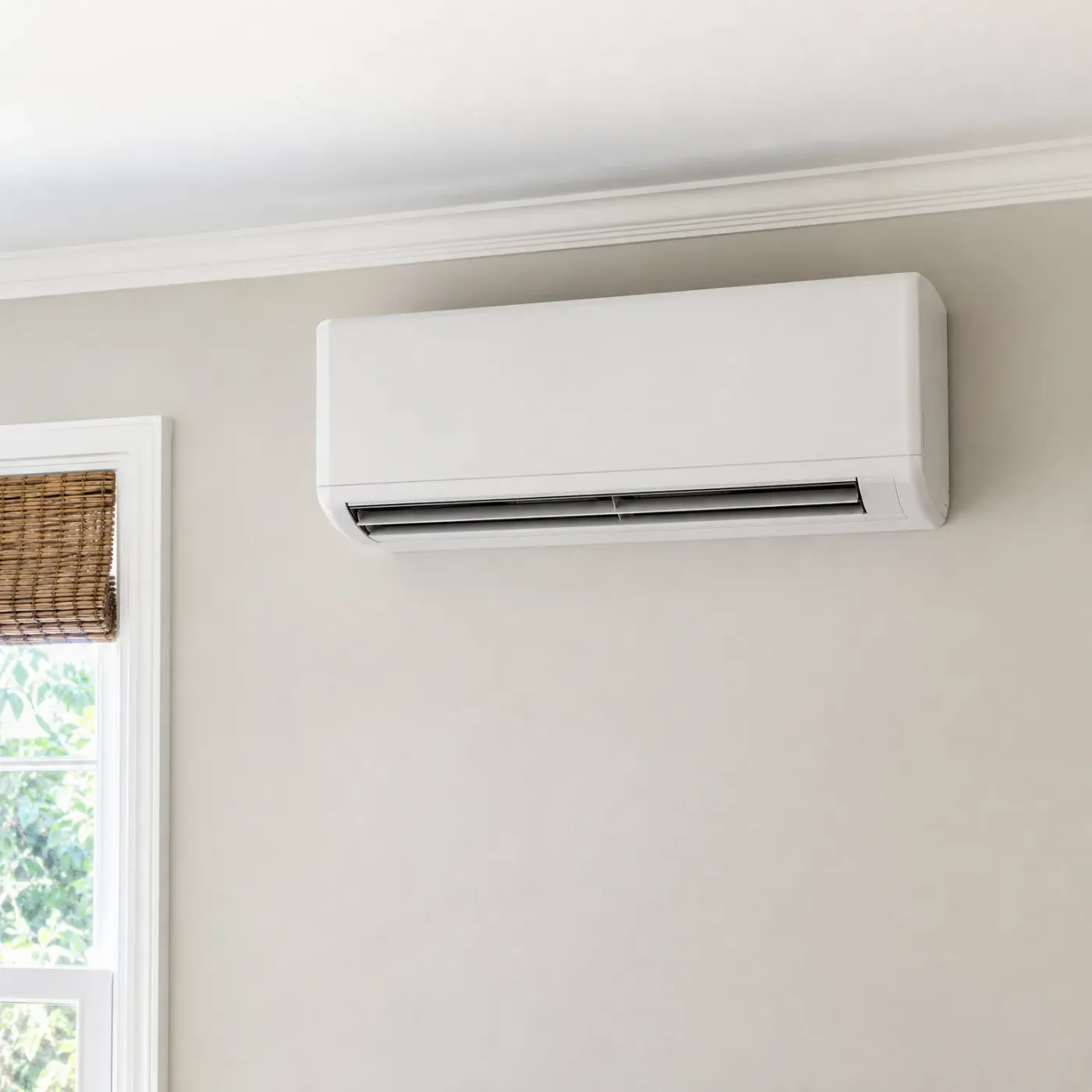
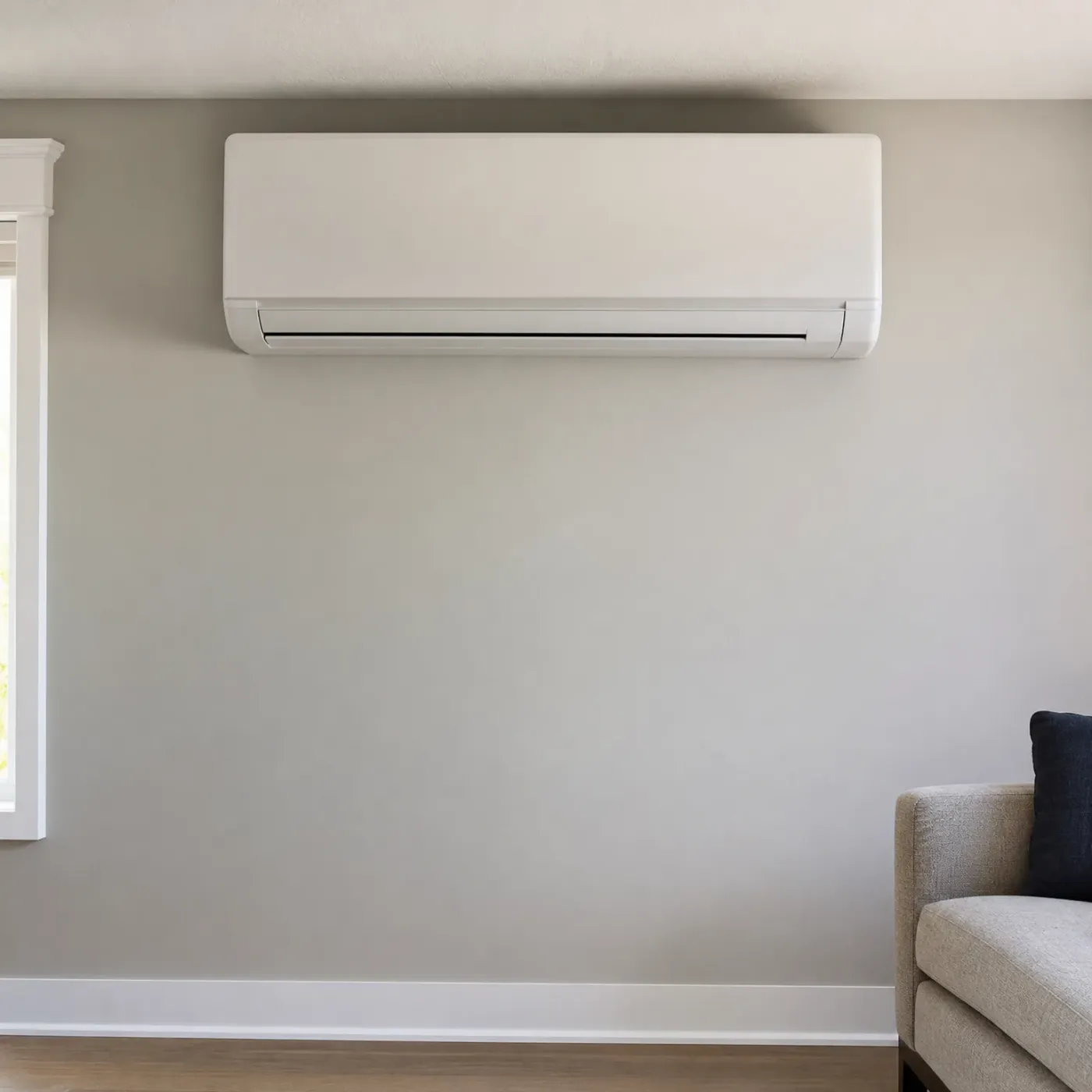
A white wall-mounted mini-split air conditioner unit installed high on a beige interior wall below white crown molding, with a window and woven shade at the left edge showing green foliage outside.

On a mild day, it's all you need

Above freezing, a mini split pulls heat from outside air and puts it into the room for less than a gas furnace would cost to run. Most New York days from fall through spring sit in that range.
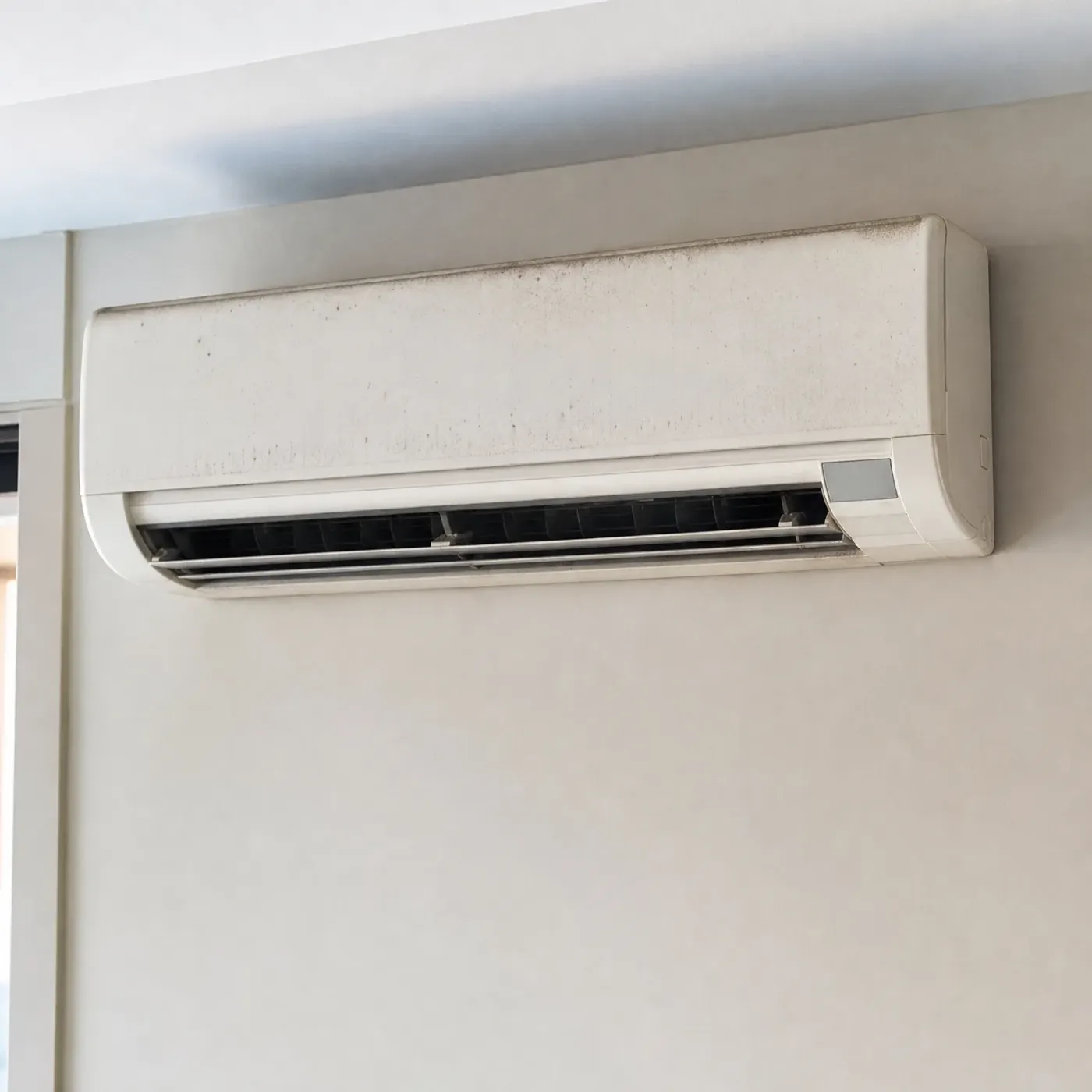
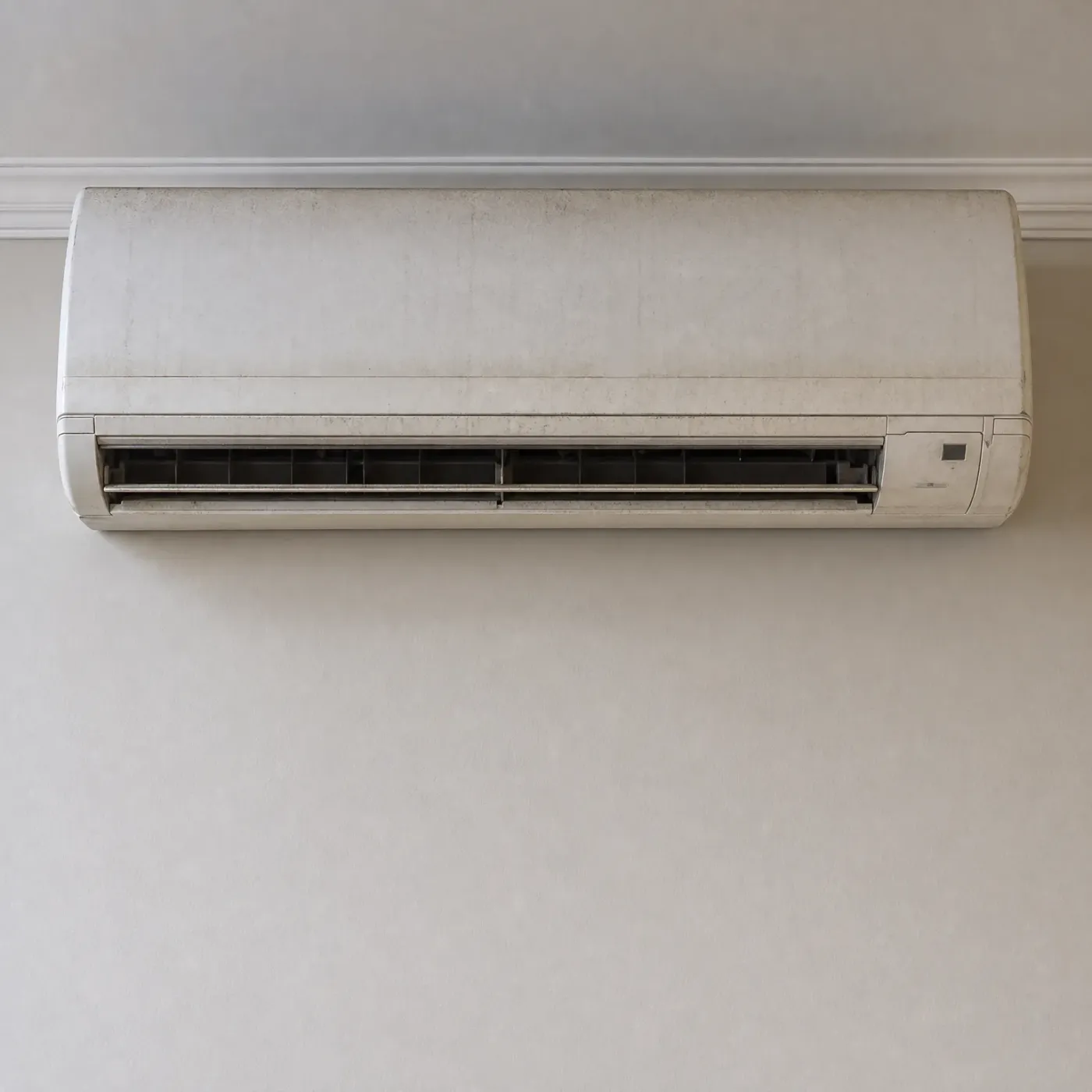
A dusty, stained white wall-mounted mini-split air conditioner indoor unit installed high on a plain off-white interior wall near the ceiling.

Below freezing, it starts losing ground

As the outdoor temperature drops toward zero, the unit has to work harder for less heat, and output falls off. On the coldest nights of a New York winter, it may not keep the room at the temperature you set.


Mini Split Alone or With Gas Backup

Mini split alone

  • Below freezing, output drops and the unit has to run longer to hold the thermostat setting, which shows up on the power bill.
  • At single digits or lower, some units can't keep up and the room temperature starts to slide no matter how long it runs.
  • You're paying electric rates for every degree of heat, and New York's rates are among the highest in the country.
  • A single outdoor unit losing power or freezing up during a cold snap leaves you with no heat at all until it's fixed.
  • There's no gas furnace cycling in to share the load on the coldest nights of the year.

Mini split with gas backup

  • A furnace takes over once outdoor temperatures drop low enough that the mini split can't keep pace on its own.
  • Gas is burned instead of pulled from the outside air, so output doesn't fall off the way it does for the mini split in a deep cold snap.
  • If one system has a problem, the other can still carry the house until it's looked at.
  • Most New York homes already heat with gas, so the furnace and ductwork may already be in place for this to work.
  • The mini split still handles the shoulder months and summer cooling, so it isn't sitting idle the rest of the year.
A smiling woman with long dark hair in a gray sweater sits at a white stone counter with a glass of white wine, with a kitchen, fireplace and sofa visible behind her.
A smiling woman with dark hair in a cream sweater sits at a marble table with a glass of red wine, with a lit lamp, sofa, fireplace and kitchen counter behind her.
A woman in a cream sweater laughs while seated at a marble countertop with a glass of red wine, with a dimly lit living room and sofa behind her.
A woman in a beige turtleneck sweater with her hair up sits laughing and looking to the side at a white marble table with a glass of red wine, in a dimly lit interior with a lamp and seating area behind her.

Is the house actually keeping up on the cold nights

On the nights that drop into the teens or lower, you might notice the room near the unit stays fine but the rest of the house feels off, or the mini split runs almost nonstop and the thermostat still reads a couple degrees low. Some homeowners hear the outdoor unit cycling more than usual, or see frost building up on it that doesn't clear between cycles. None of that means the unit is broken. It means it's working at the edge of what it can do on its own, and with electric rates here among the highest in the country, that stretch of hard running shows up on the bill before it shows up anywhere else.
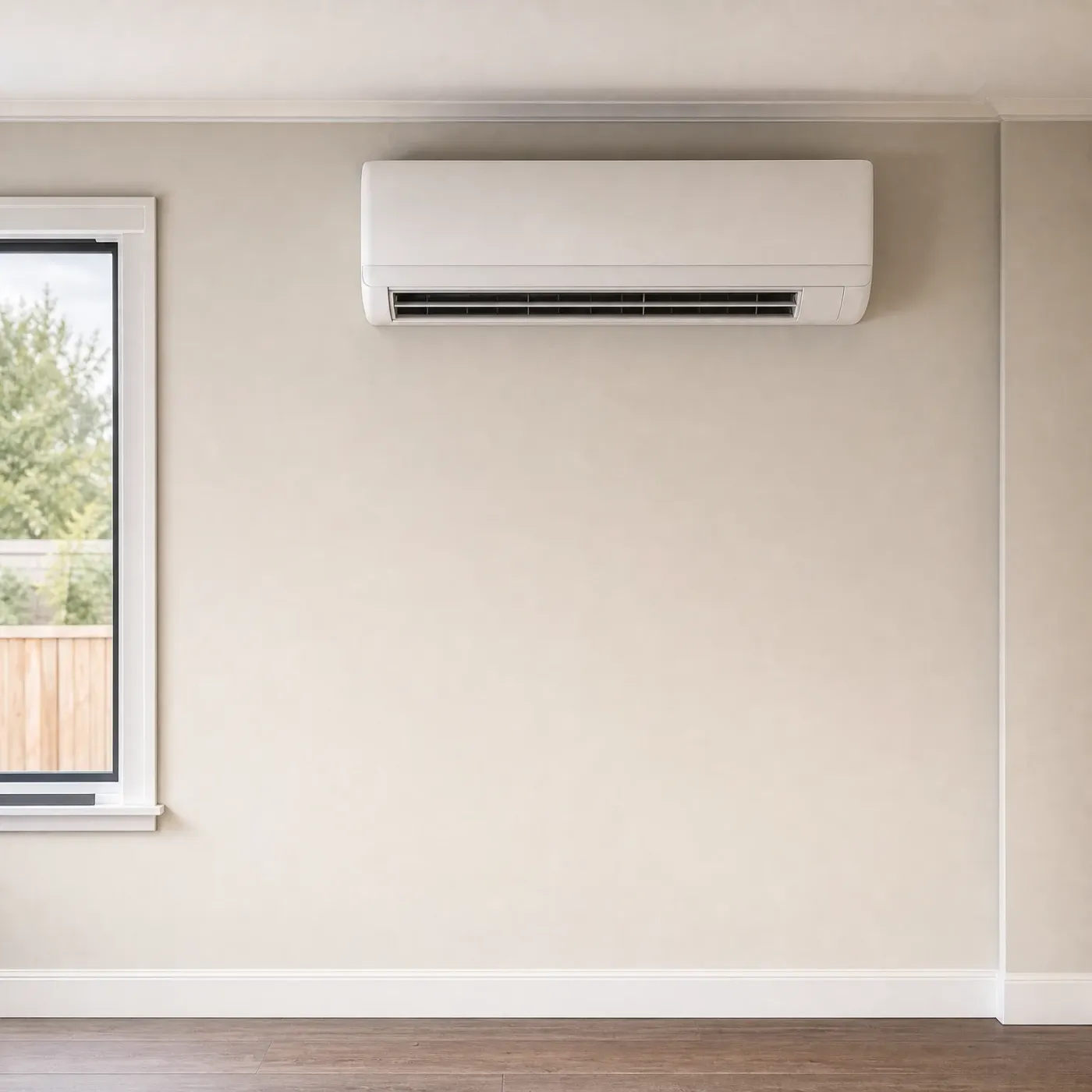
A white wall-mounted mini-split air conditioner on a beige interior wall, with a window at left showing trees and a wooden fence, and dark wood flooring below.

Running clean and quiet

This is the mini split on a normal day, pulling heat out of the air and keeping the room even. No gas smell, no burner cycling on and off, just steady air out of the unit. This is what fall and spring look like, and plenty of winter days too.
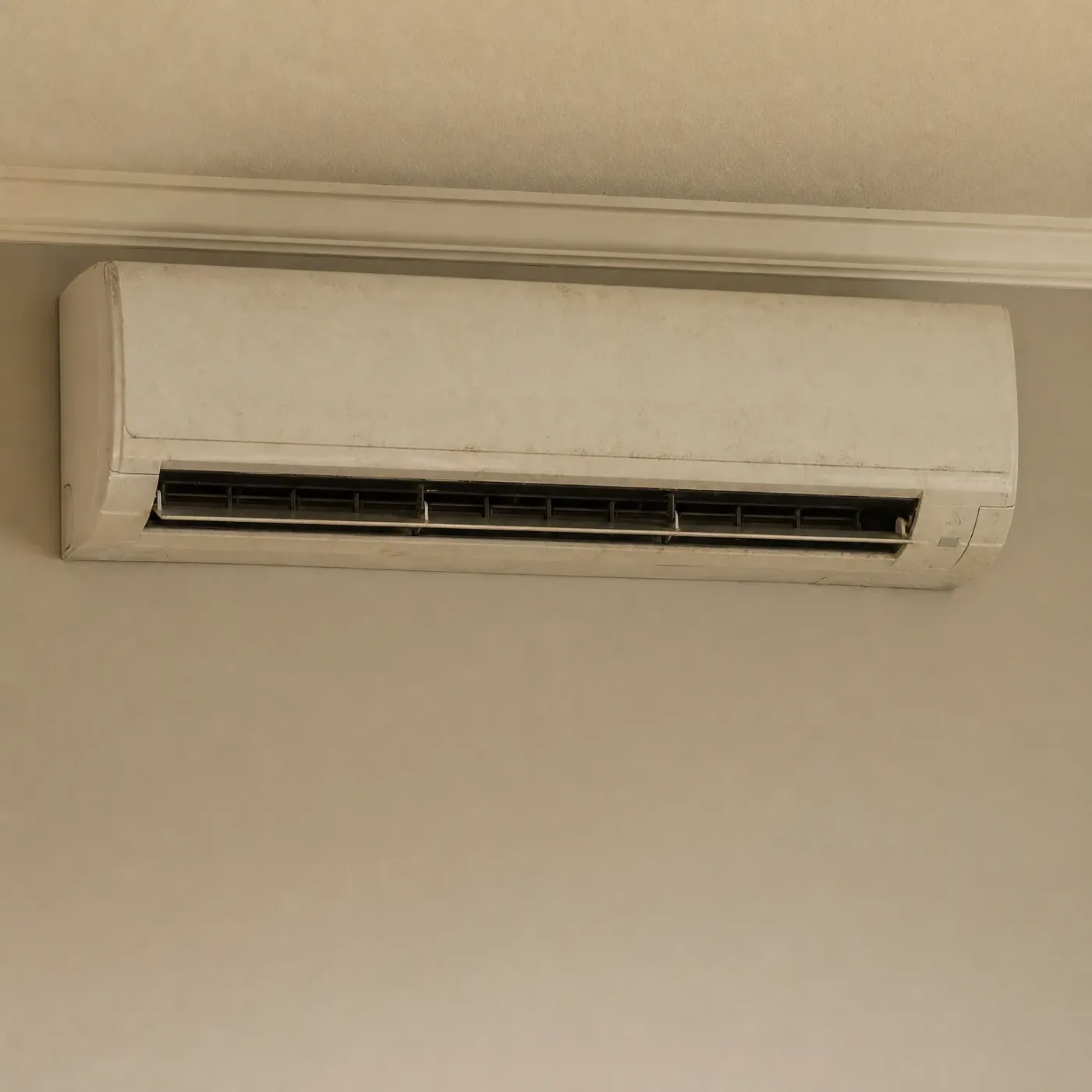
A white wall-mounted mini-split air conditioner indoor unit with dark louvered vents, installed near the ceiling on a beige wall below white crown molding.

Aged, dusty, struggling

Years of use and a dirty coil behind that louvered front cut into what the unit can put out. An older mini split working harder on a cold night is the one that falls behind, running long stretches without catching up. That's the point where a second heat source, or a tune-up, starts to matter.

Power costs 26.39 cents per kilowatt-hour statewide

That rate makes every kilowatt your mini split draws on a cold night more expensive than it would be almost anywhere else. When it has to run long hours to hold temperature in January, you'll feel that on the bill before you feel it in the room.

EIA-861 2025 statewide residential average
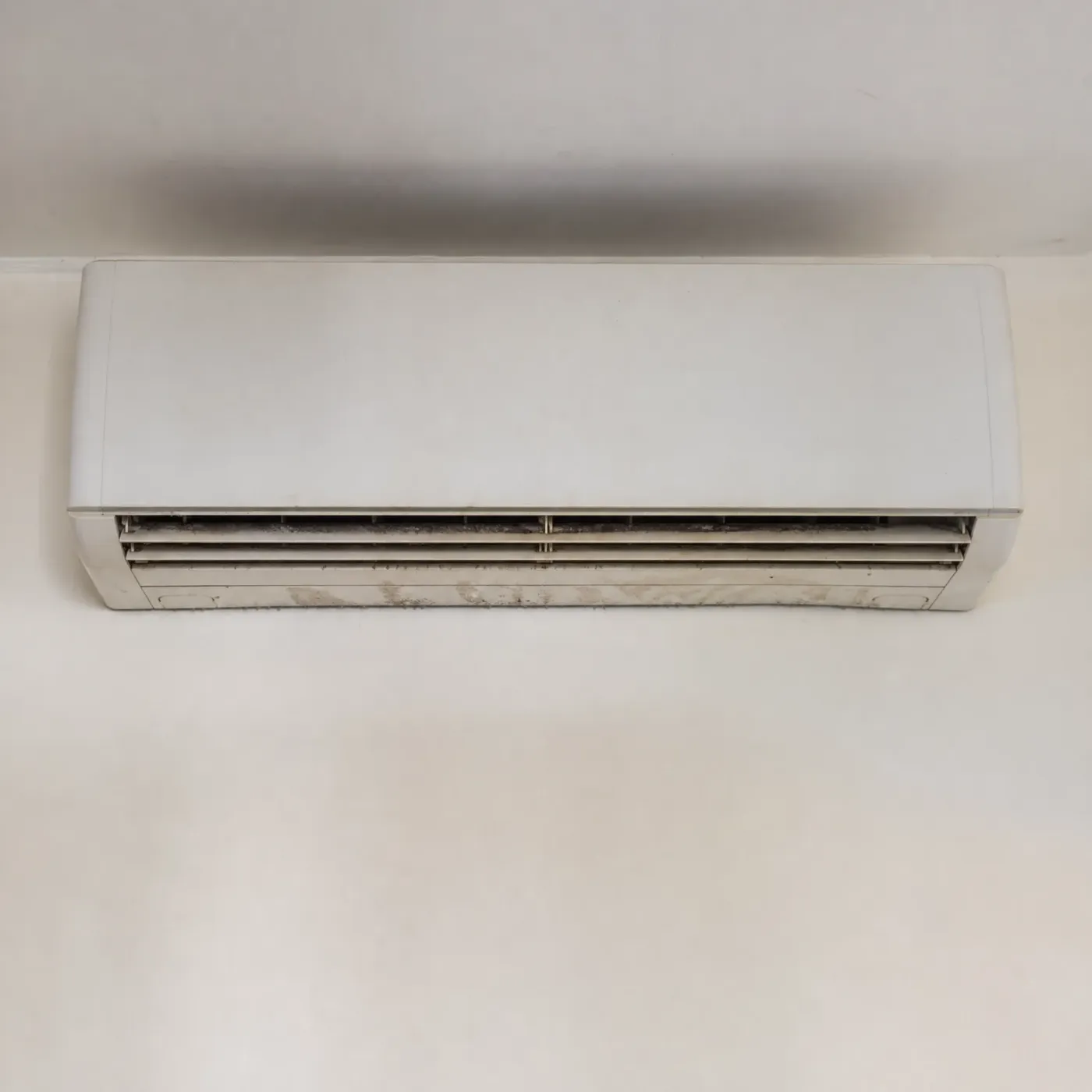
A white wall-mounted mini-split air conditioner indoor unit with visible dust and staining along its lower vent, installed on a plain pale wall.
Before you get your mini split installation
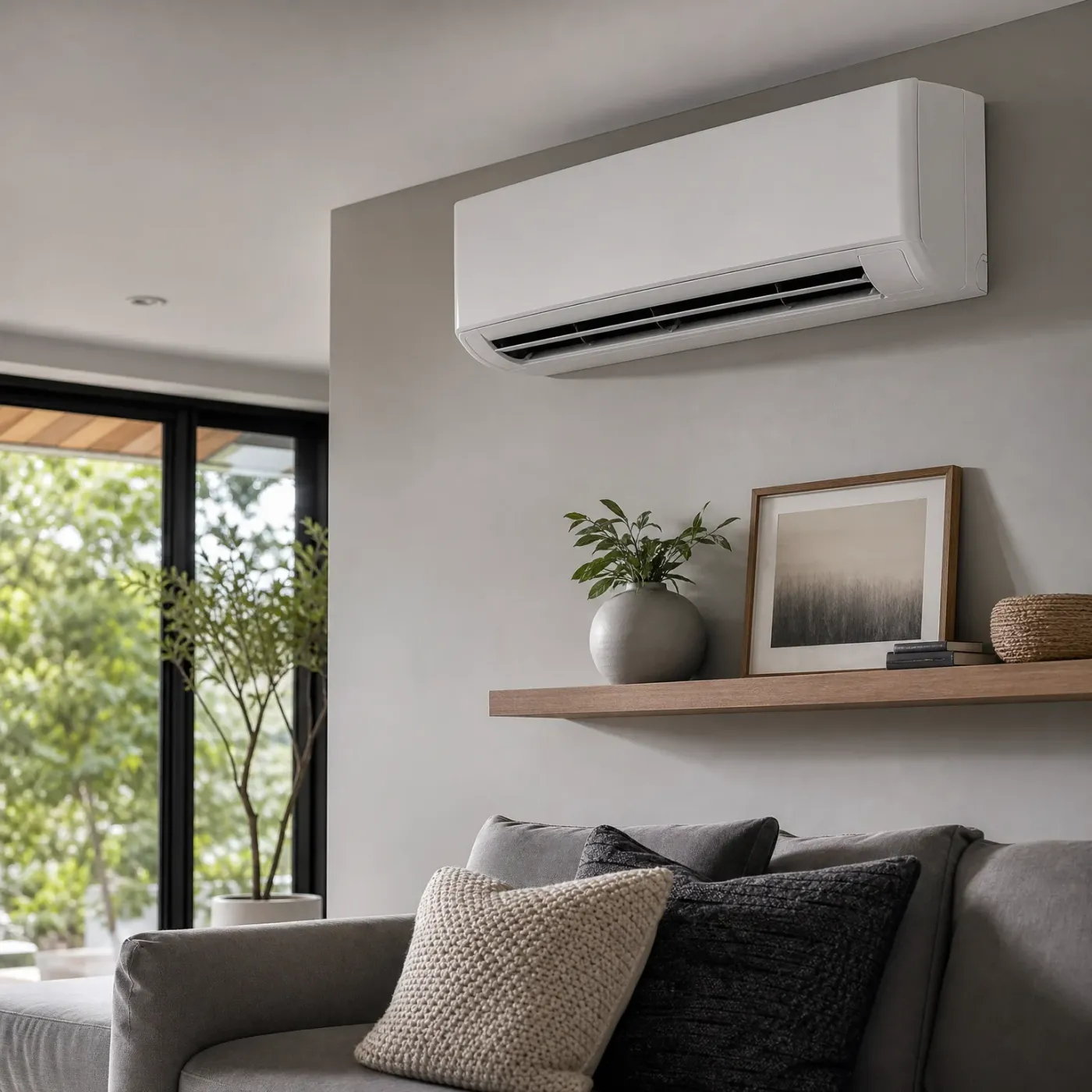
A white wall-mounted mini-split indoor unit installed high on a gray interior wall, with a window at left and part of a light gray sofa with a dark cushion at lower right.
After you get your mini split installation

Most cold-climate mini splits list their rated output at 5 degrees Fahrenheit, and that number is lower than what the unit puts out at 35 or 40 degrees.

That drop is built into the equipment, not a sign anything's wrong with it. A furnace backing it up on the coldest nights isn't a workaround, it's how the system was sized to work.


A bearded man in a dark navy sweater over a collared shirt smiles and looks off to the side while seated at a dinner table with a glass of red wine, a lit candle, and a plate of food in the foreground of a dimly lit room.
A woman in a dark gray sweater reclines on a couch with her eyes closed and a knit blanket over her lap, an open book resting face-down in front of her, with a lit table lamp and shelving blurred in the background.
A white wall-mounted mini-split air conditioner near the ceiling of a living room with a gray sofa, knit cushions, a wooden floating shelf holding a plant in a round vase, a framed print and a woven basket, and a large window showing green trees.

No quotes to chase

One installer gets your project, so there's no bidding war over it.

Skip collecting and comparing quotes for the new mini split.

Describe it once

There's no charge for the request.

A closed silver laptop and a glazed ceramic mug on a wooden table, with a blurred kitchen counter, potted plant, cutting board and window in the background.

What's actually happening inside the unit when it gets cold

A mini split moves heat, it doesn't burn fuel to make it. The outdoor unit runs refrigerant through a coil, pulls whatever heat is in the outside air, and the compressor concentrates it enough to release inside through the indoor head. Cold-climate models add a stronger compressor and a larger outdoor coil so there's still heat to grab at low temperatures, plus a defrost cycle that melts off the frost that builds on that coil below freezing. During defrost the unit pauses heating for a few minutes, which is normal and not a malfunction.

That defrost cycle, how low the compressor can still pull heat, and whether the sizing accounts for a gas backup on the coldest nights, are the kind of details that separate installers who work on cold-climate systems every winter from ones who mostly do summer AC swaps. Finding that out usually means calling around, asking each company the same questions about backup heat and sizing, and sorting through quotes that don't match up. A local contractor who installs mini splits in New York winters already knows which models hold their rated output here and how to size one against your gas furnace, so you're asking those questions once instead of five times.


Interior corner of a dining room with a round wooden table, a ceramic vase holding olive branches, a dark spindle-back chair near a curtained window, and a sideboard with a lamp against beige walls.
A single-story house with light gray horizontal siding, dark gray shingled gables, black shutters and a dark front door, fronted by a mulched bed of small shrubs and a large lawn under a clear blue sky.

New York summers run sticky, and the number behind that is a dew point averaging 62°F across June, July and August, according to NOAA climate data. That's the humidity your mini split has to wring out of the air, not just the heat. On the muggiest afternoons it'll run longer than the thermostat setting alone would suggest, because it's pulling moisture out along with lowering the temperature. You'll notice it in how the house feels rather than what the number says: air that sits dry and even instead of cool but damp, especially in rooms farther from the indoor unit.

NASA POWER T2MDEW county cells weighted by homes
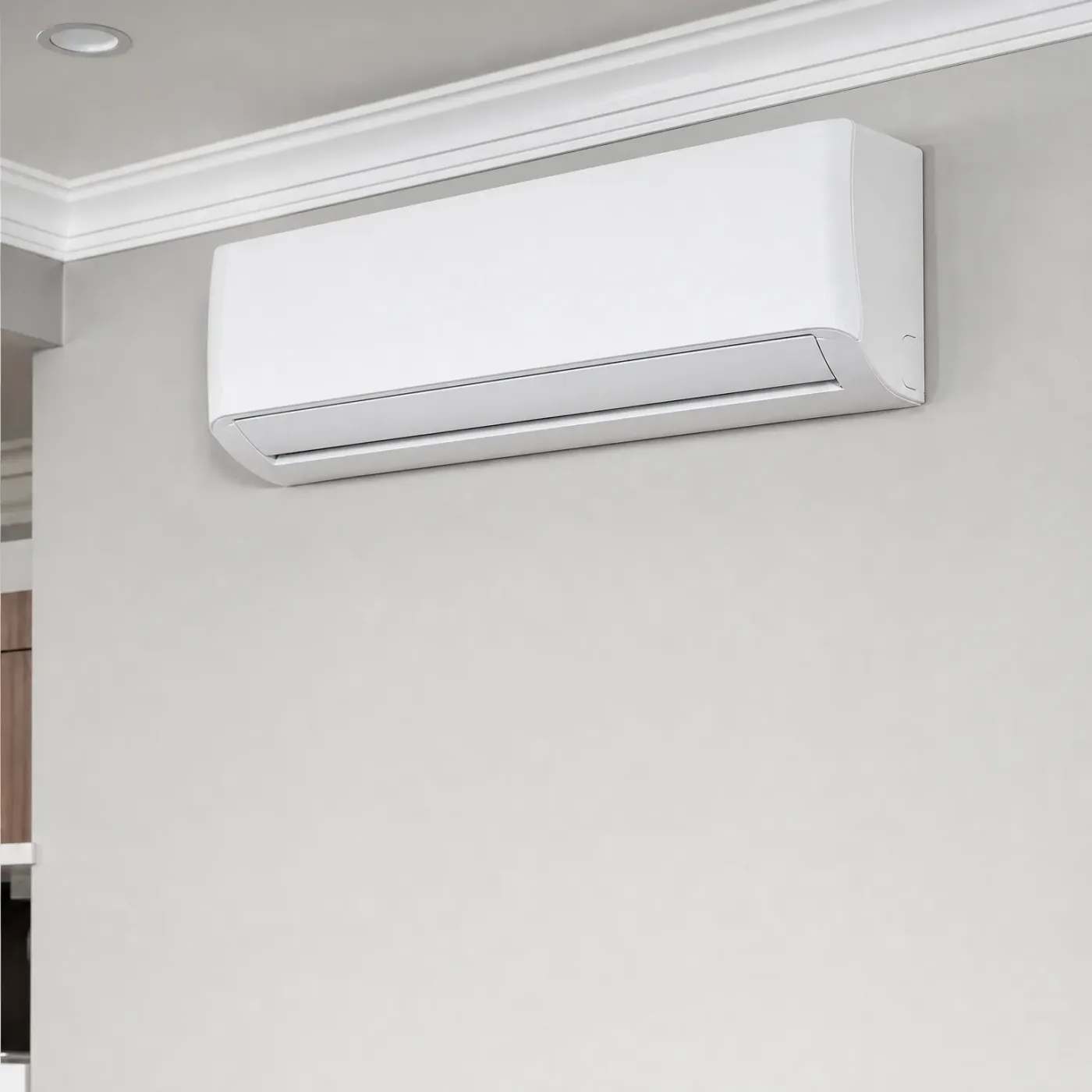
A white wall-mounted mini-split air conditioner installed high on a light gray interior wall below a white crown molding and ceiling with a recessed light.
A clean filter and a clear outdoor coil mean the unit is pulling full capacity out of every degree of outside air.
A dusty, discolored white wall-mounted mini-split air conditioner unit installed on a plain beige interior wall below a molding strip.
Dust and grime on the casing often mean the same buildup inside, and a unit working that hard loses capacity right when you need it most.
  1. Refrigerant inside the outdoor coil absorbs heat from the outside air.

  2. The compressor squeezes that refrigerant, raising its temperature further.

  3. Hot refrigerant travels through the line set into the indoor unit.

  4. The indoor coil releases that heat, and the fan pushes warm air into the room.

So the honest answer is that your mini split can handle most of a New York winter on its own, but below freezing it needs help, and on the coldest nights it needs a backup source of heat to keep the whole house even. Whether that backup is worth adding depends on how your particular unit is rated, how your house holds heat, and what you're paying per kilowatt hour right now. That's a judgment call specific to your house, not a general rule, and it's worth having someone look at the actual equipment before you decide anything. A contractor who installs and services mini splits in New York through the cold months has seen which models hold up at single digits and which ones start to slide, and what a backup setup looks like in a house like yours. You'd be talking to one local contractor who already knows this equipment in this climate, not fielding calls from five companies and explaining your situation over and over. They can look at what you have and tell you straight whether it's enough or whether it needs backup.

A modern two-story house with dark siding and stone base at dusk, with lit soffit lights, a path of large rectangular pavers set in dark gravel, planting beds, a lawn, and an orange and blue sunset sky above distant trees and water.

Mini Split Installation

Skip the calls to every shop

Step 1 of 3: Equipment
  • A dimly lit living room corner with a beige upholstered sofa holding a dark green cushion and a chunky knit throw, beside a wooden sideboard with a lit ceramic table lamp, a small potted plant, and a wooden bowl, with a framed artwork on the wall and a mug on a book in the foreground.
    • A local installer who puts in mini splits gets your project.
    • Get in touch with a local installer about a new mini split.
  • A round wooden coffee table holding a round stone vase of green foliage, a lit candle in a glass container, and a small dark bowl, with a beige sofa, cushions and knit throw behind and a window at left.
    • After you send the request, you're done searching.
    • Send the form and the search for an installer is over.
  • Sunlit living room with a wooden coffee table holding a ceramic vase of leafy branches and a carved wooden tray with two stacked books, in front of a beige sofa with tan and green cushions and a potted plant near a window.
    • Explain the job once and skip repeating it on every call.
    • Skip searching for a mini split pro and answer a few questions instead.
  • Interior corner with a lit ceramic table lamp and wooden bowl on a wood sideboard, a framed picture and branch-filled vase behind, a knit throw over an upholstered chair, and a lit candle in a glass holder, stoneware mug and round planter of green foliage on a wooden table in the foreground.
    • Your request stays with one local pro.
    • Your request goes to one pro, not a list of companies.