Tell us about the job
Takes about a minute. No obligation.
Sizing a mini-split here starts with what the compressor is being asked to do during the warmest months of the year. Homes in New York County, NY run cooling about three months a year, from June through August. That compressor runs and stops repeatedly across a concentrated stretch, and the contactor and condenser fan take the same load each cycle. A contractor quoting an install in this county calculates the actual heat load of the space before selecting capacity, because a unit that cannot keep pace during peak heat runs at high duty the entire season. That sustained cycling is where undersized equipment fails first.
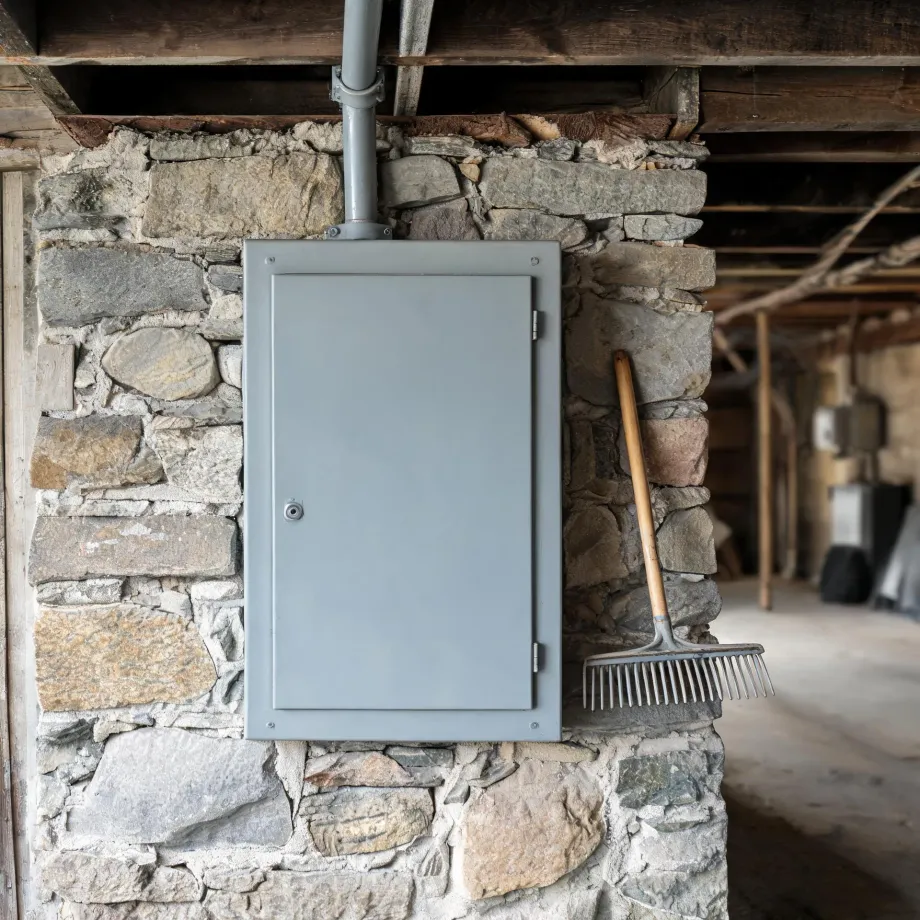
Electrical service in prewar construction was sized for what prewar households ran, and a mini-split's draw can push a panel that was never upgraded past what it was designed to handle. Half the homes in New York County, New York were built in 1951 or earlier (2020-2024 ACS 5-year). A contractor pricing a mini-split installation here looks at the panel before settling on anything else, because an undersized or unmodified panel changes the scope and the cost of the job before the unit is even ordered.
What a Mini-split Installation Puts in Your Home
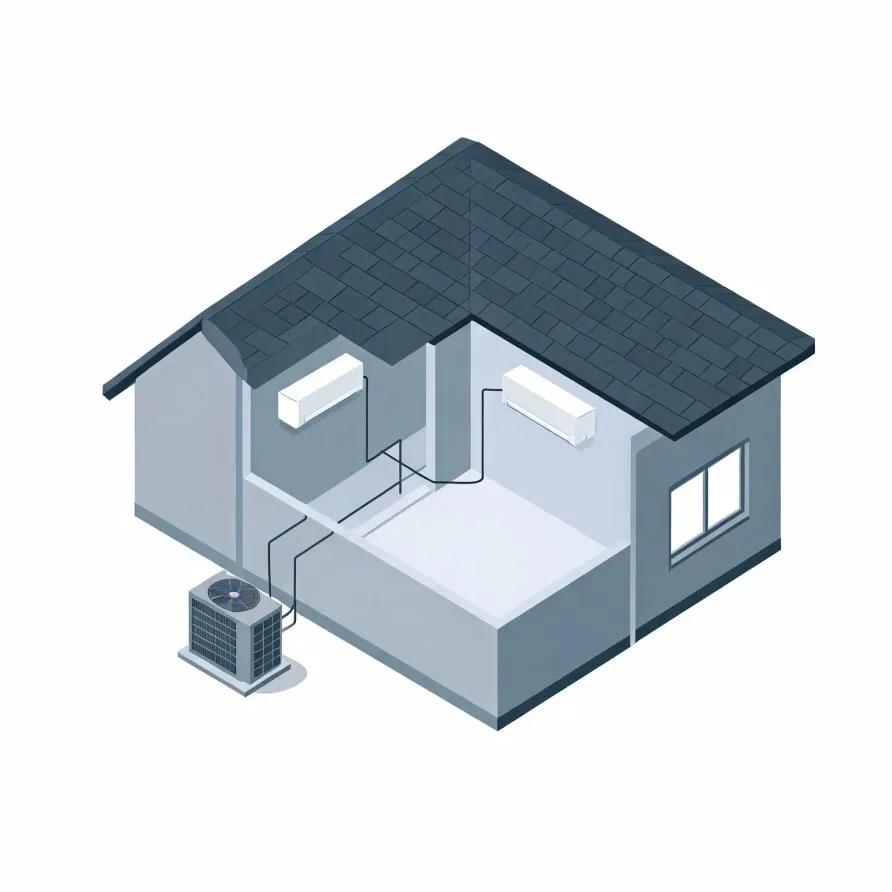
The indoor air handler mounts high on an interior wall of the room being served, and that is the piece a homeowner sees every day. A contractor fixes it to a wall bracket, connects it to refrigerant lines, and sets the drain line so condensate runs clear of the room. Each zone in the house gets its own unit.
The outdoor condenser sits on a pad or bracket outside the building and houses the compressor and the main coil. A sleeve of refrigerant lines, a condensate drain, and a power cable run through a small hole in the wall to connect the two units. A remote or wall control goes in wherever the homeowner wants it.
The drawing shows the general layout of a mini-split system, and a licensed contractor determines exactly what applies to your house and how each piece is positioned.
Get matched in New York CountyNew York County, by the numbers
52 severe weather events were recorded in New York County, New York between 2015 and 2024.
NOAA National Centers for Environmental Information, Storm Events Database, bulk CSV export, events 2015-01-01 through 2024-12-31.Half the homes in New York County, New York were built in 1951 or earlier (2020-2024 ACS 5-year).
U.S. Census Bureau, 2020-2024 American Community Survey 5-Year EstimatesNew York County, New York holds 923,472 housing units (2020-2024 ACS 5-year).
U.S. Census Bureau, 2020-2024 American Community Survey 5-Year EstimatesOwners occupy 25.1% of the occupied homes in New York County, New York (2020-2024 ACS 5-year).
U.S. Census Bureau, 2020-2024 American Community Survey 5-Year EstimatesSevere Weather Events in New York County
Heating and cooling equipment in New York County works against whatever the local climate delivers, and storm load is part of that picture. How hard a system has to work, and how reliably it needs to hold up, depends on what the weather here actually does.
52 severe weather events, 2015–2024. Source: NOAA National Centers for Environmental Information, Storm Events Database.