Tell us about the job
Takes about a minute. No obligation.
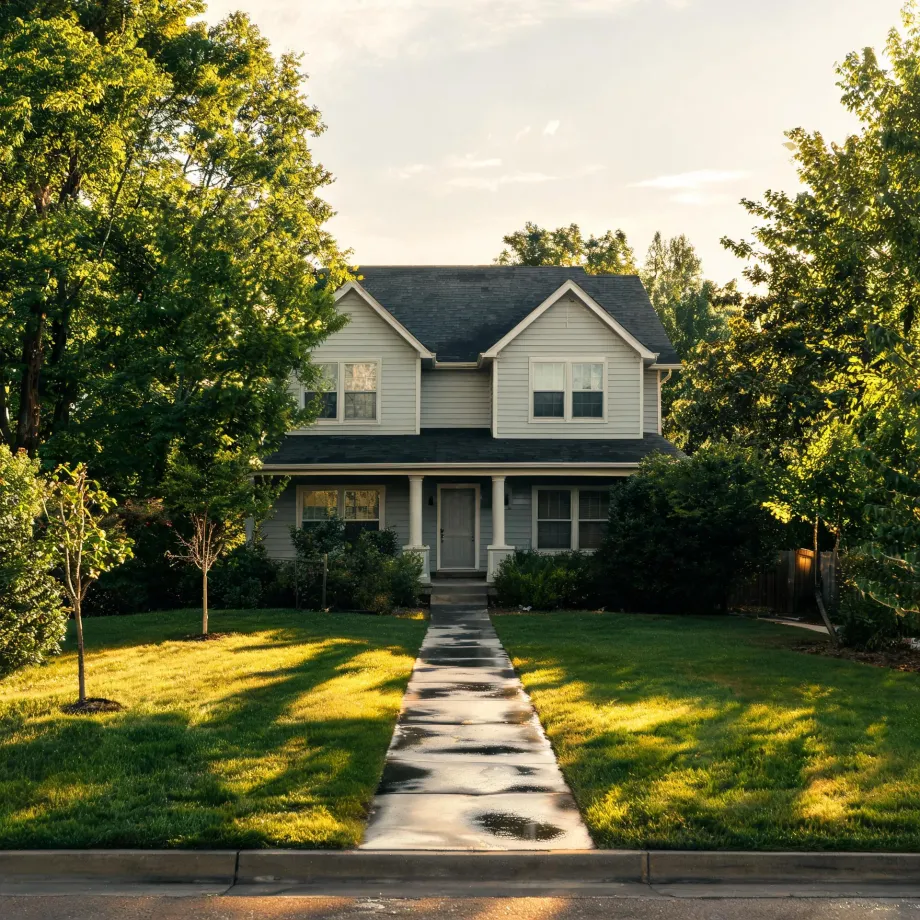
For a mini-split installation in Sullivan County, the heating load is the whole question. Homes in Sullivan County, NY have essentially no cooling season — no month of the year is warm enough to call for it. That means the compressor and heat exchanger are sized, tested, and commissioned entirely around heating demand. A contractor quoting the job here cannot split attention between a cooling load and a heating load and price accordingly. The outdoor unit's rated capacity at low ambient temperatures, and whether a backup heat source is needed, are the decisions that determine whether the system will hold on a hard January night.
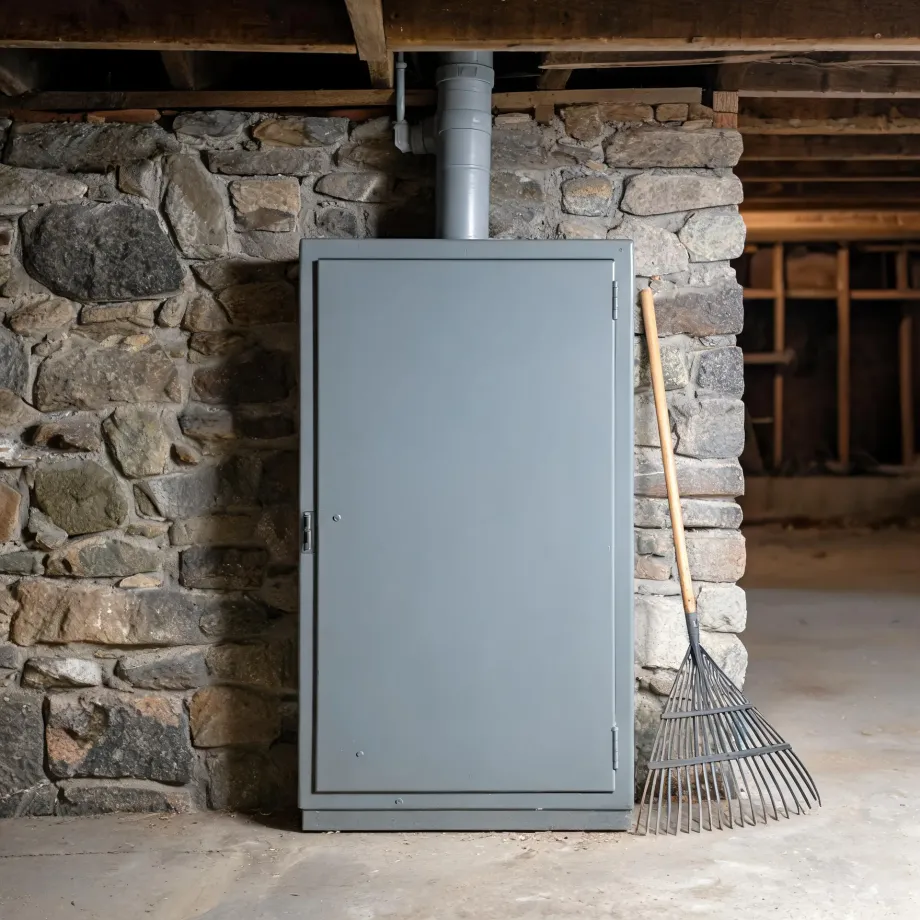
Older electrical panels are where mini-split installation in Sullivan County runs into its first real constraint. Half the homes in Sullivan County, New York were built in 1974 or earlier (2020-2024 ACS 5-year). A house of that vintage was wired for a load profile that predates modern HVAC equipment, and the service panel a contractor finds behind the drywall often reflects that original sizing. If the draw a new mini-split unit requires exceeds what that panel can cleanly supply, the electrical work becomes part of the job before the unit ever goes up.
What a Mini-split Installation Puts in Your Home
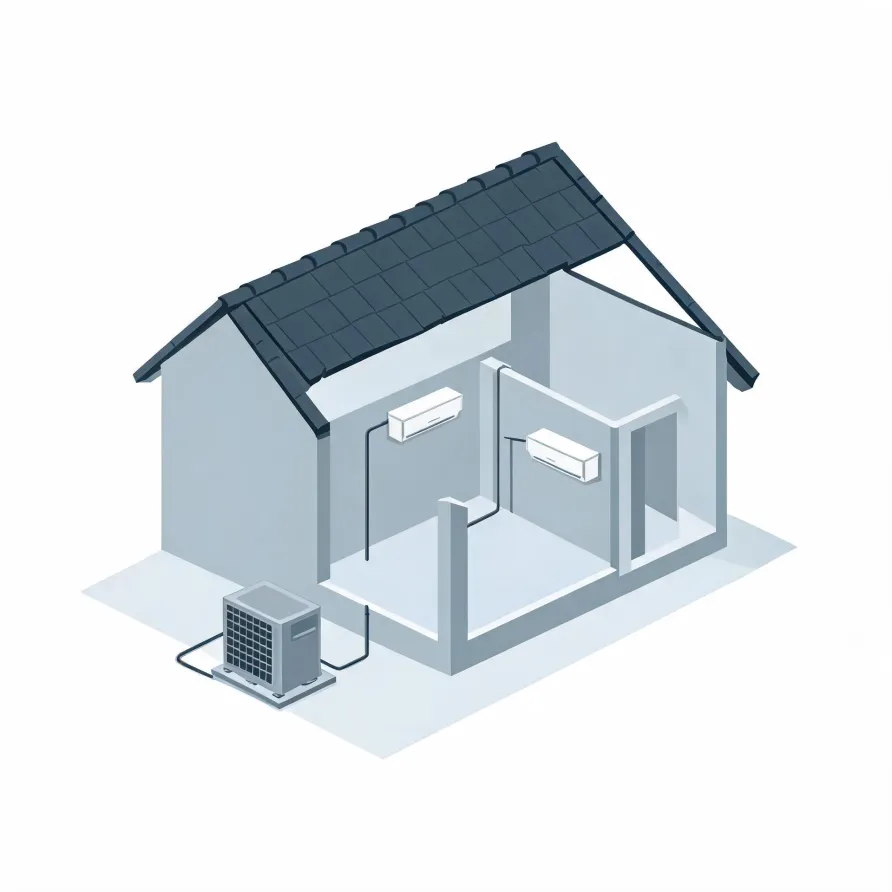
The indoor air handler mounts high on a wall inside the room being served, pulling room air across its coil and sending conditioned air back out. The outdoor condensing unit sits on the ground or on a bracket outside the house, housing the compressor and the coil that exchanges heat with the outside air.
A refrigerant line set runs through a small hole in the wall to connect the two units, carrying refrigerant between them. A condensate drain line runs from the indoor head to the outside, and a dedicated electrical line feeds the outdoor unit.
The drawing shows a typical layout, and a licensed contractor determines exactly how the system comes together in your home.
Get matched in Sullivan CountySullivan County, by the numbers
185 severe weather events were recorded in Sullivan County, New York between 2015 and 2024.
NOAA National Centers for Environmental Information, Storm Events Database, bulk CSV export, events 2015-01-01 through 2024-12-31.Half the homes in Sullivan County, New York were built in 1974 or earlier (2020-2024 ACS 5-year).
U.S. Census Bureau, 2020-2024 American Community Survey 5-Year EstimatesSullivan County, New York holds 49,994 housing units (2020-2024 ACS 5-year).
U.S. Census Bureau, 2020-2024 American Community Survey 5-Year EstimatesOwners occupy 67.4% of the occupied homes in Sullivan County, New York (2020-2024 ACS 5-year).
U.S. Census Bureau, 2020-2024 American Community Survey 5-Year EstimatesSevere Weather Events in Sullivan County
Heating and cooling loads are shaped by what the weather actually does in a given place. A mini-split sized and installed for local conditions handles that pressure better than one spec'd to a generic climate.
185 severe weather events, 2015–2024. Source: NOAA National Centers for Environmental Information, Storm Events Database.