Tell us about the job
Takes about a minute. No obligation.
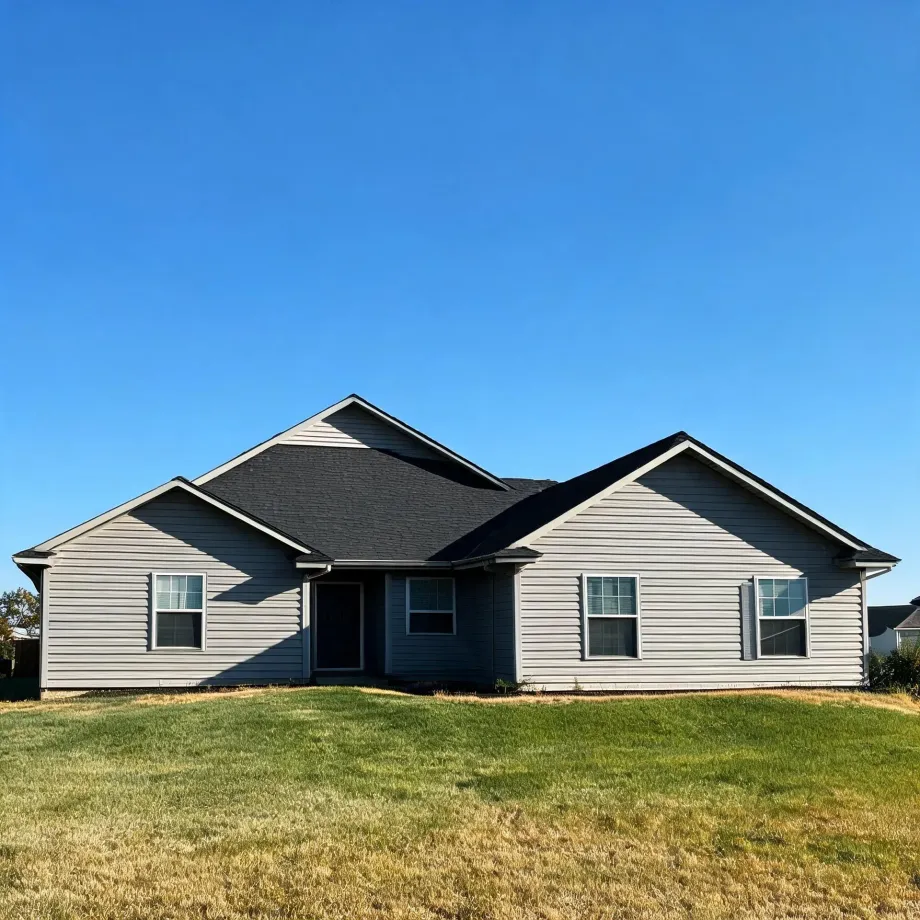
A contractor sizing a mini-split here works from a single season's demand. Homes in Clinton County, NY have essentially no cooling season — no month of the year is warm enough to call for it. That means the compressor, the refrigerant circuit, and the outdoor unit are chosen and charged around heating performance alone, with nothing borrowed from a cooling requirement that does not exist. An undersized system finds no relief in summer shoulder months, because there are none. Commissioning in this climate is a test of heating capacity, full stop, and a contractor who treats it as anything broader is quoting for a different county.
Electrical service in much of this county's housing was sized for a world of resistive heat and window units, and a mini-split runs on a different load profile entirely. Half the homes in Clinton County, New York were built in 1974 or earlier (2020-2024 ACS 5-year). A contractor scoping that work has to look at the panel and the branch circuits before the equipment choice means anything. If the service needs an upgrade, that becomes the first line of the quote, and it shapes everything priced after it.
What a Mini-split Installation Covers
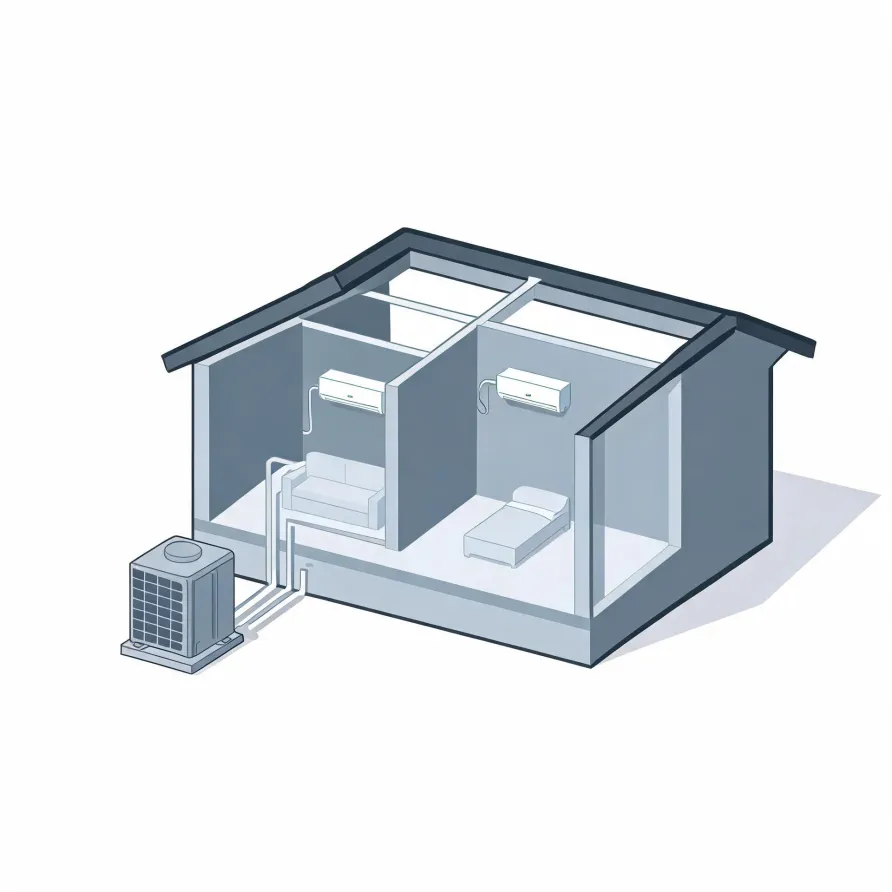
The indoor air handler mounts high on a wall inside the room being served, which is where conditioned air enters the space. The outdoor condenser unit sits outside the house, usually on a pad or bracket at ground level or on an exterior wall. Together these two units make up the core of what gets placed during an installation.
A refrigerant line set runs through a small penetration in the wall to connect the indoor and outdoor units, and a condensate drain line carries moisture away from the air handler to a suitable discharge point. A dedicated disconnect and control wiring also run between the units as part of the same installation.
The drawing shows a representative layout, and a licensed contractor determines exactly how those components are positioned and routed for your specific home.
Get matched in Clinton CountyClinton County, by the numbers
133 severe weather events were recorded in Clinton County, New York between 2015 and 2024.
NOAA National Centers for Environmental Information, Storm Events Database, bulk CSV export, events 2015-01-01 through 2024-12-31.Half the homes in Clinton County, New York were built in 1974 or earlier (2020-2024 ACS 5-year).
U.S. Census Bureau, 2020-2024 American Community Survey 5-Year EstimatesClinton County, New York holds 37,658 housing units (2020-2024 ACS 5-year).
U.S. Census Bureau, 2020-2024 American Community Survey 5-Year EstimatesOwners occupy 69.4% of the occupied homes in Clinton County, New York (2020-2024 ACS 5-year).
U.S. Census Bureau, 2020-2024 American Community Survey 5-Year EstimatesSevere Weather Events in Clinton County
Heating and cooling equipment in Clinton County carries a workload shaped by local conditions, and extreme weather is part of that load. A mini-split sized and installed for this climate handles real-world pressure that regional averages alone do not capture.
133 severe weather events, 2015–2024. Source: NOAA National Centers for Environmental Information, Storm Events Database.