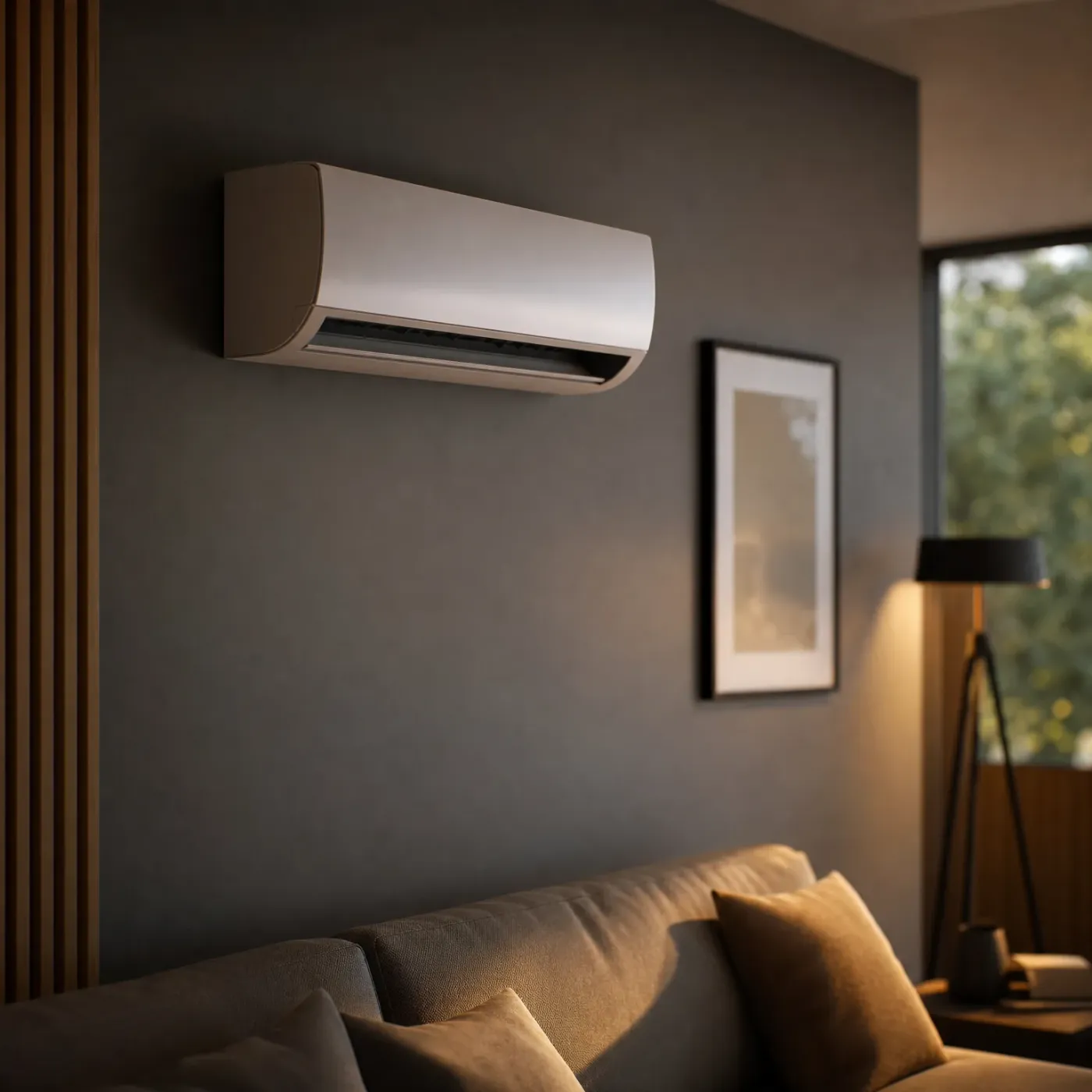






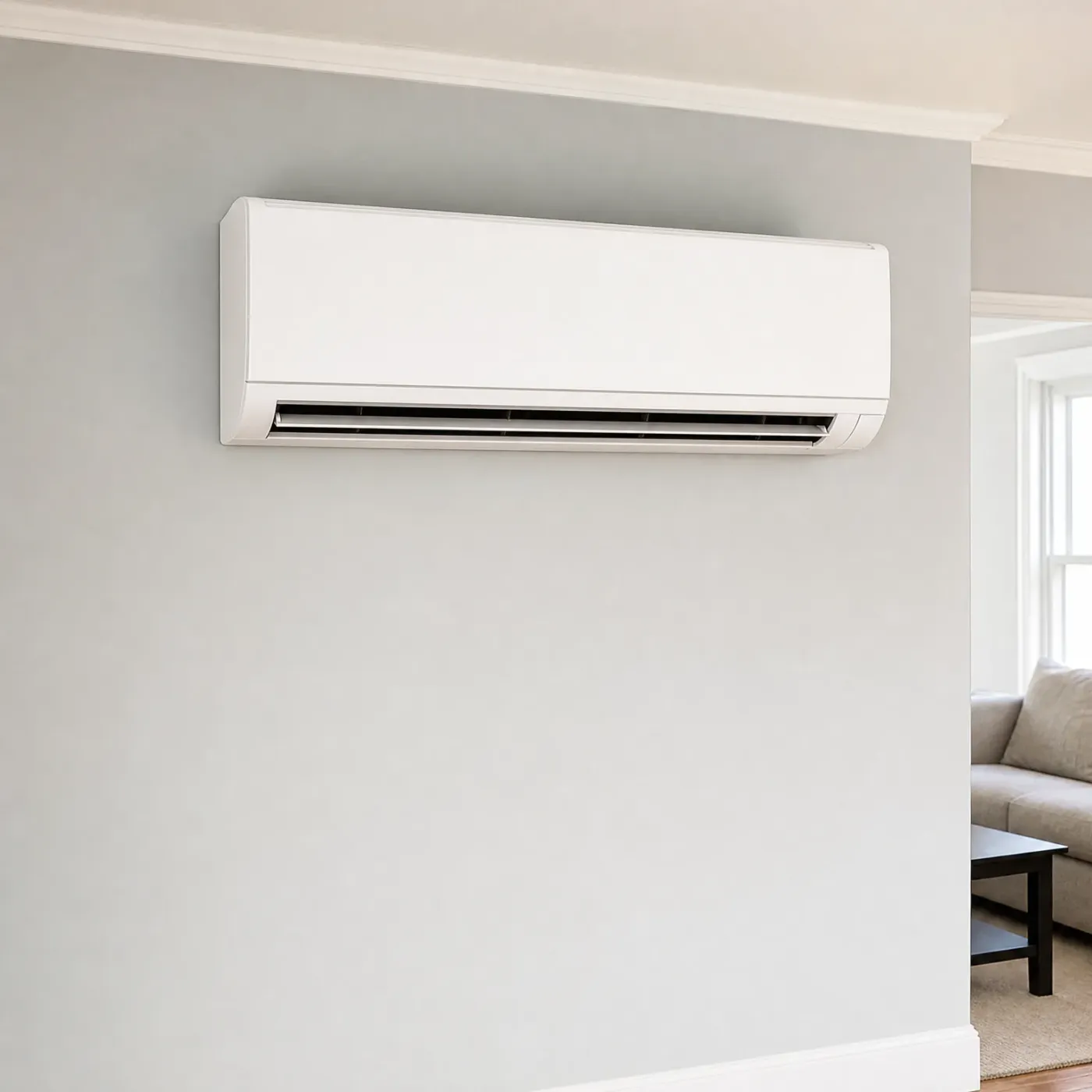

A white wall-mounted mini-split indoor unit on a gray interior wall above a beige sofa, with a framed picture, a floor lamp, wood slat wall trim, and a window showing green foliage.

The right pro for this job

What defrost mode means on a New York mini split

Your mini split goes into defrost mode on its own in cold weather, and for a minute or two it stops heating and may blow cool air, even run its outdoor fan backward or show steam. That's what this page gets into: why it happens, how long it should last, and when it means something's wrong. If yours is stuck in it, get matched with a contractor who can take a look.

Find my pro

Defrost mode is your mini split melting off the ice that builds on its outdoor unit when it's cold outside. The outdoor coil runs colder than the air around it, so in New York winters, moisture in the air lands on it as frost, the same way frost forms on a car windshield overnight. Once that frost gets thick enough, it blocks airflow through the coil and the unit can't pull in heat anymore. So the system reverses itself for a few minutes, sends warm refrigerant out to the coil to melt the frost, and that's why the indoor head blows cool air or stops blowing at all during that stretch. It should end on its own, usually within ten minutes, and the unit goes back to heating normally. If it keeps going longer than that, or your house never warms back up after, something in the system isn't resetting the way it should.

A bearded man in a plaid flannel shirt stands in a kitchen looking out a window toward snow-covered shrubs, with a steaming mug on the windowsill and potted plants on a shelf behind him.
A smiling man with dark curly hair in a navy t-shirt sits on a gray couch indoors, with a large-leafed plant and a window in the background.

The outdoor coil carries a sensor, and that sensor is what starts the whole cycle. Once it reads enough frost built up, the system switches the reversing valve, the same valve that lets the unit cool in summer. For those few minutes, hot refrigerant runs out to the outdoor coil instead of the indoor one, and the ice melts off. Indoors, the fan cuts off or slows way down, so you're not getting blasted with cold air while this happens. Any water or steam you see outside is just that frost leaving the coil. None of this means something's wrong, as long as it's short and it's not happening constantly. A cycle that runs its course in five to fifteen minutes and then goes back to heating is the system doing its job in the cold. If a unit is going into defrost every hour, or staying in it well past fifteen minutes, something outside isn't right, usually the refrigerant charge or the outdoor fan.

What's happening during defrost

  • The indoor fan shuts off or drops to a crawl during defrost so cold, unheated air doesn't blow into the room.
  • A sensor on the outdoor coil tracks its temperature and tells the system when enough frost has built up to run the cycle.
  • The reversing valve flips so the system briefly runs like an air conditioner, sending hot refrigerant to the outdoor coil to melt the ice.
  • Most defrost cycles run somewhere between five and fifteen minutes before the unit switches back to heating.
  • Water or steam coming off the outdoor unit during defrost is the frost leaving, not a sign of a leak.
  • A unit that defrosts every hour or runs much longer than that each time usually has low refrigerant or a fan problem outside.
A woman in a cream cowl-neck sweater sits by a window with snow outside, in a dimly lit living room with a sofa, lit lamp, mirror, candles and a fireplace.
A woman in a gray turtleneck sweater sits beside a large window looking out at snow-covered evergreen trees, in a dimly lit living room with a lit fireplace, lamps, couch and houseplant.
A woman in a cream turtleneck sweater stands beside a large window with snow-covered ground and bare trees outside, in a dimly lit living room with lamps, a sofa and framed art.
A woman in a grey cowl-neck sweater stands indoors near a window, looking out at falling snow, with a lamp, framed picture and couch in the warmly lit room behind her.

What Defrost Mode Costs Your House

  • If your mini split is heating a room you actually sit in all winter, a few cold minutes every hour or two is noticeable, not minor.
  • Each defrost cycle pulls power to run the compressor and reversing valve while putting out no heat, and New York electric rates make that add up over a winter.
  • A unit stuck defrosting too often or too long usually means low refrigerant or a failing sensor, not a problem that fixes itself.
  • If you're leaning on the mini split because gas heat doesn't reach that room, a bad defrost cycle leaves you with no backup for those cold stretches.
  • Ice that doesn't fully melt off the outdoor unit between cycles can build up over a storm and block the coil entirely.
  • A system that defrosts constantly on a mild January day, rather than only during a hard freeze, is telling you something is already wrong.

A healthy mini split defrosts for a couple of minutes, then goes back to heating, and most households barely notice. The trouble shows up when that pattern changes. If the room you're heating is one you actually live in, not a spare bedroom you keep shut, every cold spell during the cycle is a few minutes you feel. Run that over a New York winter and the compressor is cycling on and off, drawing power the whole time, without putting a single degree of heat into the room. With electric rates here among the highest in the country, a unit that's defrosting more than it should is a cost you're paying for and not getting anything back on. There's also the question of what's behind it. A mini split that defrosts on a mild day in January, not just during a hard freeze, usually has a sensor reading wrong or refrigerant running low, and that doesn't correct itself over time. Left alone, ice that isn't fully clearing between cycles can build up across a storm and cover the outdoor coil, which stops the unit from heating at all. If this mini split is what's covering a room your gas furnace doesn't reach well, a defrost cycle that's gone bad leaves that room with nothing to fall back on during the coldest stretches, right when you'd need it most.

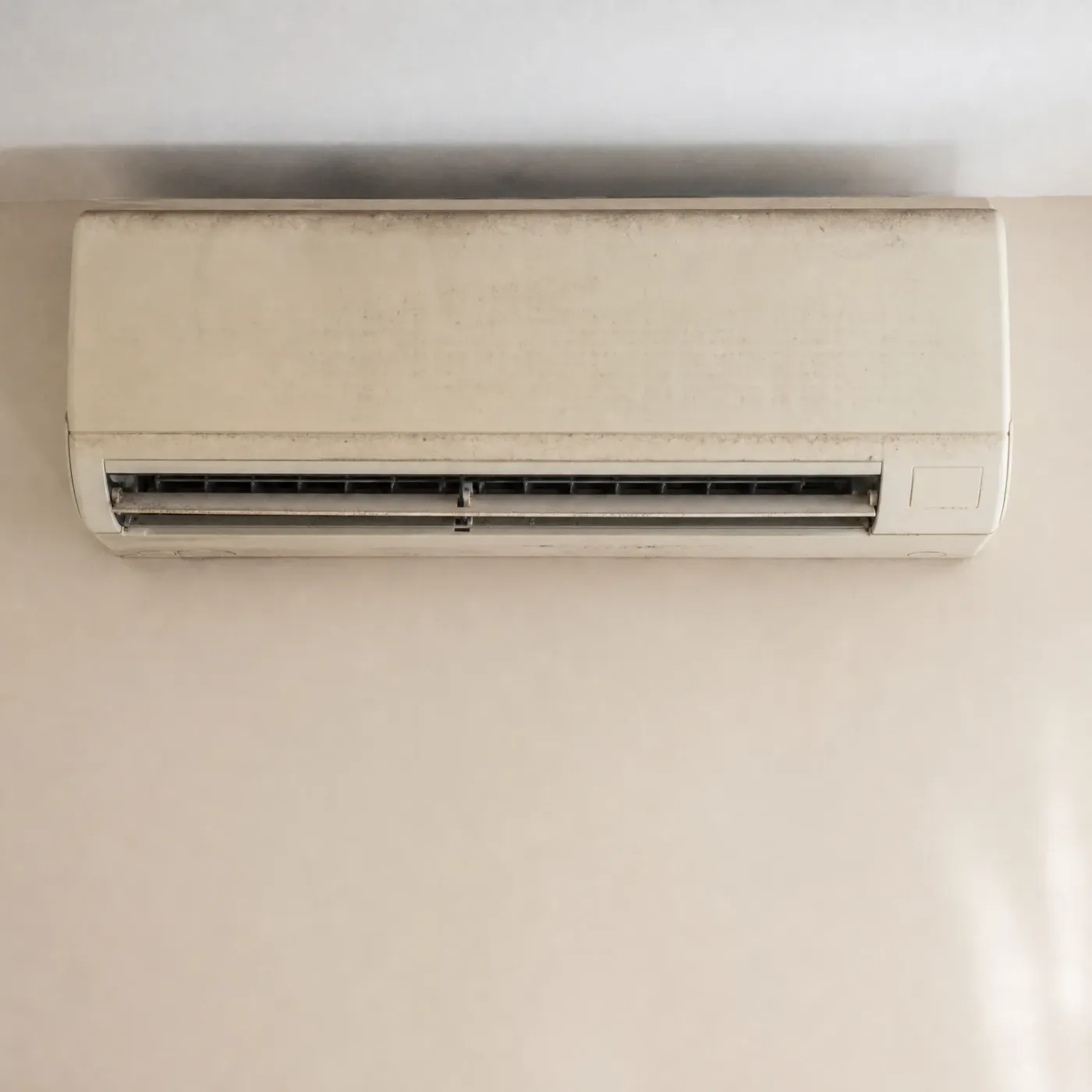
A wall-mounted mini-split air conditioner indoor unit with a dusty beige casing and dark louvered vent, installed near the ceiling on a plain beige wall.
Before you get your mini split repair
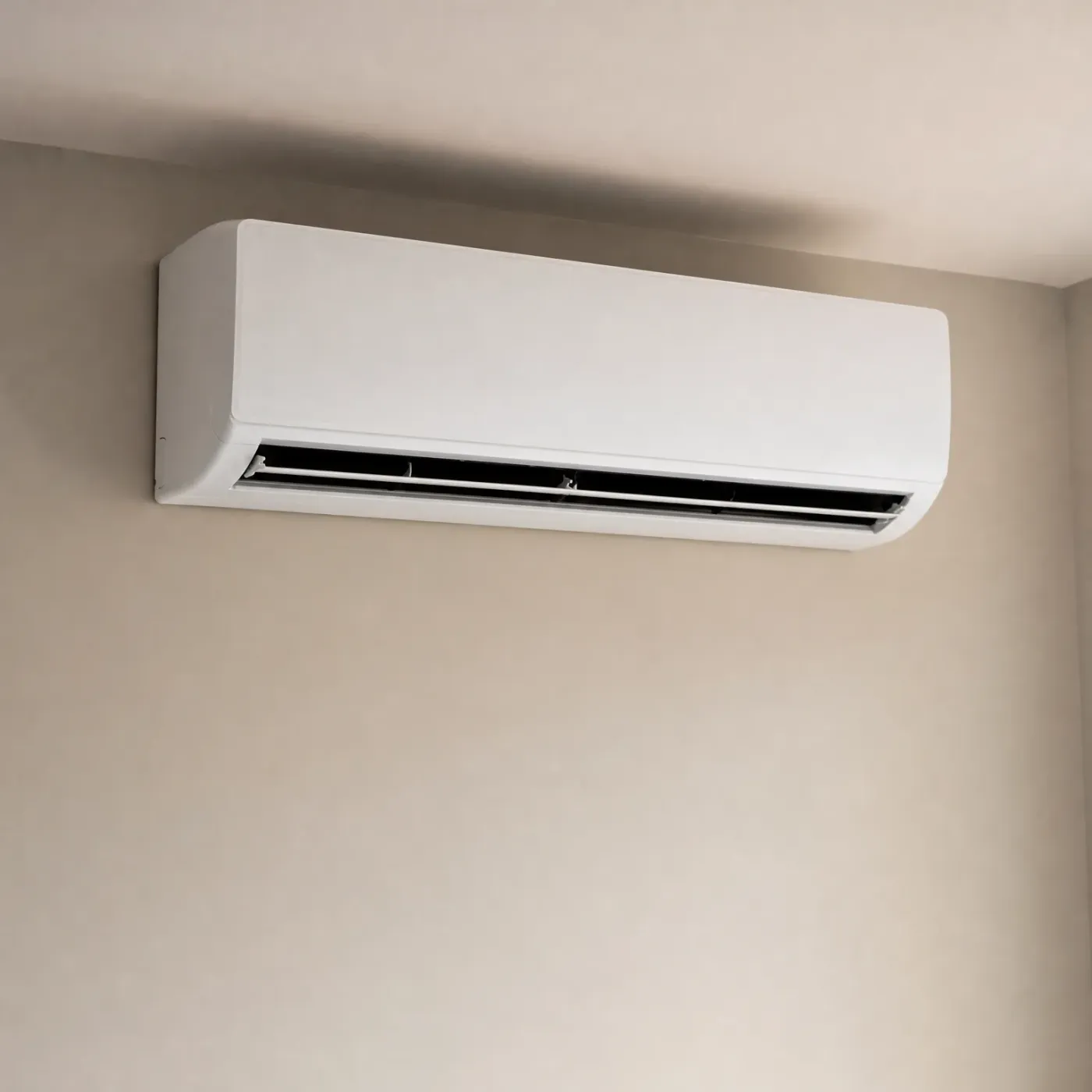
A white wall-mounted mini-split indoor unit installed high on a gray interior wall, with a sofa, dark table and window visible in an adjoining room to the right.
After you get your mini split repair

Matched to your mini split job

Send the request today and stop worrying about who to call.

You're not committing to anything by asking.

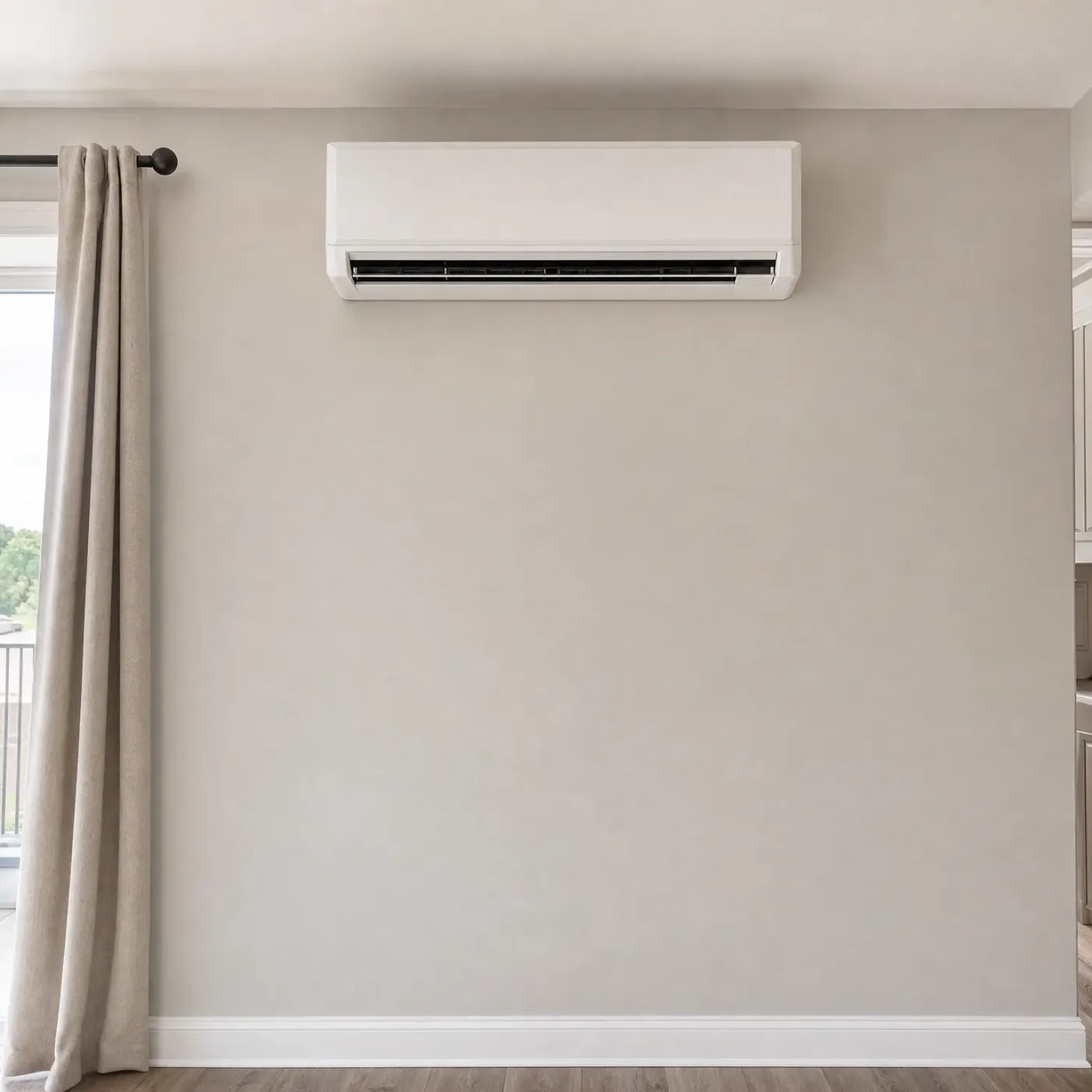
A white wall-mounted mini-split air conditioner unit high on a light gray interior wall, with a beige curtain and window at the left and wood-look flooring below.

Normal defrost cycle

The unit clears its frost, switches back to heat, and the fan picks back up within a couple minutes. Room temperature barely moves. You might not even notice it happened unless you're standing near the vent when it switches over.
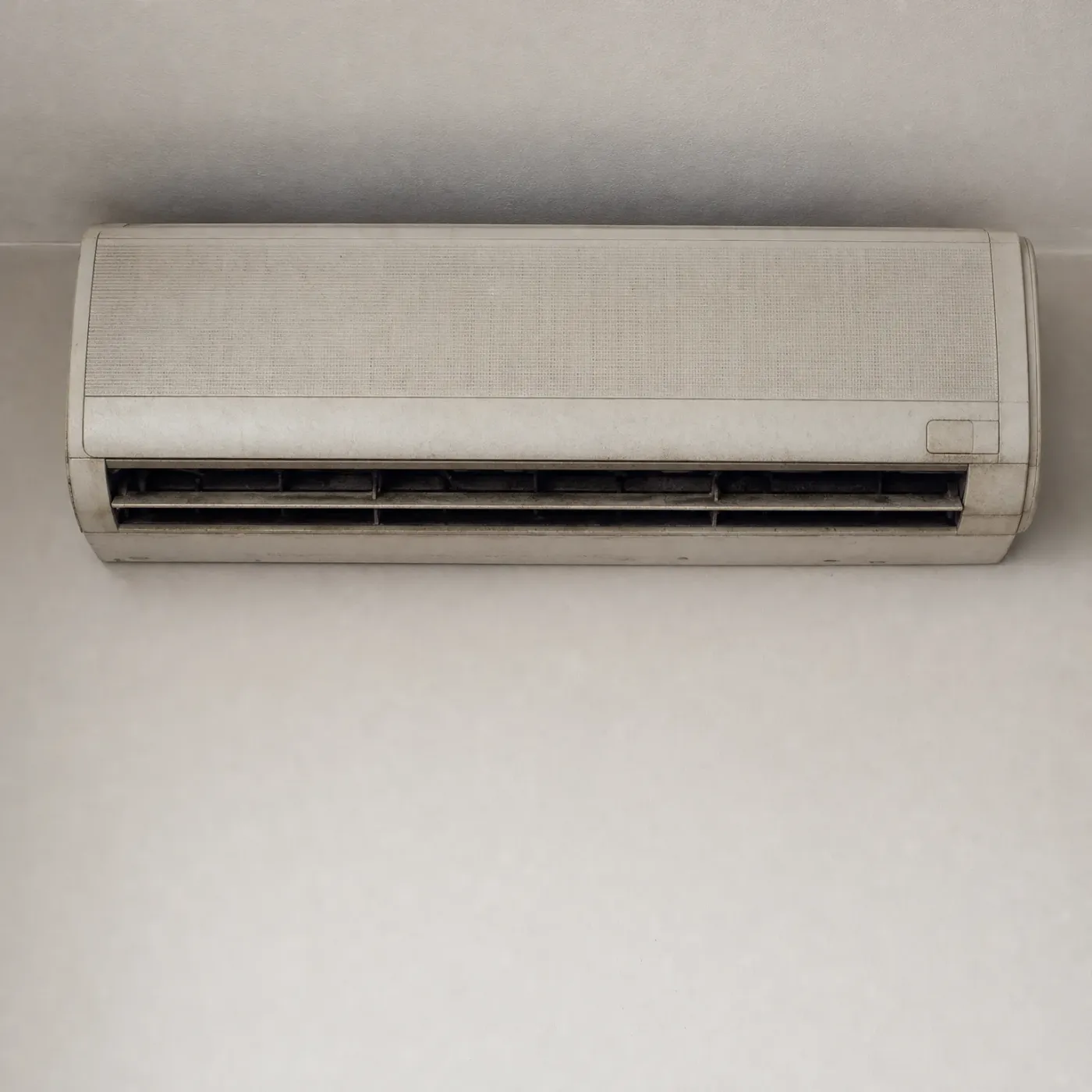
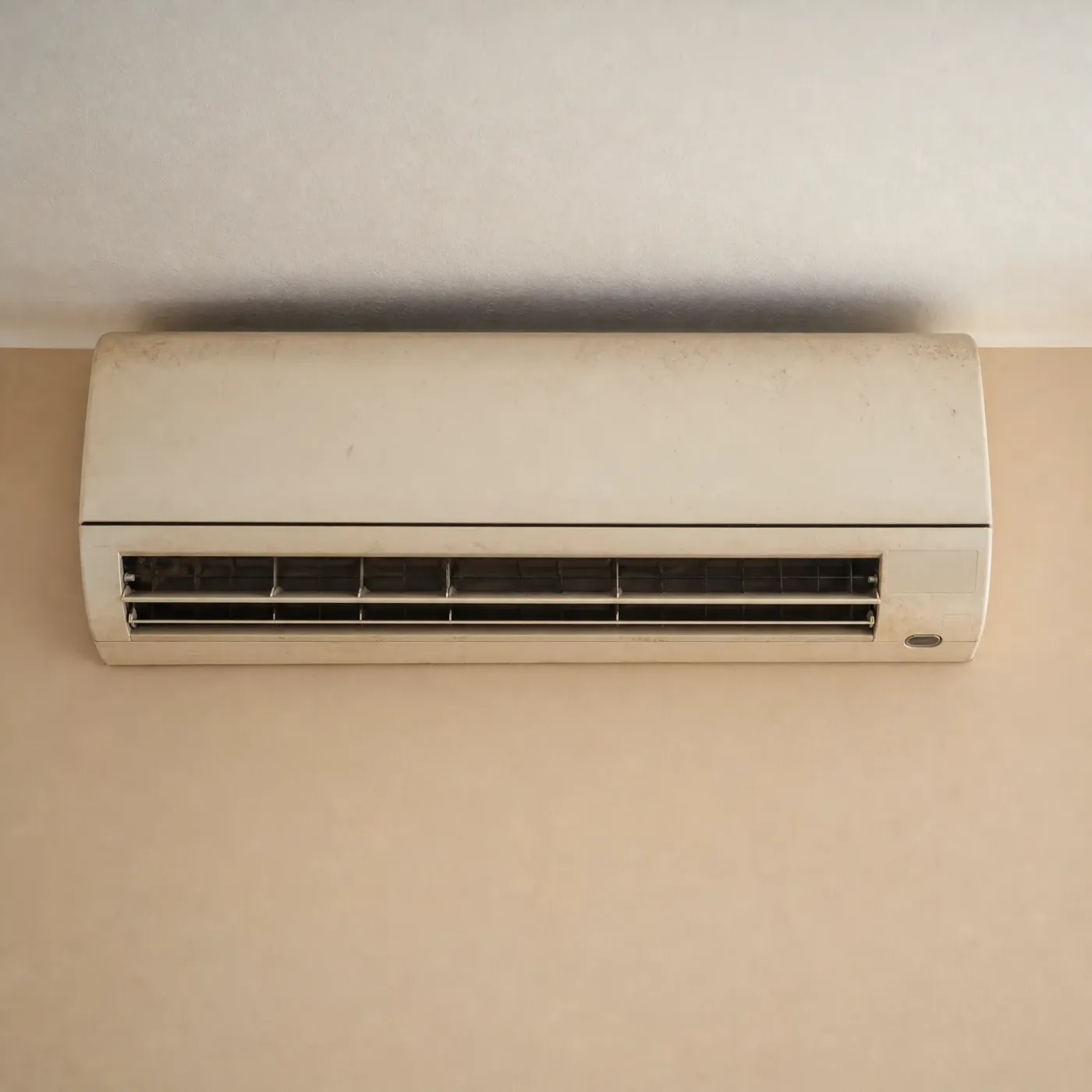
A dusty white wall-mounted mini-split air conditioner indoor unit with open louvers, installed near the ceiling on a plain light-colored wall.

A cycle gone wrong

Grime along the outlet vents like this points to a coil that isn't draining or defrosting right. If defrost mode runs long, repeats too often, or the unit looks like this, the sensor or the reversing valve may need a look before it struggles through another New York winter.

Normal Defrost or Time to Call Someone

Leave it alone

  • If the cycle clears in a few minutes and the fan comes back on, the unit is doing what it's supposed to do.
  • Steam coming off the outdoor unit during defrost is just melted frost, not smoke or a sign of a fault.
  • An outdoor fan that briefly runs backward during defrost is normal on some mini splits and not a breakdown.
  • If the room holds its temperature through the cycle, the system is keeping up fine on its own.
  • Calling someone out for a defrost cycle that starts and ends on its own wastes a visit and your money.

Get it looked at

  • If defrost runs longer than a few minutes or kicks in every few minutes instead of every hour or two, the sensor or control board may be reading frost wrong.
  • Ice that stays on the outdoor coil after the cycle ends means the unit isn't clearing it, and it will keep building from there.
  • A room that noticeably cools down and stays cool after defrost ends points to a problem beyond the normal cycle.
  • If the outdoor fan doesn't restart after defrost, or the unit won't switch back to heat, something in the reversing valve or controls needs a tech.
  • A mini split stuck in defrost, or cycling into it nonstop, is pulling power on New York rates without heating anything.
  • Once you send in the request, a contractor reaches out to you, so you're not the one tracking this down.
A single-story house with gray vinyl siding, dark shingled gable roofs, and white-trimmed windows, set behind a partly dry green lawn under a clear blue sky.

New York summers don't drive defrost mode, but they tell you something about the air your mini split handles the rest of the year. The National Weather Service puts the summer dew point here at an average of 62°F, which is the sticky, heavy air you feel in July. That same unit pulling moisture out of your rooms in August is pulling frost onto its outdoor coil in January. A system that's been working hard against humidity all summer is the same one cycling into defrost all winter, and if it's slow to clear or struggling to switch back to heat, that's worth a look either season.

NASA POWER T2MDEW county cells weighted by homes

How long should defrost mode last on a mini split?

You've timed it, or you're about to, standing there watching the outdoor unit while the house gets a little cooler than you'd like. You want to know if this is almost over or if something's gone wrong and the unit is stuck in a cycle it should've finished minutes ago.

A normal defrost cycle runs 5 to 10 minutes

Most defrost cycles finish in 5 to 10 minutes. That's how long it takes the reversing valve to send warm refrigerant through the outdoor coil and melt the frost off it. Once the coil's clear, the unit switches back to heat and the indoor fan comes back on. If you're checking a clock because the house feels cold, that window is what you're waiting out. A cycle that runs past 10 or 15 minutes, or one that starts again right after it finished, isn't melting frost anymore. That points to a sensor reading the coil wrong, a reversing valve not switching back, or an outdoor unit so iced over it can't clear in one pass.

A white wall-mounted mini-split air conditioner installed near the ceiling on a plain beige interior wall.
This is a defrost cycle doing its job: frost melts off, the fan stays quiet for a minute, and heat comes back on its own.
A dusty, discolored wall-mounted mini-split air conditioner unit near the ceiling of a plain beige interior wall.
This one is past due for a look: a coil that stays caked in frost or a casing this worn can mean defrost mode isn't finishing what it starts.

Power costs 26.39 cents per kilowatt-hour statewide

At 26.39 cents per kilowatt-hour, a defrost cycle that runs long or kicks in too often shows up on your bill. A unit stuck defrosting for repeated short bursts is pulling compressor power with no heat to show for it, so a cycle that won't behave is worth having looked at rather than watched.

EIA-861 2025 statewide residential average

  1. Outdoor coil temperature drops and frost starts forming on it.

  2. A sensor reads the coil and signals the system to defrost.

  3. The reversing valve flips, sending hot gas out to the coil.

  4. The indoor fan shuts off so no cold air blows inside.

A woman in a cream cardigan and jeans stands with one hand raised facing an open front door of a gray horizontal-siding house, with a black lantern wall light, a potted shrub with yellow flowers, and a stone-faced porch column.

Defrost mode on its own is nothing to worry about

A mini split that clears frost in a couple minutes and goes back to heating is working the way it's supposed to. That's the whole answer. The cold air, the pause, the steam off the outdoor unit, all of it is the system doing routine upkeep on itself so it can keep pulling heat from New York's cold air all winter.

What's worth a second look is a cycle that runs long, kicks in too often, or leaves frost behind when it's done. You don't have to figure out whether that's a sensor, a valve, or a coil that's seen better days. Send in what you're seeing and a contractor who works on these systems gets back to you to take it from there.

Interior corner of a room with a window and sheer curtain at left, a gray upholstered sofa with a cushion at right, and a round wooden table holding stacked books and a round vase with an olive branch.
At dusk, a dark board-and-batten house with a standing-seam metal roof and lit entry walkway of stone pavers, with two large outdoor heat pump units on a stone-walled pad at right and trees and hills in the background.

Mini Split Repair

A mini split pro near you

Step 1 of 3: Equipment
  • A ceramic vase holding leafy green branches and a shallow wooden bowl sit on a wooden window ledge beside a sunlit window, with a cream upholstered chair and knit throw in the foreground.
    • A local pro who knows mini splits gets your details and gets in touch.
    • Describe your mini split job, and a local pro who handles it gets in touch.
  • Sunlit living room corner with a beige upholstered sofa, a round wooden side table holding a ceramic vase of olive branches, linen curtains at a window, a floor vent in the baseboard, and a woven jute rug on hardwood flooring.
    • After this form, you can stop searching for a mini split pro.
    • One request and the search for a pro is handled.
  • A wooden side table with a single drawer holds a shallow carved wood bowl and a white ceramic vase of green eucalyptus stems, beside a window and an upholstered chair draped with a cream knit throw.
    • Describe what your mini split is doing once, in one form.
    • Answer a few questions instead of calling shop after shop.
  • Corner of a house with horizontal siding, a white-framed window and stone veneer base, beside a covered entry with wooden steps, a potted plant, mulched beds of green shrubs and a flagstone path.
    • Your request goes to one pro, not a list of companies.
    • The pro who reaches out is licensed in New York.