

Running the way it should
Air moves out of the vents and nothing shows on the wall below. The outdoor unit cycles through its defrost on its own schedule and the meltwater drains outside where you never see it.
Water dripping from your indoor unit in winter almost always means ice built up on the outdoor coil and then melted. In a New York winter, the outdoor unit runs constantly to pull heat out of cold air, and frost forms on its coil the same way frost builds in a freezer. The system defrosts itself on a timer, switching briefly to cooling mode to melt that frost off. That meltwater is supposed to drain outside, but if the condensate line is clogged, cracked, or not sloped right, it backs up and shows up as a leak indoors instead. A unit that's low on refrigerant makes this worse, since the coil runs colder than it should and ices over faster and more often. Either way, the leak itself isn't the real problem. It's a sign the defrost cycle, the drain, or the refrigerant charge needs a look before the ice buildup causes bigger damage to the unit.
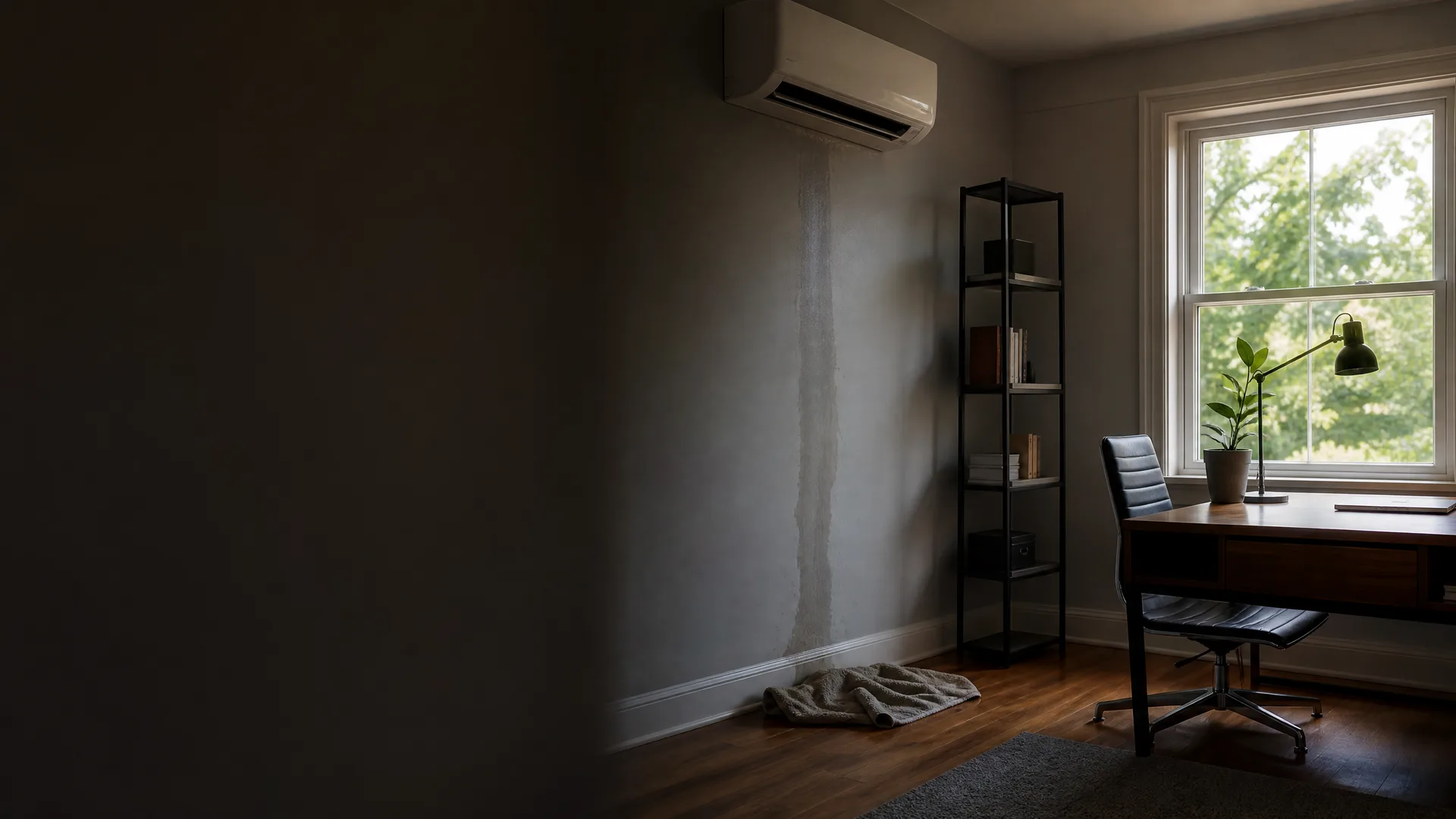
You're at your desk around two in the afternoon, working through emails, when you notice the wall looks wrong. A streak of water has run down from the indoor unit and dried into the paint, and when you touch it, it's still damp at the edge. You grab a towel and press it against the baseboard where a small puddle has formed. The unit above hums along like nothing's happening. Outside, it's one of those sticky New York afternoons, and you can't figure out why water would be coming from a machine that's supposed to be drying the air, not adding to it.
The outdoor unit reverses itself for a few minutes, sending warm refrigerant through the outdoor coil to melt the frost off. The fan slows or stops, so neighbors won't hear it. That meltwater is supposed to drain out through the base pan and a drain hole into the ground outside. If that base pan is cracked, tilted, or its drain hole is clogged with ice, the water has nowhere to go but back toward the line set and into the wall.
Refrigerant lines run from the outdoor unit through the wall to the indoor head, wrapped in insulation to keep condensation from forming on the line itself. When that insulation is thin, cracked, or missing a section, the cold line sweats inside the wall cavity instead of outside where you'd see it. In a stretch of single-digit nights, that sweating adds up fast, and the water tracks along the line until it finds a way out, usually at the indoor unit.
Water showing up on the wall under your indoor unit, or dripping onto the windowsill or floor below it. A stain spreading on the ceiling if the unit sits on a wall near the top of a room. A puddle on the floor by morning that wasn't there the night before. Sometimes it's just a drip you catch when you happen to be in the room, other times it's steady enough that you've started keeping a towel down. If this keeps happening through the winter, that water is getting into drywall and flooring, and left alone it can warp the floor or grow mold behind the wall where you can't see it. None of this means the unit is ruined, but it isn't something that fixes itself once the cold settles in for the season.





The meltwater from a defrost cycle drains down through the outdoor unit's base pan and out a small drain hole, usually onto the ground or a pad outside. Inside, condensate from the indoor coil runs into a drain pan under the coil, down a condensate line, and out through a drain or a small pump built into the unit. Two separate paths, two separate places for ice or debris to block them. When either one backs up instead of draining, the water finds another way out, and that's usually down the wall or through the ceiling below the indoor unit.
Tracing which path failed takes opening the unit and checking the base pan, the drain line, and the pump if there is one, something most homeowners aren't set up to do themselves. A contractor who works on mini splits in New York winters can look at where the water is actually showing up and work back to the blocked drain or frozen pan causing it, instead of you guessing at it from a stain on the wall. Getting matched with one means explaining what you're seeing once, to someone who already knows what to check first.

Air moves out of the vents and nothing shows on the wall below. The outdoor unit cycles through its defrost on its own schedule and the meltwater drains outside where you never see it.
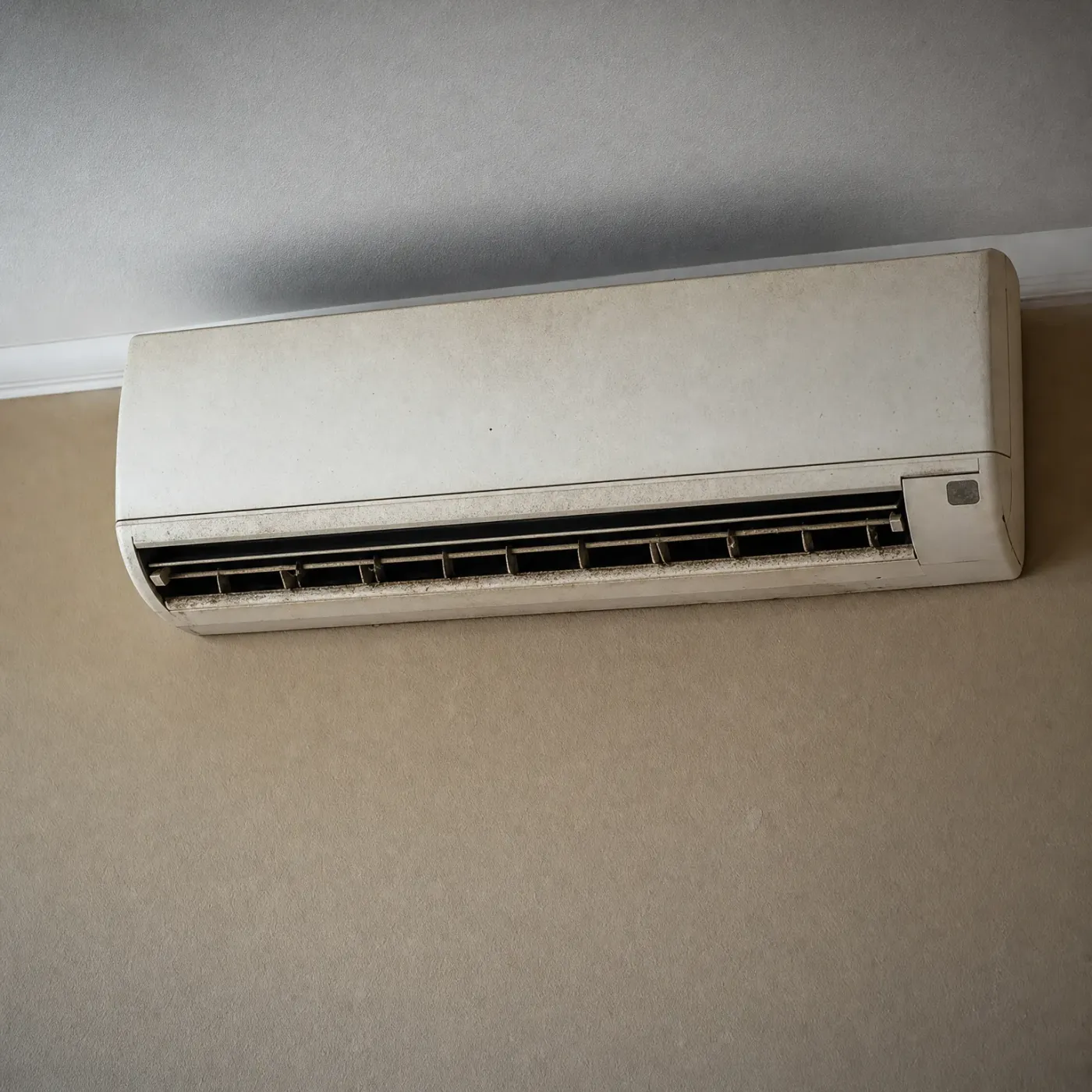
A grille this caked holds water instead of letting it pass. Grime along the intake and vents slows airflow across the indoor coil, and a coil that can't shed condensate properly is more likely to send water somewhere other than the drain.


A mini split that drips in January isn't fixing itself, and the cold months here aren't done yet. Left alone, a blocked drain or a frozen coil that can't clear itself tends to keep sending water to the same spot, which means more damage to that wall or ceiling the longer it sits. Finding someone to look at it usually means searching around, calling a few places, explaining the leak and the unit and where the water shows up each time you get someone new on the phone, then sitting on quotes trying to compare them against each other. None of that gets the drain unclogged or the coil checked any faster. Hand over what you're seeing, the wall, the ceiling, the puddle on the floor, and let a contractor who works on these systems take it from there. You've already done the hard part, which is figuring out that this isn't normal. The rest is someone getting eyes on the unit while New York's cold still has months left to run.

New York summers run heavy, with the dew point in the air averaging 62°F across June, July and August, according to NOAA climate data. That's the same indoor coil that ices up on you in January, and a summer that sticky means it spends months pulling a lot of moisture out of the air it cools. All that condensate has to find its way down the drain line and out, same as the meltwater does in winter. A line that's slow to clear or already narrowed by grime won't suddenly get better once summer's over. It's often the same path causing both problems, just at opposite ends of the year.
NASA POWER T2MDEW county cells weighted by homes
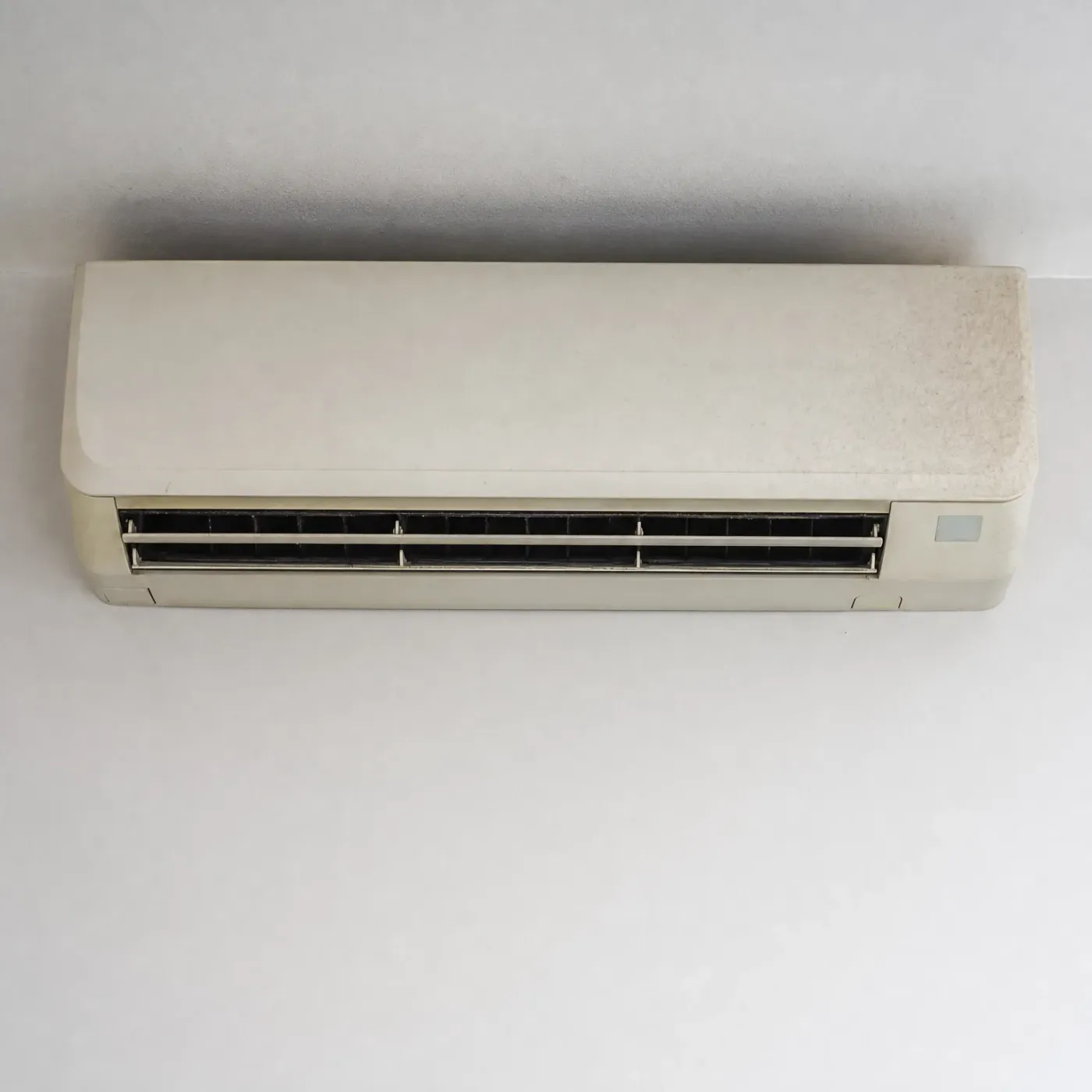
You keep towels under the unit and hope the leak stops on its own. Meanwhile ice keeps building on that outdoor coil every time it drops below freezing.
A contractor who works on mini splits checks the drain line and the outdoor coil to find out why the water isn't draining where it should.
A mini split that's icing up and short cycling to fight it is drawing more than it should, and at 26.39 cents per kilowatt-hour that shows up fast on your bill. Getting the leak fixed stops the extra draw along with the water on your wall.
EIA-861 2025 statewide residential average
The water on your wall has one of two sources: ice that built up on the outdoor coil and melted somewhere it shouldn't, or a drain line that's blocked and backing up instead of carrying water outside. Everything the frost cycle, the base pan, the drain hole points back to one of those two problems. New York's cold stretches on for months yet, so if the cause isn't found now, the same freeze and thaw keeps happening every time the temperature drops, and the same spot on your wall or ceiling keeps taking water in the meantime.
Finding the actual cause from a stain on the wall is hard to do on your own, and most people don't have a reason to know what a base pan drain hole even looks like. A contractor who works on these systems does, and can trace the leak to its source instead of leaving you to guess. Getting matched with one means you skip the part where you'd normally be searching for someone who services mini splits, calling a few numbers, and explaining the same leak and the same stain to each one before you even know if they can help. That matching happens once, and the explaining happens once.
Once the drain is clear or the coil issue is resolved, the system goes back to doing what it's supposed to do: running its defrost cycles on schedule, melting the frost, and sending that water outside where you never see it. No more towels under the unit, no more checking the wall when you walk by.





Explain the job once and skip repeating it on every call.
No fee to send it, and nothing to sign.