Why your mini split makes noise in a New York winter

Step 1 of 3: Equipment

A mini split that bangs, buzzes, or hums in winter is usually ice talking. The outdoor unit runs a defrost cycle to melt frost off its coil, and when that cycle kicks in you can hear a whoosh or a clunk as the reversing valve switches, then a fan ramping up and down as it clears. In a New York winter, with real cold and damp stretches, frost builds fast and the unit may defrost more than once an hour on the coldest nights. That's normal. What's not normal is grinding, rattling, or a loud clicking that doesn't stop after a cycle ends. That points to a loose panel, a failing fan motor, or ice that isn't clearing the way it should, and it's worth having someone look at before the unit has to work harder than it needs to through the rest of the season.

A gray-haired man in a dark long-sleeve shirt sits on a gray sofa in a living room, looking toward a sunlit window with sheer curtains.
A gray-haired man in a dark green sweatshirt sits on a sofa in a living room, looking toward a bright window, with a houseplant, lamp, fireplace and framed art behind him.
A gray-haired bearded man in a dark green collared sweater sits on a sofa in a living room with a window, houseplant, floor lamp and bookshelves, looking off to the side.
A gray-haired man in a dark green sweater sits on a sofa in a sunlit living room, looking off to the side, with a framed landscape painting, dining table and shelving behind him.

Normal Defrost Noise or a Real Problem

Normal defrost noise

  • You hear it mostly when the outdoor temperature sits near or below freezing, since that's when frost builds up fastest on the coil.
  • The sequence is short: a clunk as the reversing valve switches, then a whoosh of refrigerant, then the fan speeding up for a few minutes.
  • It stops on its own once the coil clears and the unit switches back to heating.
  • You'll hear it repeat every so often through a cold night, not just once.
  • The indoor head may blow cool air briefly during defrost, which is normal and not a sign the system is failing.

Noise that needs a look

  • A rattle or metallic ticking that doesn't line up with a defrost cycle often means a loose fan blade or a panel that's worked itself free.
  • Grinding or a high-pitched squeal usually points to a fan motor bearing wearing out, not ice.
  • If the outdoor unit runs constantly without ever quieting down, it may be struggling to defrost at all, which matters in a New York winter.
  • A hum that continues after the compressor should have shut off can mean a failing capacitor.
  • Ice that doesn't clear between cycles and builds up on the unit's housing or the ground below it means the defrost cycle isn't working as it should.
  • Any of these call for a technician who works on mini splits through New York winters and knows which part is likely behind the sound.
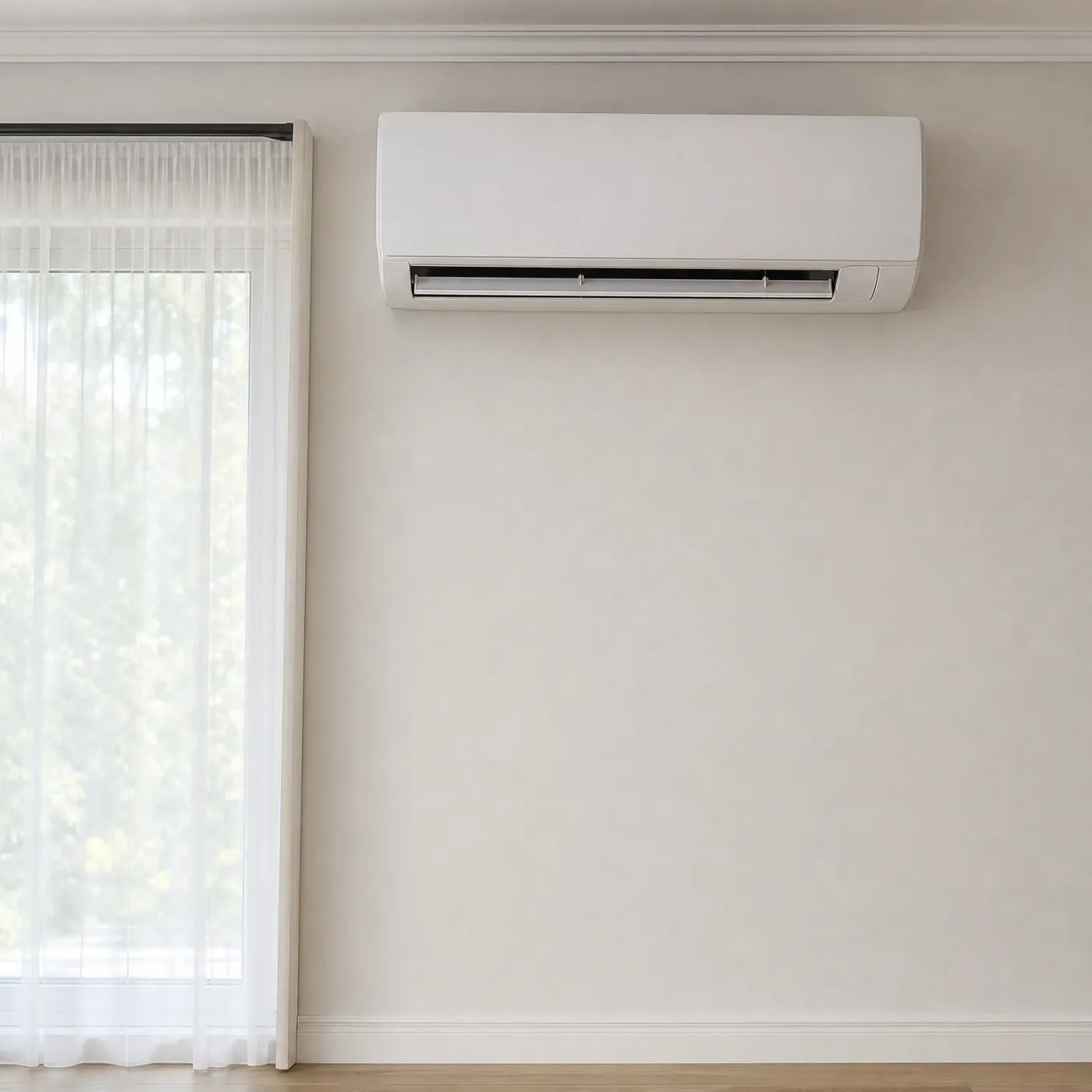
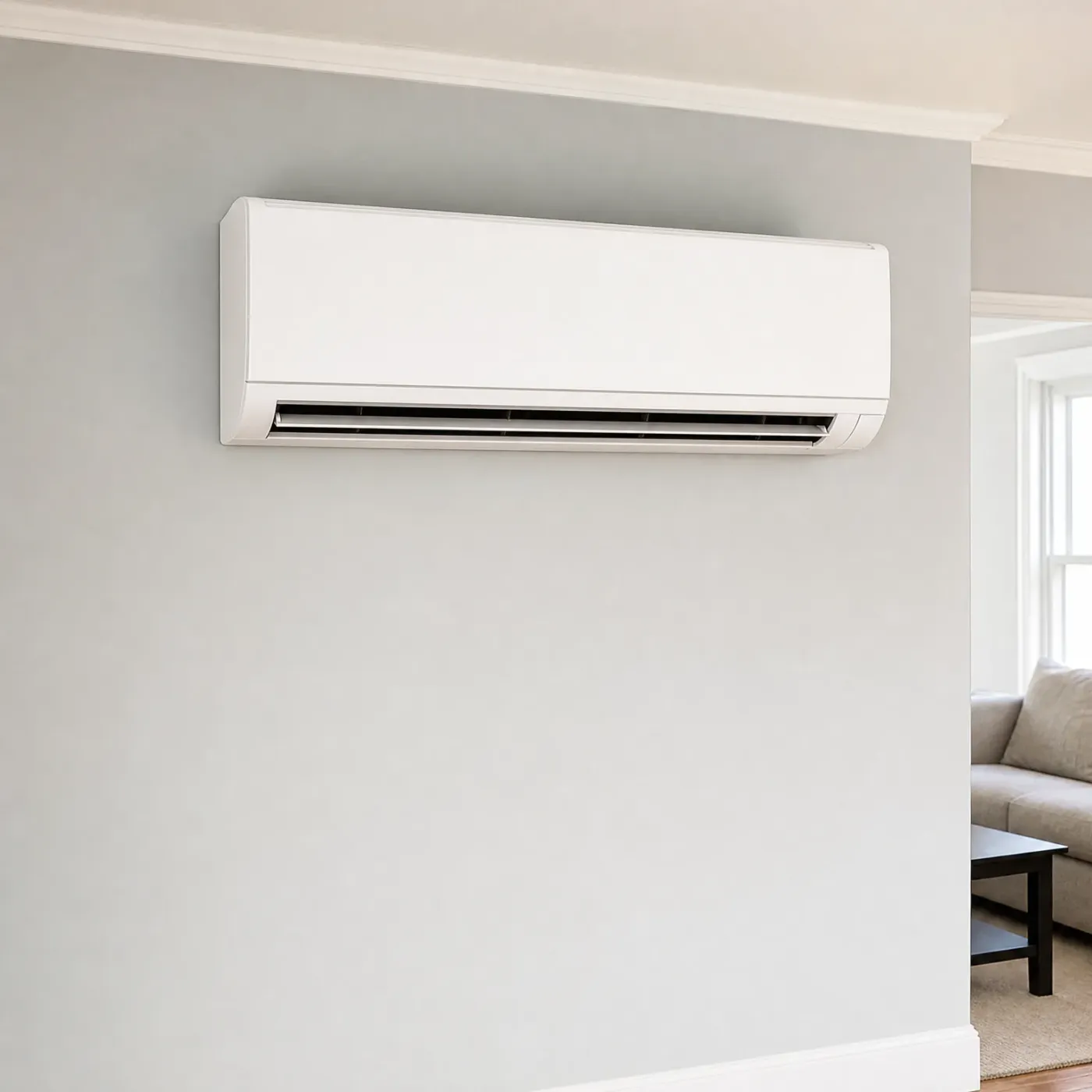
A white wall-mounted mini-split air conditioner on a beige interior wall, next to a window with sheer white curtains and green foliage outside.

Running normally

A mini split in good shape stays quiet most of the time. You'll hear the outdoor fan step up on a cold night and a short clunk when defrost kicks in, then it settles back down. No rattle, no grinding, nothing that pulls your attention from across the room.

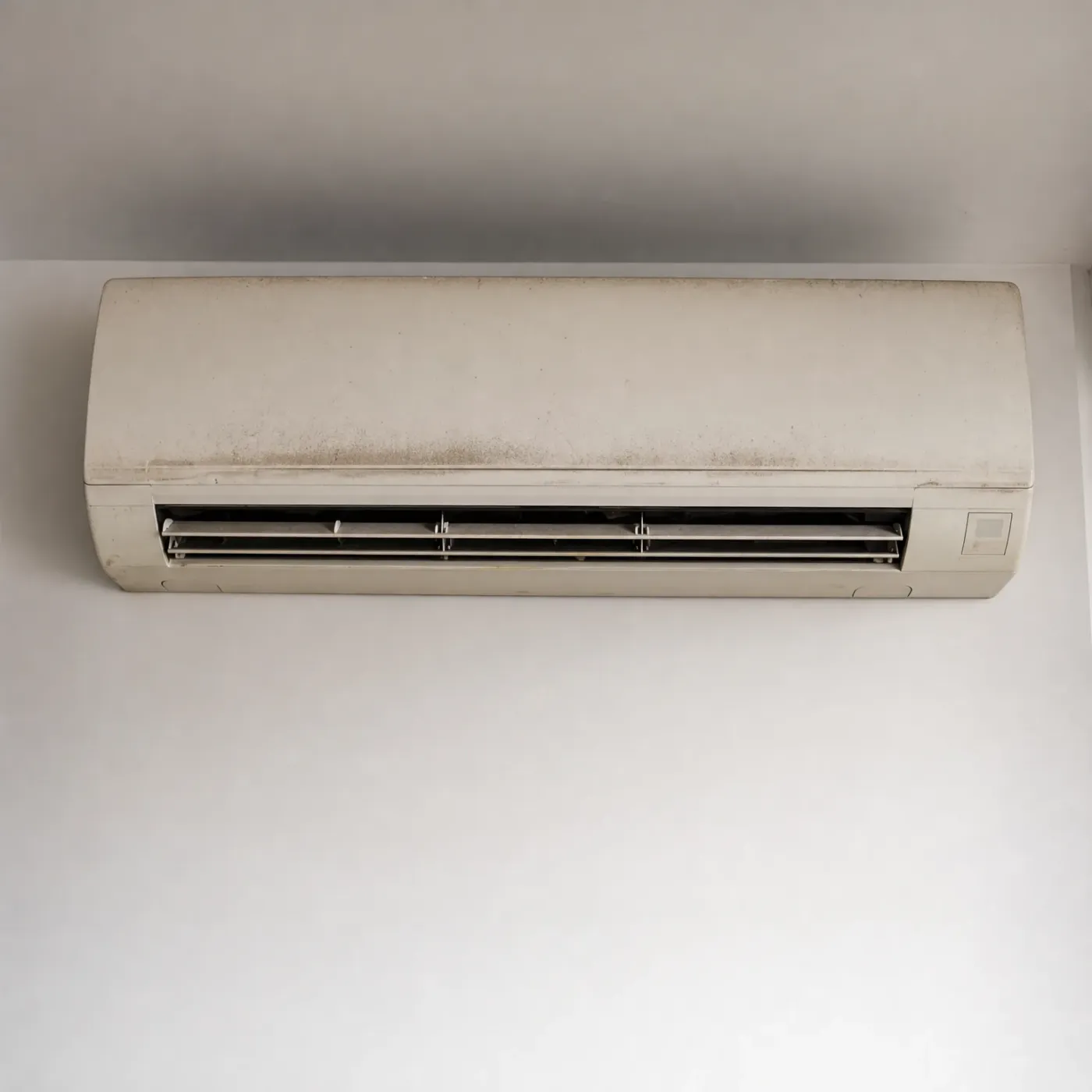
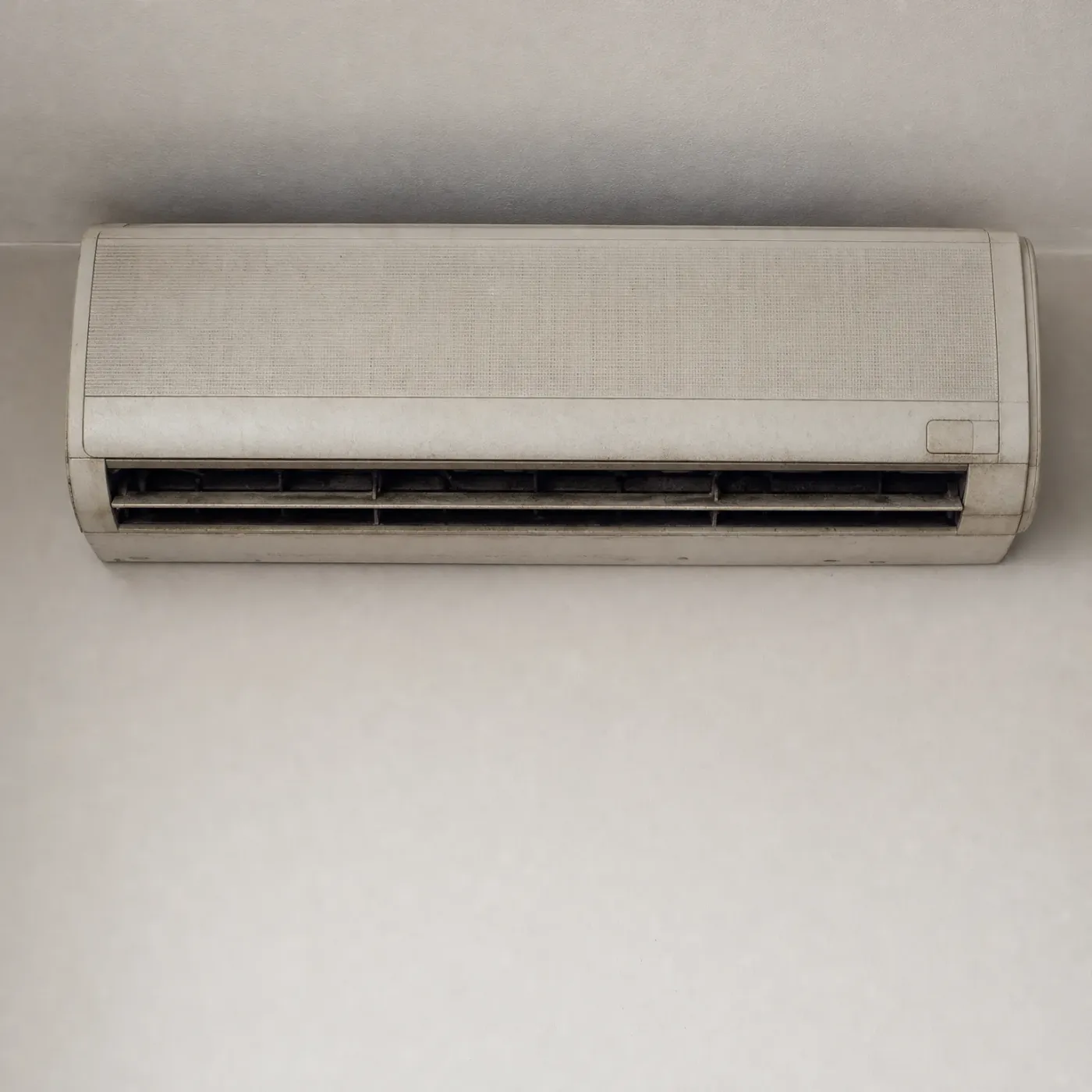
A dusty, discolored wall-mounted mini-split air conditioner indoor unit on a plain white wall, with its horizontal louvers and vent grille visible.

Needs a look

Dust and grime built up like this on the indoor unit usually means airflow is restricted, and a blocked coil or dirty blower wheel can turn into noise that doesn't go away between defrost cycles. A licensed local contractor who services mini splits through New York winters can tell you if it's buildup or something failing inside.

Why does my mini split click and whoosh when it's cold out?

You hear it most on the coldest nights, when the outdoor unit starts up and a minute later there's a clunk followed by a rush of air or fluid, then the fan speeding up. It happens enough through a New York winter that you've started to notice the pattern, and you want to know if that sequence means something is wrong or if it's just how the unit handles the cold.

It's the defrost cycle switching the system into reverse and back

The clunk is the reversing valve changing direction inside the outdoor unit. Below freezing, frost builds up fast on the outdoor coil, so the system periodically runs itself in cooling mode for a few minutes, pulling heat from inside to melt that frost off. The whoosh you hear right after is refrigerant moving through the valve as it switches. Once the coil is clear, the valve switches back, there's often a second clunk, and the fan ramps up to shed the leftover heat before heating resumes. On a cold New York night this can happen every half hour or so. If the sequence is short and the unit goes back to quiet heating after, that's the system working as designed.

  1. Frost builds on the outdoor coil as it pulls heat from cold air.

  2. A sensor reads the coil and triggers the defrost cycle.

  3. The reversing valve switches direction, sending hot gas backward through the coil.

  4. That switch is the clunk or whoosh you hear from outside.

What are you hearing in your house right now

Sit in the room with the indoor head and listen. A short clunk, a rush of air, the fan picking up speed, then quiet again in a few minutes is the unit defrosting itself, and on a cold New York night that can happen several times. What's different is a grinding or rattling that doesn't settle down, a buzz that holds steady instead of fading, or banging that starts up outside your window no matter what the temperature is doing. If you've noticed the room taking longer to warm or your electric bill climbing while the noise gets worse, the unit is working harder than it should, and with power costing what it does here, that's money going somewhere other than heat.

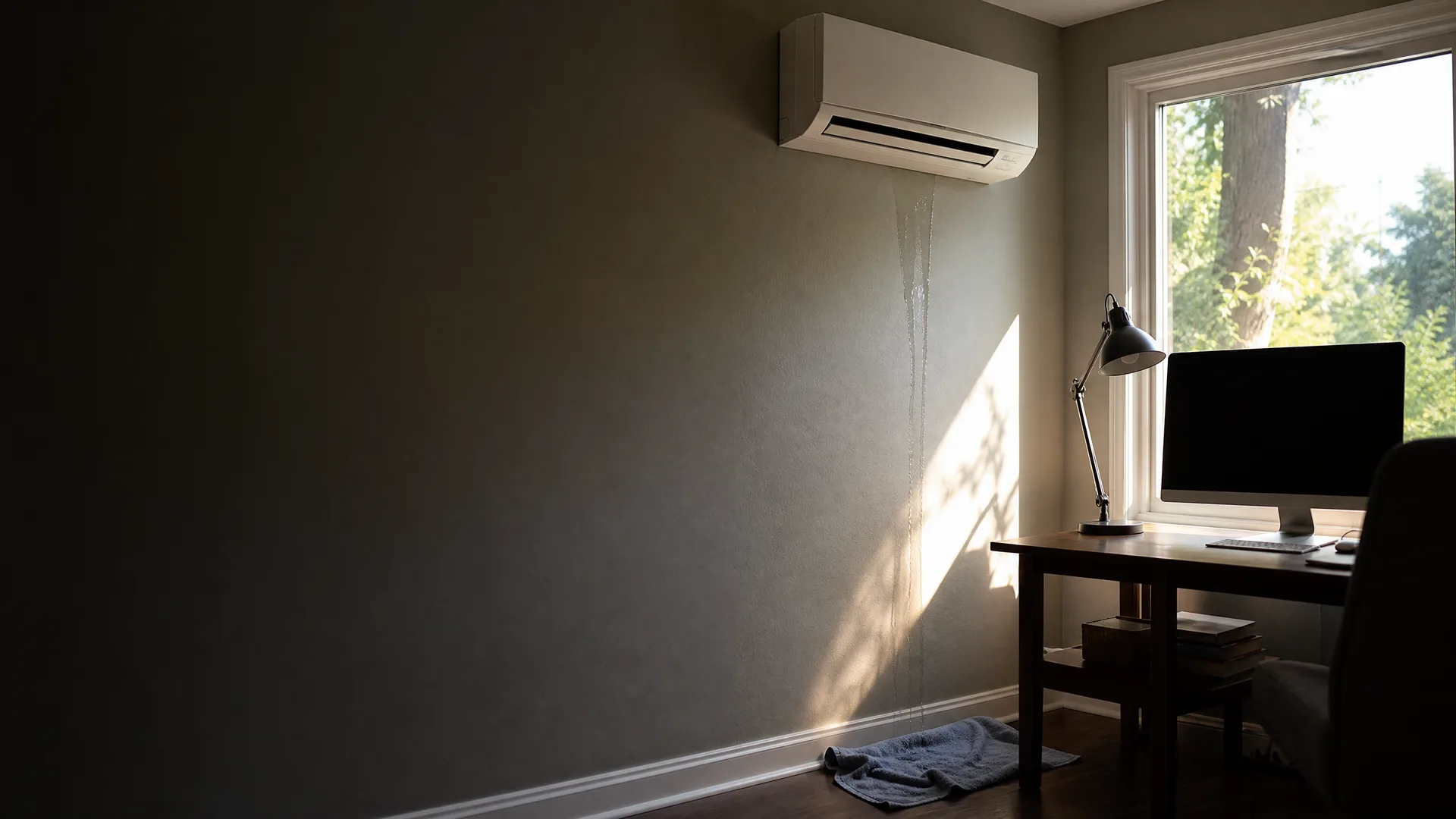
A wall-mounted mini-split air conditioner leaking water down a dim gray wall onto a towel on the floor, beside a window with a desk, lamp and monitor.

Late January, and you're at the desk in the office around two in the afternoon, half watching the gray light outside. You hear the mini split click into defrost like it has all winter, the clunk, the whoosh, nothing new. Then you notice the wall under the indoor unit has a dark streak running down it, and the carpet below is damp enough that you've put a towel there already. It's cold outside, not hot, so the drain line freezing doesn't track with what you'd expect. You stand there a minute, looking at the towel, trying to decide if this is something you can watch for a few days or something that needs a tech who actually knows these units in the cold, not just the summer side of them.


A local pro for your mini split repair

Your request stays with one local pro.

Sending the form costs nothing.

What the compressor is doing

Every time the reversing valve switches, the compressor has to push refrigerant the opposite direction through the system. That's load, and load makes noise. A compressor working against cold outdoor air already runs harder than it does in July, because it's pulling heat out of air that doesn't have much to give. Add a defrost cycle on top of that, several times over a cold night, and you get the clunk and hum repeating on a schedule instead of once. None of this is the compressor struggling. It's the same part doing the same job it does every winter, just loud enough for you to notice through a wall.

Why a loud cycle costs you more

A mini split that's defrosting correctly uses electricity to run the reversing valve and a backup heat strip or the compressor itself to melt that frost, then goes back to heating your room. Power in New York is expensive enough that a unit running longer or more often than it should shows up on your bill before you ever hear a new sound. If the noise has changed, gotten longer, or started happening on nights that aren't especially cold, that's often a sign the cycle is working harder than the weather calls for, which means you're paying for it whether or not it ever fails outright.

A woman with shoulder-length dark brown hair in a cream knit cardigan sits in an upholstered armchair beside a window, looking off to the side, with a white bookshelf and potted plant blurred behind her.
A woman and a child wrapped together in a thick knitted blanket on a sofa, both with eyes closed, with a lit table lamp and houseplant in the dim background.

Defrost cycle noise

Comes and goes, usually a few minutes at a time, and leaves the unit running quiet again after. Nothing to schedule a repair around.

Connect with a pro

New or worsening noise

A grinding, a rattle, or a buzz that wasn't there before and doesn't stop with the cycle is worth having someone who works on these units look at.

Connect with a pro
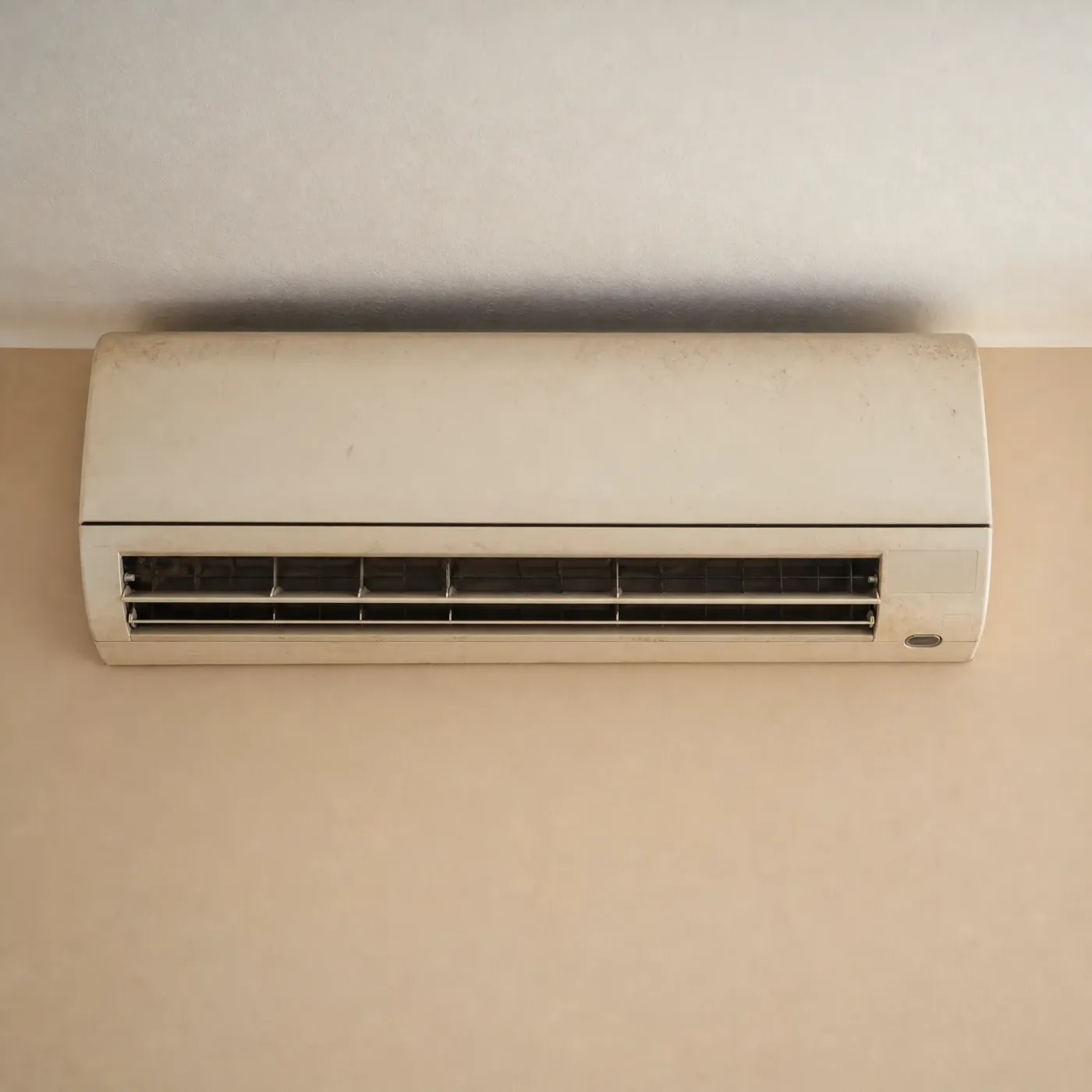
A wall-mounted mini-split air conditioner indoor unit with a dusty beige casing and dark louvered vent, installed near the ceiling on a plain beige wall.
Before you get your mini split repair
A white wall-mounted mini-split indoor unit installed high on a gray interior wall, with a sofa, dark table and window visible in an adjoining room to the right.
After you get your mini split repair

Letting it ride out the winter

The noise might stay exactly what it is now, a short clunk and whoosh a few times a day that clears up on its own. Plenty of mini splits run this way for years without trouble. But a sound that's new or getting louder usually points to something working harder than it should, a fan motor straining or a valve not seating right. Left alone through a full New York winter, that strain tends to turn into a bigger repair, and on the coldest nights you may find the unit struggling to keep up at the exact time you need the heat most.

Having someone look at it now

A local contractor who works on mini splits all season knows the difference between defrost noise and a part on its way out, usually within a few minutes of hearing it run. They can check the reversing valve, the fan motor, and the refrigerant charge, and tell you straight whether what you're hearing is normal or not. You get matched with one contractor, not several, so you're not fielding a round of calls to sort out. If something is wearing down, catching it now means it gets fixed on your schedule instead of on a subzero night in January.

Power costs 26.39 cents per kilowatt-hour statewide

At 26.39 cents per kilowatt-hour, running a mini split that's working harder than it should costs you more here than almost anywhere else. If a worn part is making the compressor strain through every defrost cycle, that extra noise is extra power too, and you're paying New York rates for it.

EIA-861 2025 statewide residential average

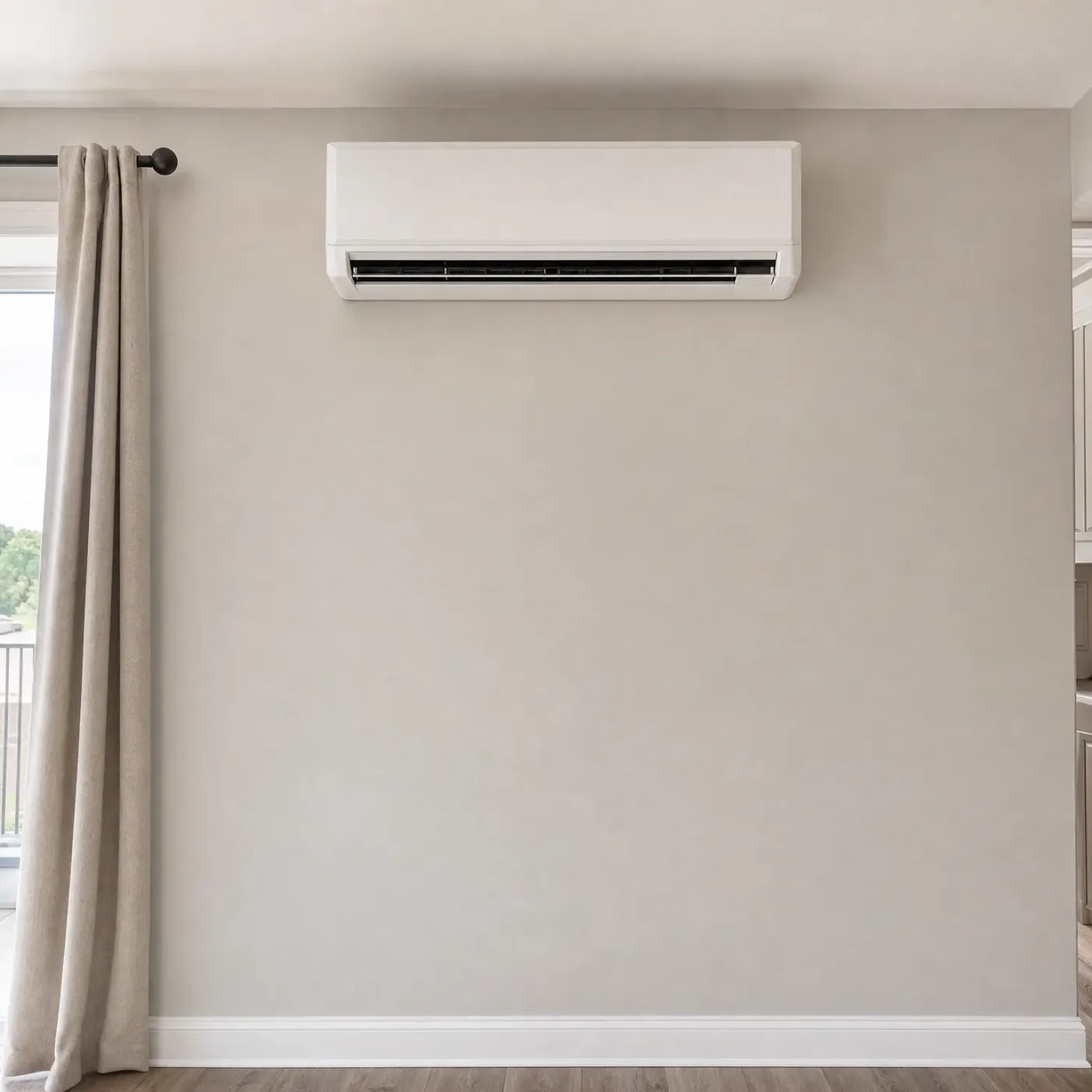
A white wall-mounted mini-split air conditioner unit high on a light gray interior wall, with a beige curtain and window at the left and wood-look flooring below.
A clean coil and clear vents, so the air moves the way it's supposed to and the unit stays as quiet as this.
A dusty white wall-mounted mini-split air conditioner indoor unit with open louvers, installed near the ceiling on a plain light-colored wall.
Dust and grime built up along the vents like this usually mean a dirty coil, and the unit working harder to push air through it.
Two-story house with beige horizontal siding, gray shingled gable roofs and a covered front entry, with an outdoor air conditioning unit beside it and a partly dry grass lawn in front under a clear blue sky.

NOAA's averages for where homes sit in New York put the summer dew point at 62°F across June, July and August. That's the sticky air you already know from July afternoons, and it's why your mini split works as hard as it does in summer, pulling moisture out of the air along with heat. That load doesn't connect to the clunk and whoosh you hear in winter, since defrost noise comes from frost on the outdoor coil, not summer humidity. But a unit that ran hard all summer goes into winter already carrying wear, and wear is what turns a normal defrost click into a grinding or rattling one.

NASA POWER T2MDEW county cells weighted by homes

A woman stands in the open doorway of a white stucco house holding the dark door, facing a man in a black cap and shirt seen from behind in the blurred foreground, with a potted flowering plant beside the entry.

Where that leaves you

A clunk and a whoosh a few times a day, gone again in a few minutes, is your mini split defrosting itself. That's normal on a cold New York night and it isn't why you'd call anyone. A grinding, a rattle, or a buzz that sticks around after the cycle ends is different, and it's worth getting looked at before it turns into a bigger repair or a bigger power bill.

If that's what you're hearing, the next step is simple. You'll be matched with a local contractor who works on mini splits all winter and has a good sense of what's behind a noise like yours before they even open the unit up. It's one contractor, not a handful calling you back, and they're licensed to do the work. They'll reach out to you directly to look at what's actually going on with your system.

A dark ceramic mug on a round wooden table beside a light grey sofa with a woven cushion and knit throw, with a window, potted plant, floor lamp and wooden cabinet blurred in the background.
Corner of a room with a white window at left, a white fireplace mantel with dark stone surround at right holding a weathered clay vase of leafy branches, and a cream upholstered sofa with a knit throw and tan pillow in the foreground.
A cushioned window seat with a brown lumbar pillow beside a white-framed window overlooking green trees, next to built-in cream cabinetry with shelves holding ceramic vessels and a wooden bowl.
An entryway with a dark wood console table holding a stone vase of olive branches and a shallow wooden bowl, a woven basket on the lower shelf, a framed landscape print on the wall, and a glass-paned wood door at left.
A wooden vanity cabinet with dark knobs and a beige stone countertop holding a round terracotta vase with leafy branches, beside a wood-framed mirror and a white sink.
Sunlit room corner with wide-plank oak flooring, white baseboard molding and beige walls, a window at left showing green trees, and a dark cabinet at right topped by a stone vase holding a leafy branch.

A pro who works on mini splits

The pro who reaches out is licensed in New York.

Find a pro near me

It costs nothing to send, and you don't have to hire anyone.