
Dust burning off
Normal when a mini split switches to heat after months of cooling. The smell is faint, fades as the coil warms, and doesn't return once you've run heat a few times.
You turn the heat on and get a smell out of the vents, maybe musty, maybe like something burning dust. It's unsettling when the unit never smelled like that before, and you want to know if it's dirty, broken, or something you need to shut off and get looked at before you run it through the winter.
A mini split sits unused for months after summer ends, and dust settles on the heat exchanger and coil during that time. The first few times you switch to heat, that dust burns off and puts a smell through the vents, usually gone within an hour. If the smell is more musty or sour, that's mold or mildew growing in the unit from condensation left over from cooling season, and it'll keep coming back every time the unit runs until the coil and drain are cleaned. A burning plastic or electrical smell is different and means a part is overheating. New York summers run humid enough that condensation buildup is common, which is part of why the musty version shows up here.
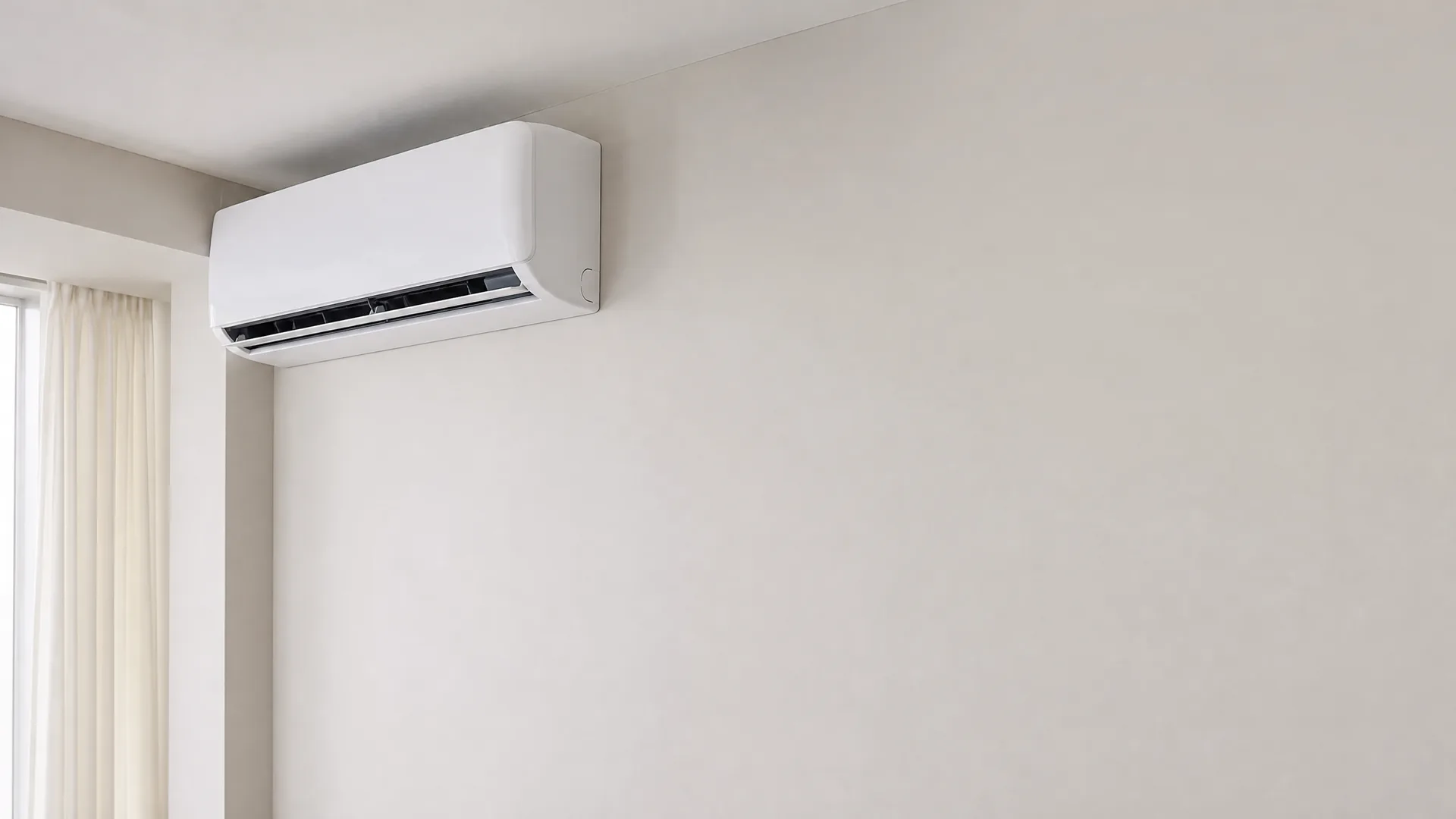
That burnt-dust smell usually comes from the coil and the dust that settled on it while the unit sat idle running cooling all summer. Once the heat runs for ten or fifteen minutes, the coil warms past room temperature and the dust burns off. If it clears on its own each time you switch to heat, that's the normal cause. If it lingers past the first cycle, something else on the coil or in the blower housing is holding onto it.
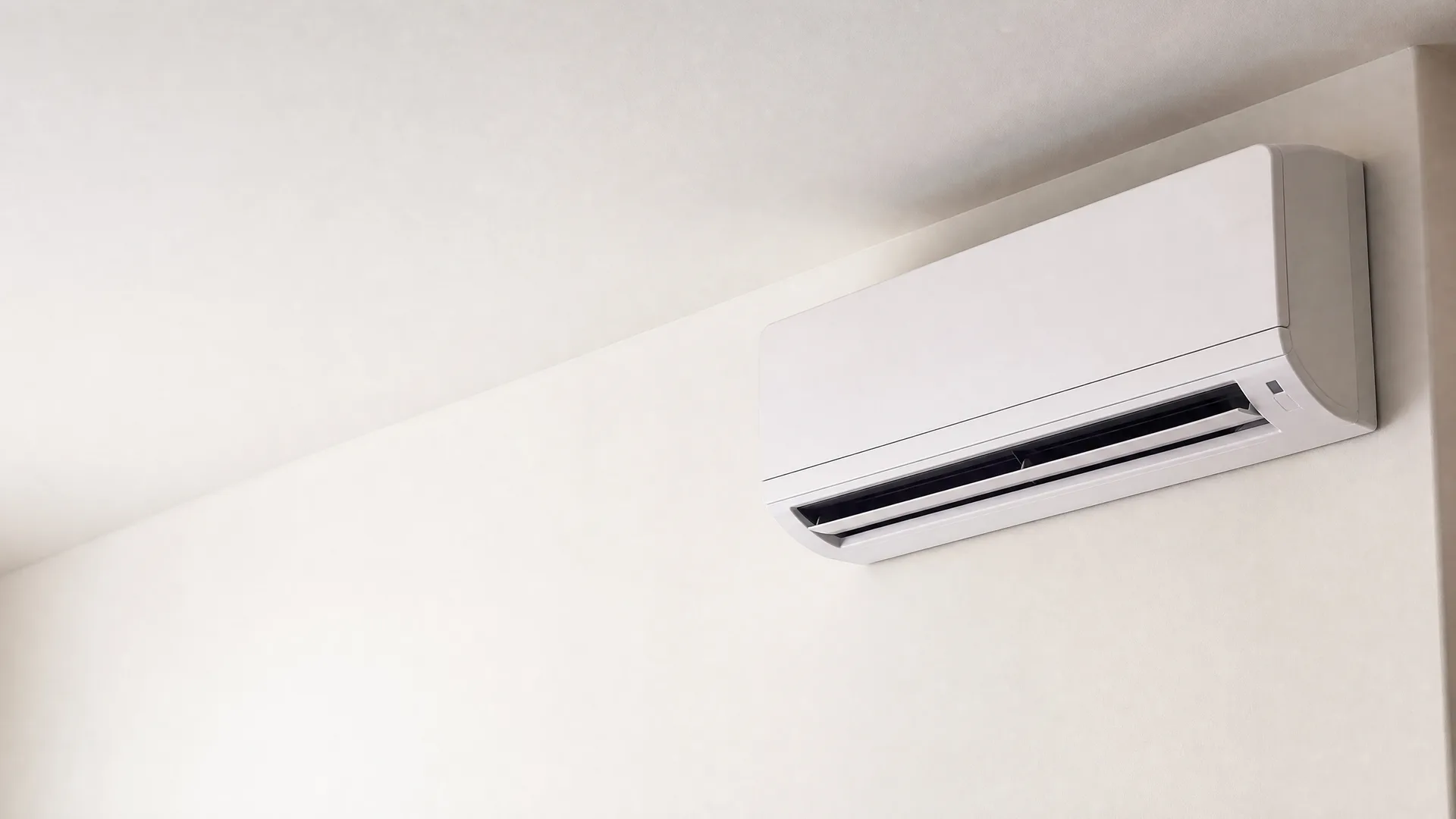
A musty smell is different from burnt dust. It usually means moisture sitting somewhere it shouldn't, often in the drain pan or the line that carries condensate out of the indoor unit. Mini splits here run cooling for months each summer, and if that drain line has any buildup in it, water can sit instead of draining. Switching to heat doesn't cause this, it just stops masking it, since the blower pushes air across whatever has grown in that damp space.

You're at your desk on a slow afternoon in late October, the kind where you finally gave in and switched the mini split over to heat. You look up from your laptop and notice the wall under the indoor unit has a dark streak running down to the baseboard, the paint gone soft and dull along the edge. There's a towel on the floor already soaked through. You get up and touch the wall and it's cold and damp under your fingers. The smell you noticed that morning wasn't dust burning off a coil. You stand there working out how long it's been dripping behind the drywall before you ever saw the streak, and who you'd even call for something like this.
A smell that won't quit after a few runs, or one with a dark streak on the wall under it, isn't something to keep guessing about. You could spend an evening searching contractors, calling a few, explaining the smell and the streak over and over, then sitting on quotes trying to tell them apart. That's the part worth skipping. One call goes to a licensed contractor working in New York, someone who services mini splits all year here and has seen what the switch from summer cooling to winter heat does to a coil that's been sitting. You're not fielding calls from five different companies trying to win the job. You get one contractor who already knows what this kind of smell usually means in a New York winter, and can look at your unit and the wall behind it and tell you straight whether it's dust burning off or something that needs attention now.
If the smell is faint, only shows up the first couple times you switch to heat, and fades once the unit's been running fifteen minutes, it's reasonable to let it play out over a day or two. That's the coil burning off the dust it collected over the summer. Nothing about that pattern needs a technician standing in your living room. What it does need is you actually checking it fades, not assuming it will. Run the heat long enough to see the smell drop off each time, not just once.
A smell that's still there after several runs, one that smells like plastic or something hot and electrical, or any dark streak on the wall under the indoor unit changes the math. That's not dust burning off anymore. A technician who works on these systems all winter in New York can tell from the smell and the streak whether it's condensate pooling somewhere it shouldn't, a drain line backed up, or something electrical that needs to be caught before it's worse. Sort through that yourself and you're guessing with a wall unit that isn't cheap to replace.




Normal when a mini split switches to heat after months of cooling. The smell is faint, fades as the coil warms, and doesn't return once you've run heat a few times.
A musty smell that lingers, or any trace of smoke, points to standing water in the drain pan or a wiring problem that needs a licensed contractor to look at the unit directly.


The blower shuts off all summer while the mini split cools your home.
Dust and moisture settle on the indoor coil during that idle stretch.
You switch the system to heat, and the coil starts warming up.
Hot coil surfaces burn off the dust and send smell through the vents.
At 26.39 cents a kilowatt-hour, running a mini split's heat strips or backup resistance coil to chase down a smell or a fault gets expensive fast. A unit that's actually broken, cycling oddly or running longer than it should to make heat will show up on your bill before you place a service call.
EIA-861 2025 statewide residential average
A faint dust smell that fades after fifteen minutes is the coil doing what it does every year when you switch over from cooling. A musty smell that lingers, or any burning plastic smell, is the unit telling you something needs a look. Once you know which one you've got, the only real question is who checks it. A tech who services mini splits in New York all year, through the switch to cooling every spring and back to heat every fall, has seen this exact complaint plenty of times and knows what it usually turns out to be. Request service through this page and you're matched with one licensed local contractor, not a handful of companies competing for your callback. No explaining the smell and the streak on the wall to five different people, no sorting through quotes that describe the job differently. One contractor, already familiar with this equipment, takes it from here.





Your request goes to one pro, not a list of companies.
There's no charge for the request.