Tell us about the job
Takes about a minute. No obligation.
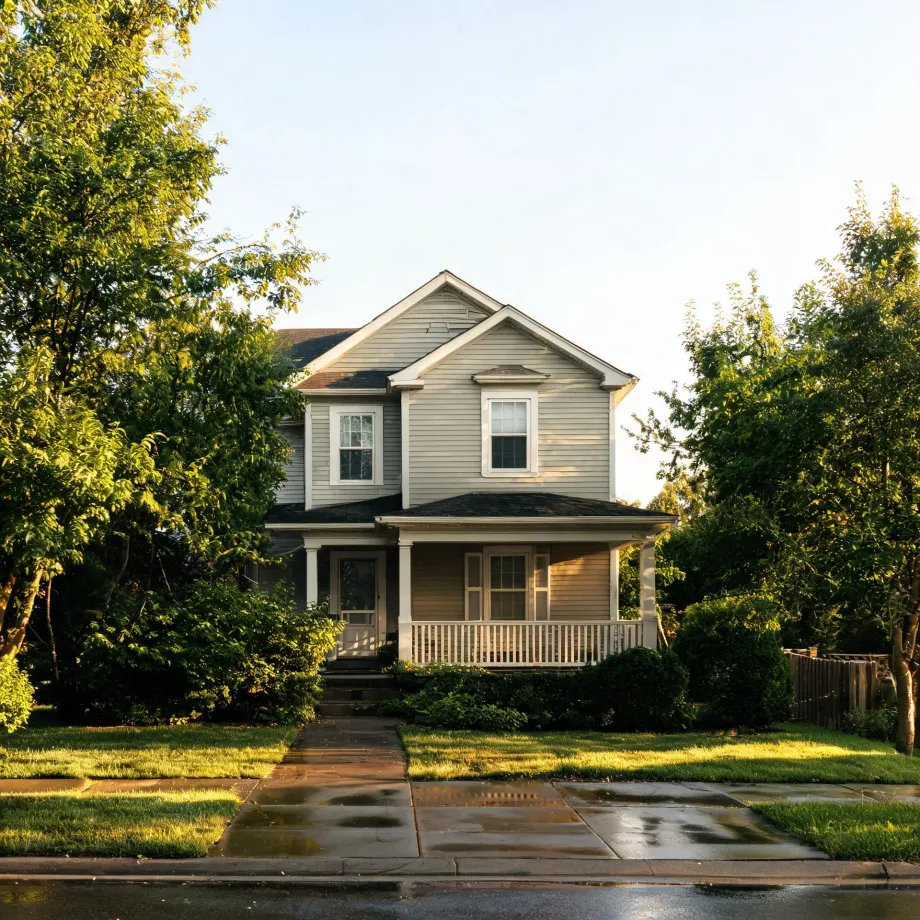
A mini-split contractor quoting an installation in Seneca County has to account for what a short cooling season does to a compressor that sits dormant through autumn, winter, and spring. Homes in Seneca County, NY run cooling about two months a year, from July through August. Refrigerant seals, contactor points, and condenser fan bearings can degrade during long idle periods without tripping any visible symptom. The system starts up in July and either runs clean or reveals a problem on the first genuinely hot afternoon, when a contractor's schedule is already full. Sizing the unit correctly for the house matters here for exactly that reason: an undersized system will run continuously through its short working window and accumulate wear it has no off-season to hide.
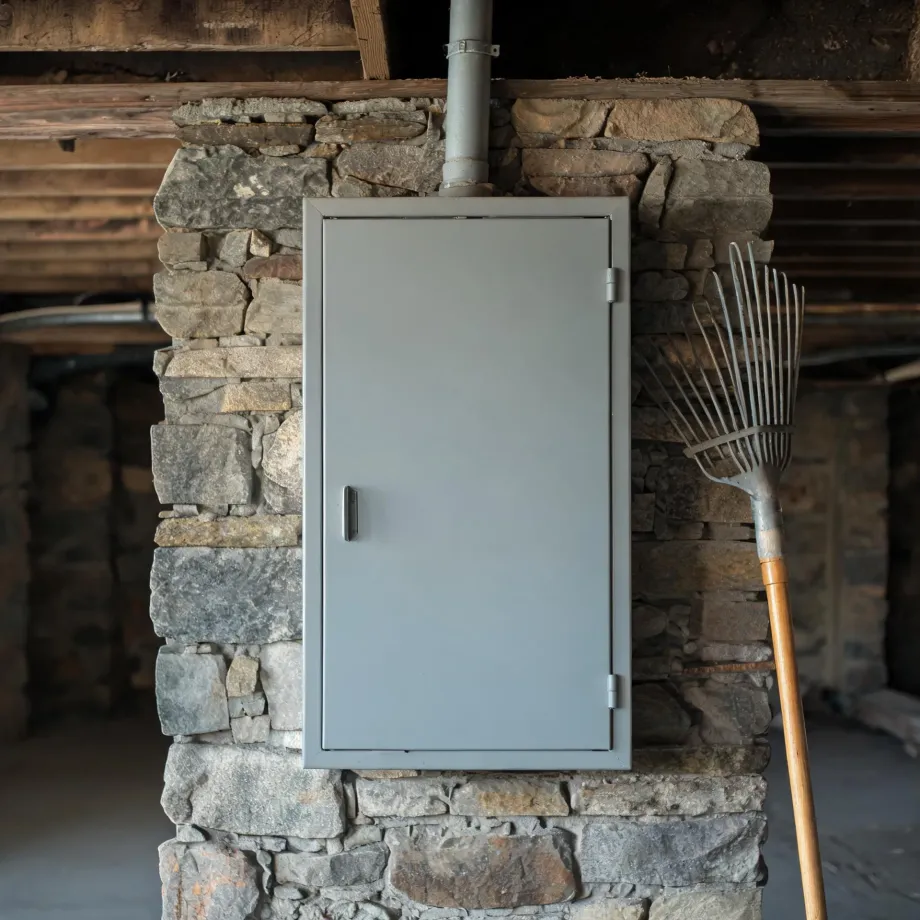
Older electrical panels are where mini-split installs in Seneca County tend to stall. Half the homes in Seneca County, New York were built in 1959 or earlier (2020-2024 ACS 5-year). Houses built for the appliances of that era carry service panels that were never sized for the draw a mini-split compressor puts on a circuit, and a contractor has to assess that capacity before anything else is priced or scheduled. If the panel cannot support the load, that work comes first.
What a Mini-split Installation Puts in Your Home
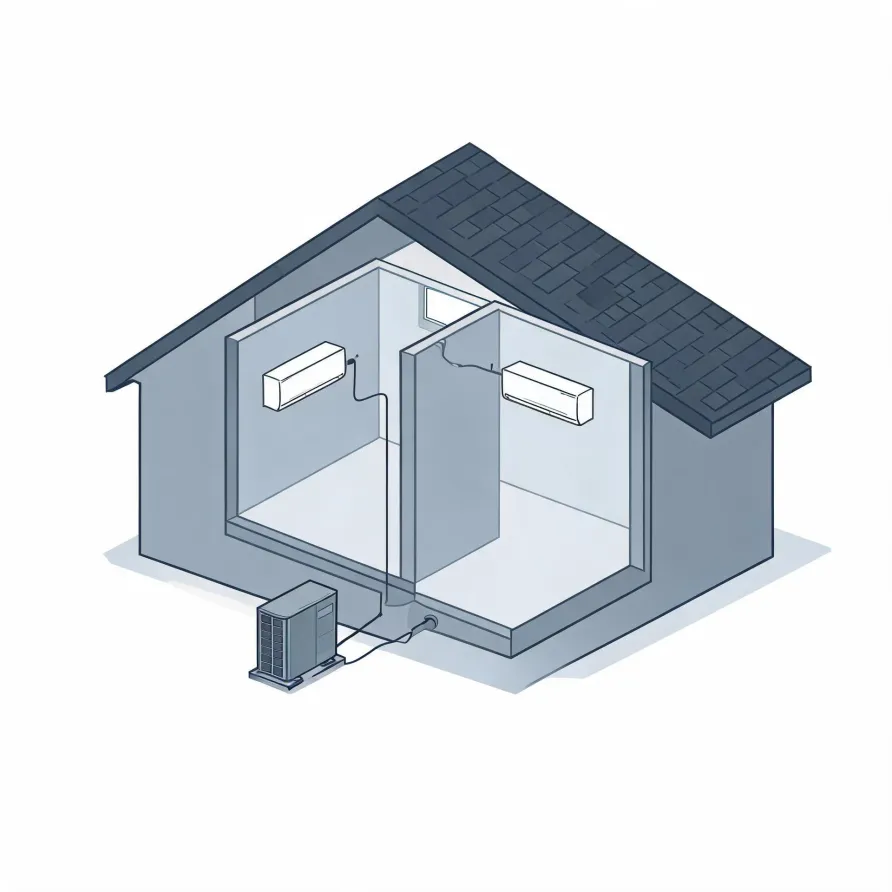
The indoor air handler mounts high on an interior wall, usually in the room you want conditioned. That is the unit a homeowner sees every day. The outdoor condenser sits on the ground or on a bracket outside the house and holds the compressor and the components that do the heavy mechanical work.
A refrigerant line set runs through a small hole in the wall to connect the two units, and a condensate drain line carries moisture out of the indoor unit to the exterior. The outdoor unit also gets a dedicated disconnect box mounted nearby, which gives a technician a safe way to cut power at the equipment.
The drawing beside this text shows the general layout of a mini-split system, and a licensed contractor determines exactly how each piece is positioned and routed in your home.
Get matched in Seneca CountySeneca County by the numbers
62 severe weather events were recorded in Seneca County, New York between 2015 and 2024.
NOAA National Centers for Environmental Information, Storm Events Database, bulk CSV export, events 2015-01-01 through 2024-12-31.Half the homes in Seneca County, New York were built in 1959 or earlier (2020-2024 ACS 5-year).
U.S. Census Bureau, 2020-2024 American Community Survey 5-Year EstimatesSeneca County, New York holds 16,194 housing units (2020-2024 ACS 5-year).
U.S. Census Bureau, 2020-2024 American Community Survey 5-Year EstimatesOwners occupy 71.0% of the occupied homes in Seneca County, New York (2020-2024 ACS 5-year).
U.S. Census Bureau, 2020-2024 American Community Survey 5-Year EstimatesSevere Weather Events in Seneca County
Heating and cooling equipment works against whatever the climate throws at a building. In Seneca County, the local weather record shapes how hard a mini-split system has to work and what it has to withstand.
62 severe weather events, 2015–2024. Source: NOAA National Centers for Environmental Information, Storm Events Database.